




Is clean air a human right? Globally, the answer is increasingly recognized as yes. But in the UAE, this question goes beyond theory—it directly affects how safe and livable your apartment or villa is, especially when indoor air quality depends heavily on AC systems, ventilation, and maintenance.
Table of Contents
ToggleIs Clean Air a Human Right Globally
Clean air has gained global recognition as a fundamental human right. In 2022, the United Nations General Assembly formally acknowledged the right to a clean, healthy, and sustainable environment. This includes access to clean air, safe water, and a non-toxic environment.
This recognition is not just symbolic. It reflects a growing understanding that air quality directly affects health, productivity, and quality of life. Poor air conditions are linked to respiratory illnesses, allergies, fatigue, and long-term health risks.
However, while this is a global principle, its real impact depends on how it is applied locally—especially inside homes where people spend most of their time.
Why Indoor Air Quality Matters More in the UAE
In the UAE, outdoor air quality is only part of the story. Due to extreme heat, most residents spend over 90% of their time indoors. Homes, apartments, and offices are tightly sealed and heavily dependent on air conditioning systems.
This creates a unique situation:
- Air is constantly recycled inside the same space
- Dust, humidity, and contaminants can build up inside ducts
- Poor ventilation can trap pollutants indoors
As a result, indoor air quality becomes just as important—if not more important—than outdoor air quality.
How Clean Air Relates to Habitability in UAE Housing Law
In the UAE, the concept of “clean air” is not always explicitly stated in law, but it is indirectly covered under the idea of habitability.
Under UAE Tenancy Law No. 26 of 2007, landlords are required to ensure that a property is fit for habitation. This means the property must be safe, functional, and suitable for living.
Habitability includes:
- Functional air conditioning systems
- Proper ventilation
- Absence of health hazards such as mold
If indoor air quality is poor due to neglected AC systems, dirty ducts, or mold buildup, it can be considered a failure to maintain habitable conditions.
Landlord Responsibilities for Air Quality and HVAC Systems
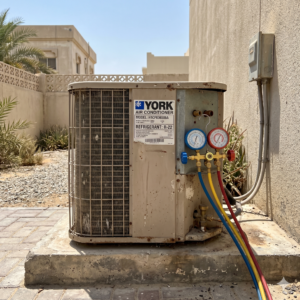
Landlords in the UAE are responsible for maintaining the core infrastructure of the property. This includes HVAC systems, which play a central role in indoor air quality.
Typical landlord responsibilities include:
- Ensuring AC systems are functional and safe
- Repairing major faults in cooling systems
- Addressing mold issues caused by structural problems
- Maintaining duct systems if part of central infrastructure
If an AC system is not working properly or is contributing to unhealthy air conditions, the landlord is generally responsible for fixing the issue.
Tenant Responsibilities for Maintenance
Tenants also have responsibilities when it comes to maintaining indoor air quality.
These typically include:
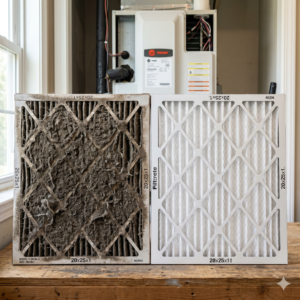
- Regular cleaning of AC filters
- Basic upkeep of the unit
- Reporting issues early
Tenants are expected to prevent minor issues from becoming major problems. However, they are not responsible for structural or system-level failures.
Tenant vs Landlord Responsibility Summary
| Area | Tenant Responsibility | Landlord Responsibility |
|---|---|---|
| AC Filter Cleaning | Yes | No |
| Major AC Repair | No | Yes |
| Duct Cleaning (Central System) | Usually No | Yes |
| Mold from Structural Issues | No | Yes |
Dubai Municipality and Ventilation Standards
Dubai Municipality has established standards for ventilation and indoor air quality. These standards focus on:
- Proper airflow and ventilation design
- Maintenance of HVAC systems
- Control of humidity and mold growth
Buildings are expected to meet these standards to ensure safe indoor environments.
Failure to maintain proper ventilation can lead to poor air quality, which affects both health and property condition.
UAE National Air Quality Agenda 2031
The UAE has also introduced broader environmental initiatives, such as the National Air Quality Agenda 2031.
This framework aims to:
- Improve air quality across the country
- Reduce pollution levels
- Enhance public health outcomes
While it focuses mainly on outdoor air, it reinforces the importance of maintaining clean air in all environments—including indoor spaces.
Common Indoor Air Quality Problems in UAE Homes
In practical terms, indoor air issues often come from:
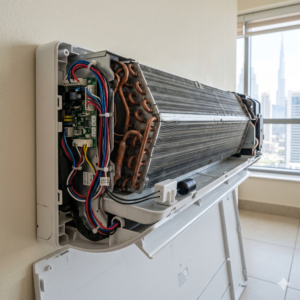
- Dust buildup inside AC ducts
- Mold growth due to humidity
- Poor ventilation in sealed apartments
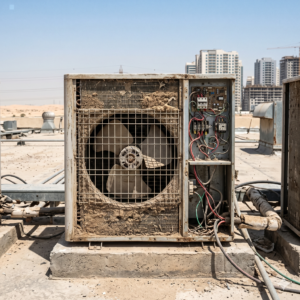
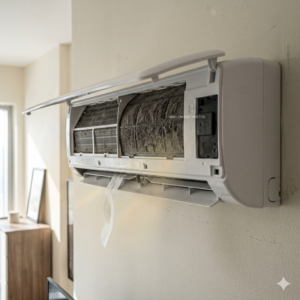
- Dirty AC filters and coils
These issues are not always visible, but they can significantly affect air quality.
Signs That Indoor Air Quality May Be Unsafe
- Musty or unpleasant smell from AC
- Frequent coughing or allergies indoors
- Dust accumulating quickly
- Uneven airflow or weak cooling
If these signs appear, it may indicate deeper issues within the HVAC system.
Practical Steps Tenants Can Take
1. Document the Problem
Take photos, videos, and notes of visible issues such as mold or dust buildup.
2. Seek Medical Documentation
If symptoms are affecting health, medical reports can strengthen your case.
3. Request Professional Inspection
Independent indoor air quality (IAQ) testing can provide objective evidence.
4. Communicate with Landlord
Always inform the landlord in writing and request action.
5. Keep Records
Maintain all communication and documentation for future reference.
How to Escalate a Dispute in the UAE
If the landlord does not respond or resolve the issue, tenants can escalate the matter.
RERA (Real Estate Regulatory Agency)
RERA provides guidance and oversight for rental relationships in Dubai.
Rental Disputes Center
The Rental Disputes Center handles formal disputes between tenants and landlords.
With proper documentation, tenants can request:
- Repairs to be carried out
- Compensation in some cases
- Contract adjustments if conditions are unsafe
Why Clean Air Becomes a Legal Issue
Clean air is not just a comfort issue—it can become a legal matter when it affects habitability.
If indoor air conditions are unsafe due to poor maintenance, it may violate tenancy obligations.
This is why documentation and proper evaluation are important.
Preventive Approach to Indoor Air Quality
The best way to avoid disputes is prevention.
- Regular AC maintenance
- Periodic duct cleaning
- Monitoring humidity levels
- Early detection of issues
Preventive care reduces both health risks and potential conflicts between tenants and landlords.
Understanding the Role of HVAC Systems in Air Quality
In the UAE, HVAC systems are the primary source of indoor air circulation. This means any issue inside the system directly affects the air you breathe.
Dust, bacteria, and moisture inside ducts can spread throughout the property if not addressed properly.
Maintaining these systems is essential for ensuring clean indoor air.
If you are experiencing air quality concerns in your home, it is important to address them early rather than waiting for symptoms to worsen. Poor indoor air conditions can affect health, increase discomfort, and lead to more serious HVAC issues over time. With proper inspection and maintenance, these problems can be identified and resolved effectively. If you need guidance on your situation, you can use the WhatsApp or Call button on the top right to connect with the Bio On Air team and understand the most suitable next step.
Conclusion
Clean air is increasingly recognized as a human right globally, and in the UAE, it is closely tied to the concept of habitable housing. By understanding legal responsibilities, recognizing warning signs, and taking proactive steps, both tenants and landlords can ensure safe and healthy indoor environments.