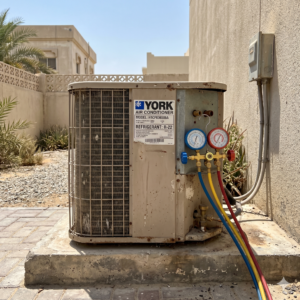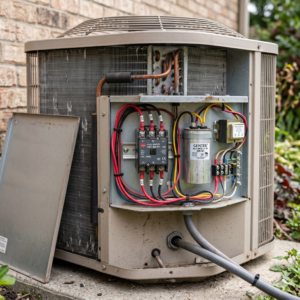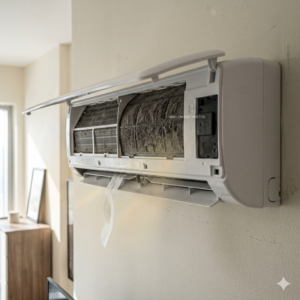





If your ac outdoor unit not working suddenly stops in the UAE, it can quickly turn into a serious comfort and safety issue. With extreme heat, even a small fault can escalate fast. This guide explains real symptoms, UAE-specific causes, repair costs, and what you can safely check before calling a technician.
Table of Contents
ToggleCommon Symptoms of AC Outdoor Unit Not Working
Before identifying the cause, it is important to understand what your system is actually doing. Different symptoms often point to different types of failure.
1. Completely Silent Outdoor Unit
If the outdoor unit is totally silent—no fan, no compressor, no vibration—this usually indicates a power-related issue. The system is not receiving electricity or has been cut off for safety reasons.
2. Fan Running but Compressor Not Starting
This is one of the most common UAE cases. The outdoor fan spins, but there is no cooling. This often points to capacitor failure or compressor-related issues.
3. Buzzing Sound Without Fan Movement
A buzzing noise without movement typically means electrical components are trying to start but failing. This is commonly linked to a weak capacitor or stuck motor.
4. Unit Starts Then Shuts Off Quickly
If the system turns on for a few minutes and then stops, it is usually a protection mechanism. The AC is detecting abnormal pressure or temperature and shutting down to avoid damage.
Main Causes of AC Outdoor Unit Failure in UAE
AC systems in the UAE operate under extreme stress due to heat, dust, and long usage hours. These conditions accelerate component failure.
1. Tripped Circuit Breaker
High electrical load can cause the breaker to trip, cutting power to the outdoor unit.
Common reasons:
- Compressor overload
- Electrical short circuit
- Wiring damage
2. Blown Isolator Fuse
Outdoor units are often connected to an isolator switch with internal fuses. If these blow, the unit will receive no power.
3. Failed Contactor
The contactor is responsible for sending power to the compressor and fan. If it fails, the unit may remain completely inactive or partially functional.
Signs of contactor failure:
- Clicking sound without startup
- Intermittent operation
- No response despite power supply
4. Capacitor Damage from Heat
Capacitors are highly sensitive to temperature. In UAE conditions, they are one of the most commonly failed components.
Extreme heat causes:
- Loss of electrical charge capacity
- Difficulty starting compressor or fan
- Complete startup failure
5. Overheated Compressor
The compressor is the heart of the AC system. When it overheats, it shuts down automatically to prevent permanent damage.
Causes of overheating:
- Low refrigerant
- Blocked airflow
- Dirty condenser coils
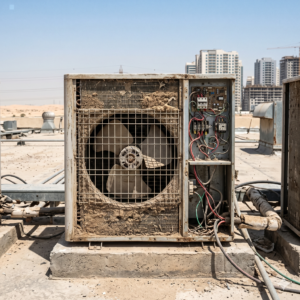
6. Sand-Clogged Condenser Coils
In the UAE, sand and dust accumulation is unavoidable. When condenser coils are blocked, heat cannot be released properly.
This leads to:
- High pressure inside the system
- Automatic shutdown (high-pressure trip)
- Reduced cooling efficiency
In many cases, what seems like a serious failure is actually caused by poor heat exchange due to dirt buildup.
Why UAE Climate Accelerates AC Failures
Unlike moderate climates, UAE conditions create continuous stress on AC systems.
Key factors:
- Extreme temperatures (often above 45°C)
- Long daily operating hours
- High humidity differences
- Frequent dust and sand exposure
These conditions cause electrical parts to degrade faster and thermal components to overwork.
For example:
- Capacitors fail faster due to heat
- Compressors run longer cycles
- Coils clog more frequently
This is why proper AC repair handling in the UAE must consider environmental stress, not just internal faults.
Estimated Repair Costs in UAE
Understanding repair costs helps you avoid overpaying and recognize realistic service pricing.
| Component | Estimated Cost (AED) | Description |
|---|---|---|
| Capacitor Replacement | 150 – 350 | Common failure due to heat |
| Contactor Replacement | 250 – 500 | Controls power flow |
| Fan Motor Repair | 300 – 700 | Outdoor fan not spinning |
| Compressor Repair | 800 – 2,500+ | Depends on severity |
| Gas Refill + Leak Fix | 300 – 900 | Low refrigerant issues |
Note: These are approximate lower-range UAE estimates and may vary depending on system type, accessibility, and brand.
Brand-Specific Error Code Examples
Modern AC systems often display error codes that indicate specific faults.
Daikin
- U4: Communication error between indoor and outdoor
- L5: Compressor overload
LG
- CH05: Communication error
- CH10: Fan motor issue
Samsung
- E101: Indoor-outdoor communication failure
- E554: Compressor protection triggered
These codes provide direction but still require proper inspection to confirm the issue.
What You Can Safely Check Yourself
Before calling a technician, there are a few things you can safely inspect.
- Check if the breaker is tripped
- Ensure thermostat is set correctly
- Look for visible dirt or blockage around outdoor unit
- Confirm power supply is active
These simple checks can sometimes solve minor issues or provide useful information.
What You Should Never Try Yourself
Some parts of the AC system are dangerous and should not be handled without training.
- Opening electrical panels
- Touching capacitors (they store charge)
- Handling refrigerant lines
- Forcing compressor startup
Improper handling can cause injury or further damage.
Safety Warning About Capacitors
Capacitors can hold electrical charge even when the system is off. This makes them extremely dangerous if touched directly.
Always assume:
- Capacitors are live
- Electrical parts are unsafe to touch
This is why professional handling is critical for these components.
When to Call a Professional Immediately
You should stop troubleshooting and call a professional if:
- The unit smells burnt
- Breaker keeps tripping
- No response after basic checks
- System shuts down repeatedly
These signs usually indicate deeper electrical or mechanical issues.
Preventing Outdoor Unit Failure
Prevention is always more cost-effective than repair.
- Clean condenser coils regularly
- Schedule periodic maintenance
- Monitor early warning signs
- Ensure proper airflow around unit
In UAE conditions, maintenance is not optional—it is necessary.
Long-Term Impact of Ignoring the Problem
If the outdoor unit is not working and the issue is ignored, it can lead to:
- Compressor burnout
- Complete system failure
- Higher electricity consumption
- Poor indoor air quality
Small issues can quickly escalate under extreme conditions.
If your AC outdoor unit is not working, it is important to address the issue early rather than waiting for it to worsen. Electrical faults, overheating components, and airflow problems can quickly lead to permanent damage and significantly higher repair costs. In addition, poor system performance can reduce indoor air quality and increase energy consumption. With proper inspection and timely repair, these risks can be minimized. If you need clarity about your AC condition, you can use the WhatsApp or Call button on the top right to connect with the Bio On Air team and understand the most suitable next step.
Conclusion
An ac outdoor unit not working in the UAE is often caused by electrical, thermal, or airflow-related issues. By understanding symptoms, causes, and safe actions, you can respond quickly and prevent further damage while maintaining system efficiency and indoor comfort.