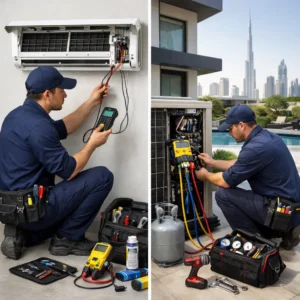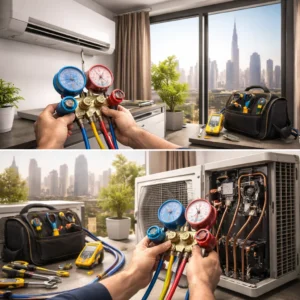





What is AC coil cleaning? It is the process of removing dust, debris, grease, and microbial buildup from the evaporator and condenser coils inside your air conditioning system to restore proper heat transfer. When coils are dirty, your AC struggles to absorb and release heat efficiently, leading to higher energy bills, weak cooling, frozen components, and long-term system damage.
Table of Contents
ToggleUnderstanding What Is AC Coil Cleaning
To understand what AC coil cleaning really means, you first need to understand the role of coils in your cooling system. Every AC unit has two primary coils:
- Evaporator coil (indoor unit): absorbs heat from inside your room.
- Condenser coil (outdoor unit): releases that absorbed heat outside.
The entire cooling cycle depends on efficient heat transfer between these two components. If either coil is covered in dirt, dust, or grime, the system cannot transfer heat effectively. This creates what many technicians call the “dust blanket effect.”
The Dust Blanket Effect and Why It Is Dangerous
The “dust blanket” effect happens when a layer of dust and debris covers the coil surface. Coils are designed with thin metal fins to maximize surface area for heat exchange. When those fins are blocked, heat cannot move properly.
Imagine wearing a thick jacket in extreme heat. Your body cannot release heat efficiently. The same happens to your AC.
When coils are dirty:
- The evaporator coil cannot absorb indoor heat properly.
- The condenser coil cannot release heat outdoors efficiently.
- The compressor works harder to compensate.
Over time, this leads to serious consequences.
Why AC Coil Cleaning Matters
Many homeowners ignore coil cleaning because the system still runs. But performance gradually drops. Here is what typically happens when coil cleaning is neglected:
Higher Energy Bills
When heat transfer is blocked, the system runs longer to reach the desired temperature. Longer runtime equals higher electricity consumption.
Reduced Cooling Efficiency
You may notice rooms taking longer to cool or never reaching the thermostat setting.
Short Cycling
The system turns on and off frequently because temperature regulation becomes unstable.
Frozen Evaporator Coils
Restricted airflow and improper heat absorption can cause moisture to freeze on the coil surface.
Compressor Damage
The compressor is the most expensive component. When coils are dirty, the compressor experiences excessive stress, increasing the risk of premature failure.
Comfort Loss and Financial Consequences
Over time, poor coil condition reduces indoor comfort and increases repair costs. What starts as dirt buildup can eventually result in compressor replacement, which is significantly more expensive than routine coil cleaning.
Evaporator Coil Cleaning (Indoor Heat Absorption)
The evaporator coil is located inside the indoor unit. It absorbs heat from your indoor air.
Common signs the evaporator coil needs cleaning:
- Weak airflow
- Ice buildup
- Musty odor
- Higher humidity indoors
Cleaning Method
Evaporator coils are often cleaned using self-rinsing foaming cleaners. These cleaners expand into foam, break down dirt, and then liquefy, draining through the system’s condensate line.
In deeper contamination cases, a technician may manually rinse the coil using controlled water pressure to avoid damaging surrounding components.
Condenser Coil Cleaning (Outdoor Heat Release)
The condenser coil is located in the outdoor unit. Its job is to release heat absorbed indoors.
Outdoor coils collect:
- Dust
- Sand
- Leaves
- Environmental debris
Cleaning Method
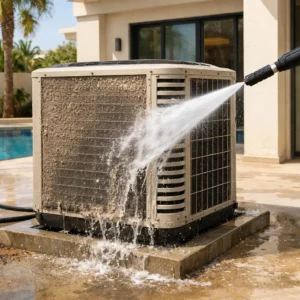
Condenser coils typically require manual rinsing with controlled water pressure after applying foaming coil cleaner. Unlike some indoor cleaners, outdoor coils often require full rinsing.
Additionally, technicians may use a coil comb to straighten bent fins. Bent fins restrict airflow and reduce performance.
Alkaline vs Acidic Coil Cleaners
Different contamination types require different chemical approaches.
Alkaline Foaming Cleaners
- Used for grease, organic buildup, and microbial contamination
- Common for evaporator coils
- Safer for aluminum surfaces when used correctly
Acidic Coil Cleaners
- Used for heavy mineral deposits
- Typically applied in commercial systems
- Require careful handling and thorough rinsing
Improper chemical selection can damage coil surfaces, which is why knowledge and precision matter.
Safe Electrical Shutdown Steps Before Cleaning
Before any coil cleaning begins, safety procedures must be followed:
- Turn off thermostat
- Disconnect power supply at breaker
- Confirm zero electrical flow
- Protect nearby electrical components from moisture
Skipping these steps increases the risk of electrical shock or component damage.
DIY vs Professional AC Coil Cleaning
Tools Required for DIY
- Foaming coil cleaner
- Soft brush
- Fin comb
- Protective gloves and eyewear
- Low-pressure water source
Risk Level Comparison
- DIY: Moderate to high risk if electrical safety is ignored
- Professional: Lower risk due to trained procedures
Depth of Cleaning
DIY cleaning often addresses surface dirt only. Professionals typically perform deeper cleaning, inspect airflow, and check related components.
Insurance and Protection
Professional service typically includes liability protection. DIY mistakes can result in out-of-pocket repair costs.
Typical Price Range
AC coil cleaning under structured maintenance usually falls within:
- AED 230–550 for evaporator or condenser coil cleaning
- More extensive cleaning or contamination cases may range between AED 320–650
Pricing depends on system condition and accessibility. For updated details, you may refer to our pricing page. Prices can vary depending on spare part cost or system complexity, but costs are always explained before work begins.
Red-Flag Checklist: When to Stop DIY and Call a Technician
- Hissing sounds suggesting refrigerant leak
- Total airflow loss
- Ice covering large coil areas
- Electrical contamination near control board
- Persistent burning smell
If any of these appear, stop immediately and seek professional help.
Visual Proof Concept: Before and After Cleaning
One of the most convincing ways to understand coil cleaning impact is visual comparison. Before cleaning, coils often appear dark and blocked. After proper cleaning, the fins become visible and airflow improves significantly.
This visible difference reflects restored heat transfer efficiency. Improved airflow often translates to quieter operation, faster cooling, and reduced compressor strain.
When AC Coil Cleaning Should Be Handled Properly
Dirty coils reduce cooling efficiency, increase electricity usage, and stress critical components like the compressor. If neglected, this can lead to frozen coils, system breakdown, and costly replacements. Bio On Air addresses AC coil cleaning with proper inspection, safe shutdown procedures, and suitable cleaning agents to restore airflow and system balance. Acting early helps prevent higher costs and comfort loss. You can use the WhatsApp or Call button at the top right of this page to discuss your AC condition with our team.
Conclusion
Understanding what is AC coil cleaning helps you protect your AC system from hidden efficiency loss and long-term damage. Clean coils mean better heat transfer, lower energy bills, improved comfort, and reduced risk of compressor failure. Whether handled carefully as DIY or professionally, regular coil maintenance is essential to keeping your AC reliable and efficient.