




Residential ac installation in the UAE is not just about placing an AC unit—it involves approvals, correct system selection, proper sizing, and precise installation standards to handle extreme heat. This guide explains approvals, system types, costs, and critical installation details you must understand before installing AC in Dubai and across the UAE.
Table of Contents
ToggleUnderstanding Residential AC Installation in UAE Context
In many countries, installing an AC unit is straightforward. In the UAE, it is more regulated and technically sensitive due to high temperatures, building systems, and safety requirements.
Residential AC installation here must consider:
- Extreme outdoor temperatures (often above 45°C)
- High humidity levels in coastal cities
- Building regulations and management approvals
- Compatibility with existing cooling systems
This is why installation quality directly affects long-term performance, electricity usage, and indoor comfort.
Mandatory Approvals for AC Installation in UAE
NOC Requirement (No Objection Certificate)
In most apartments and managed communities, you cannot install or replace AC units without an NOC from building management or the developer.
This approval ensures:
- No structural modifications are unsafe
- Electrical load remains within limits
- Outdoor units are placed in approved areas
Work Permit Restrictions
In high-rise buildings, installation work often requires a permit. This may include:
- Time restrictions (e.g., working hours)
- Access permissions for technicians
- Coordination with facility management
Skipping this step can lead to fines or forced removal of the installation.
District Cooling vs Independent AC Systems
District Cooling Systems
Many apartments in Dubai use district cooling, where chilled water is supplied from a central plant. In these cases:
- You do not install your own AC unit
- You pay for cooling usage through a service provider
- Maintenance focuses on internal components like FCU (Fan Coil Unit)
Independent AC Units
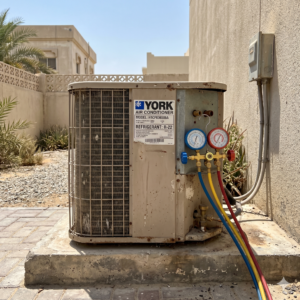
Villas, townhouses, and some apartments use independent systems such as:
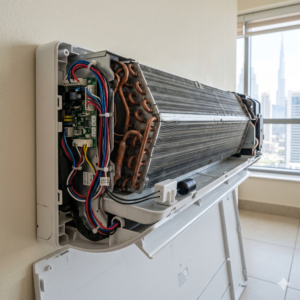
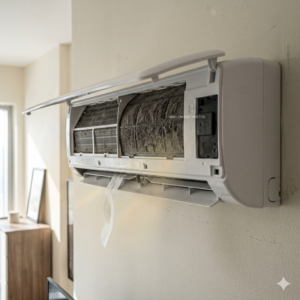
- Split AC units
- Ducted split systems
- Package units
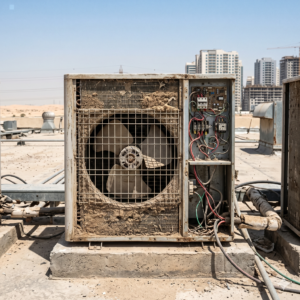
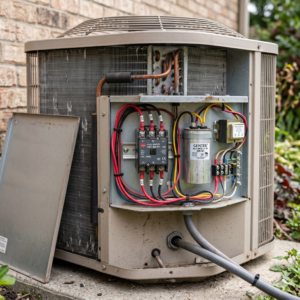
These systems require full installation, including indoor units, outdoor units, piping, and electrical connections.
Choosing the Right AC System for UAE Homes
T3 Compressor Requirement
In the UAE climate, using a T3 compressor is critical. T3 units are designed to operate efficiently in high temperatures above 45°C.
Using a non-T3 unit can result in:
- Poor cooling performance
- Overheating and system shutdown
- Reduced lifespan of the AC unit
Recommended Refrigerants
Modern AC systems in the UAE typically use:
- R410A – widely used, stable performance
- R32 – more energy-efficient and environmentally friendly
Choosing the correct refrigerant impacts efficiency, safety, and future maintenance.
Proper Tonnage Sizing
Correct sizing is one of the most important parts of residential AC installation.
General UAE guideline:
- 1 Ton per 350–450 sq.ft (depending on insulation and sunlight exposure)
Incorrect sizing can cause:
- Oversized unit → short cycling, higher cost
- Undersized unit → constant running, poor cooling
Cost for Residential AC Installation in UAE
Below is a realistic cost breakdown for residential AC installation in Dubai:
| Component | Estimated Cost (AED) |
|---|---|
| AC Unit (Split / Ducted) | 1,500 – 6,000+ |
| Installation Labor | 300 – 1,000 |
| Copper Piping & Insulation | 200 – 800 |
| Electrical Work | 150 – 600 |
| Drainage Setup | 100 – 400 |
Note: These prices are slightly below market estimates and may vary depending on installation complexity, property layout, and equipment specifications.
Standard vs Complex Installation
| Type | Description | Cost Impact |
|---|---|---|
| Standard Installation | Short piping, easy access | Lower cost |
| Complex Installation | Long piping, hidden ducts, civil work | Higher cost |
Complex installations often require additional labor and materials.
Hidden Costs in AC Installation
Some costs are not always included in initial quotes:
- Extra piping length beyond standard allowance
- Wall drilling or civil modifications
- Additional electrical load upgrades
- Condensate pump installation
Understanding these helps avoid unexpected expenses.
Critical Installation Quality Checks
Vacuuming Refrigerant Lines
This step removes moisture and air from piping before gas charging. Skipping this step can damage the compressor.
Proper Insulation
Insulation prevents condensation and energy loss, which is crucial in humid UAE conditions.
Correct Drainage Slope
Improper drainage can cause water leakage inside the property.
Outdoor Electrical Isolator
This is required for safety and maintenance access. It allows safe disconnection of power during servicing.
Installation Considerations by Property Type
High-Rise Apartments
- Strict NOC requirements
- Limited outdoor unit space
- Often district cooling systems
Townhouses
- Moderate flexibility in installation
- Shared walls may limit piping routes
Villas
- Full system customization possible
- Larger duct networks
- Higher installation complexity
Each property type requires a different approach.
Why Installation Quality Matters More Than Brand
Even the best AC unit will fail if installed incorrectly. Poor installation leads to:
- Gas leaks
- Weak cooling
- Water leakage
- High electricity bills
That is why professional AC installation handling is essential for long-term performance.
Common Mistakes in Residential AC Installation
- Skipping vacuuming process
- Using incorrect pipe size
- Improper drainage slope
- Incorrect unit sizing
- Ignoring building approvals
These mistakes can lead to repeated repairs and higher costs.
Long-Term Value of Proper Installation
A properly installed AC system provides:
- Stable cooling performance
- Lower energy consumption
- Reduced maintenance frequency
- Longer system lifespan
When Should You Replace Instead of Repair
If your system is over 10–15 years old or frequently breaking down, replacement may be more cost-effective than repair.
Modern systems are more energy-efficient and better suited for UAE conditions.
Planning Installation the Right Way
Before installing AC, you should:
- Confirm building approvals
- Choose correct system type
- Ensure proper sizing
- Understand full cost breakdown
This prevents future complications.
If you are planning residential AC installation or facing issues with an existing system, it is important to approach it correctly from the beginning. Poor installation can lead to inefficient cooling, higher electricity bills, and long-term damage to the system. In UAE conditions, these risks become more serious due to extreme heat and continuous usage. Addressing installation properly ensures better air quality, energy efficiency, and system reliability. If you need clarity on your setup or want to understand the best approach for your property, you can use the WhatsApp or Call button on the top right to connect with the Bio On Air team and discuss your situation in detail.
Conclusion
Residential ac installation in the UAE requires careful planning, proper approvals, and high installation standards. By understanding system types, costs, and quality checks, you can ensure long-term comfort, efficiency, and reliable performance in extreme climate conditions.