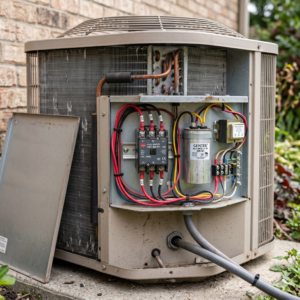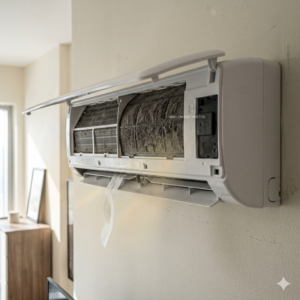





The outdoor unit split AC is the most critical part of your cooling system, especially in the UAE where extreme heat and humidity push AC systems to their limits. Understanding how it works, how to maintain it, and how to prevent common failures can help you avoid sudden breakdowns and high repair costs.
Table of Contents
ToggleWhat the Outdoor Unit Split AC Actually Does
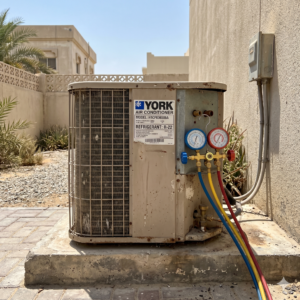
The outdoor unit, also known as the condenser, is responsible for releasing heat from inside your home to the outside environment. While the indoor unit cools the air, the outdoor unit removes the heat that has been absorbed.
Think of it as a heat pump that pushes unwanted heat out. Without proper heat rejection, your AC cannot cool effectively.
The outdoor unit mainly consists of:
- Compressor (the heart of the system)
- Condenser coil
- Fan motor
- Electrical components (capacitors, contactors)
When the outdoor unit struggles, the entire cooling system becomes inefficient.
Why Heat Rejection Is Critical in UAE Climate
In countries with mild weather, heat rejection is easier because outdoor temperatures are lower. But in the UAE, outdoor temperatures can exceed 45°C, which makes it harder for the AC to release heat.
This creates a situation where:
- The system runs longer to achieve the same cooling
- The compressor works under higher pressure
- Energy consumption increases significantly
This is why the outdoor unit is often the first part to fail in extreme heat conditions.
Why T3 Tropical Compressor Rating Matters
Not all AC units are designed for extreme climates. In the UAE, you should always check for a T3 (tropical) rating.
T3-rated compressors are designed to operate efficiently in high ambient temperatures, typically above 43°C.
Compared to standard (T1) units:
| Feature | T1 (Standard) | T3 (Tropical) |
|---|---|---|
| Operating Temperature | Up to ~35°C | Up to ~52°C |
| Cooling Stability | Reduced in high heat | Stable in extreme heat |
| Compressor Stress | High | Lower |
Using a non-T3 unit in the UAE can lead to frequent overheating and compressor failure.
How to Check the Climate Class Label
You can usually find the climate rating on the outdoor unit label or technical sticker.
Look for:
- T1 or T3 marking
- Operating temperature range
- Model specifications
If your unit does not clearly indicate T3, it may not be suitable for extreme UAE conditions.
Common Overheating Problems in Outdoor Units
Thermal Overload Trips
When the compressor overheats, the system automatically shuts down to prevent damage. This is called thermal overload protection.
Symptoms include:
- AC stops suddenly during peak heat
- Restarts after cooling down
- Reduced cooling performance
Failed Run Capacitors
Capacitors help start and run the compressor and fan motor. In high heat, they are prone to failure.
Signs of capacitor failure:
- Outdoor fan not spinning
- Humming noise from unit
- Delayed startup
These issues often require proper AC repair diagnosis to avoid further damage.
Signs Your Compressor Is Struggling in Heat
- Weak cooling despite long running time
- Frequent on/off cycling
- Unusual noise from outdoor unit
- Breaker trips during peak hours
These are early warning signs that should not be ignored.
Importance of Proper Clearance and Airflow
The outdoor unit needs space to release heat effectively. Poor installation can trap hot air around the unit.
Recommended clearance:
- At least 30–50 cm from walls
- Open airflow on all sides
- No obstruction above the unit
If hot air recirculates back into the unit, cooling efficiency drops significantly.
Coastal Corrosion Protection Blue Fin vs Gold Fin
In coastal areas like Dubai, corrosion is a serious issue due to salty air.
| Coating Type | Protection Level | Best Use |
|---|---|---|
| Blue Fin | Basic corrosion resistance | Standard environments |
| Gold Fin | High corrosion resistance | Coastal UAE areas |
Gold fin coating is more suitable for UAE conditions and helps extend the lifespan of the outdoor unit.
Sand and Dust Buildup Why Water Cleaning Is Not Enough
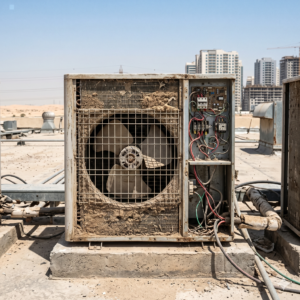
The UAE environment includes fine sand and calcareous dust that sticks to condenser coils.
Simple water spraying may remove surface dust, but it does not clean internal buildup.
Over time, this leads to:
- Blocked airflow
- Higher compressor pressure
- Reduced cooling efficiency
This is why AC deep cleaning using proper chemical treatment is often required.
Vibration and Noise Issues in Balcony Installations
Many outdoor units in UAE apartments are installed on balconies.
Common issues:
- Vibration transferred to walls
- Noise disturbance inside the apartment
- Loose mounting brackets
Solutions include:
- Rubber vibration pads
- Proper mounting alignment
- Secure installation brackets
Correct Placement Guidelines for UAE Apartments
Placement plays a major role in performance and lifespan.
Best practices:
- Avoid direct sunlight exposure when possible
- Ensure proper airflow clearance
- Install in shaded or ventilated areas
- Avoid enclosed balcony spaces without ventilation
Incorrect placement leads to overheating and inefficient operation.
Replacement Considerations for Outdoor Units
Refrigerant Compatibility
New systems use different refrigerants (R410A, R32). Compatibility with indoor units must be checked.
Inverter Efficiency
Inverter systems adjust compressor speed, reducing energy consumption and improving performance.
Electricity Savings Impact
Upgrading to modern systems can significantly reduce electricity usage, especially in high-demand climates like the UAE.
When Outdoor Unit Problems Lead to Bigger Issues
Ignoring outdoor unit problems can result in:
- Compressor failure (most expensive component)
- System inefficiency and high bills
- Poor indoor air quality
- Complete AC breakdown
Early action is always more cost-effective than full system replacement.
Preventive Maintenance for Outdoor Units
Regular maintenance is essential in the UAE environment.
- Clean coils every 6–12 months
- Check refrigerant levels
- Inspect electrical components
- Ensure proper airflow
This reduces the risk of sudden breakdowns during peak summer.
Why Understanding Your Outdoor Unit Matters
The outdoor unit split AC is often ignored because it is outside and out of sight. However, it is the part that works the hardest under extreme conditions.
If you are experiencing issues like weak cooling, unusual noise, or frequent shutdowns, it is important not to delay. Problems in the outdoor unit can quickly escalate into compressor damage, reduced air quality, and higher energy consumption. Addressing these issues early helps protect your system and maintain indoor comfort. If you need clarity about your AC condition, you can use the WhatsApp or Call button on the top right to connect with the Bio On Air team and understand the most suitable next step.
Conclusion
The outdoor unit split AC plays a critical role in cooling performance, especially in the UAE’s extreme climate. Proper selection, installation, and maintenance can significantly improve efficiency, reduce costs, and extend the lifespan of your system.