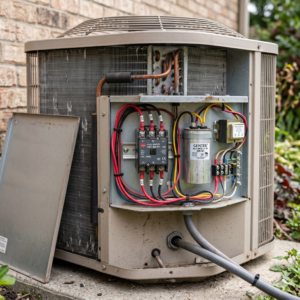





If your outdoor unit making loud noise suddenly becomes noticeable, it is not something to ignore—especially in the UAE where AC systems run almost nonstop. The type of sound can tell you whether it is safe to keep running or if you should shut it down immediately. This guide helps you understand the noise, the cause, and what to do next.
Table of Contents
ToggleShould You Turn Off the AC Immediately or Keep It Running
Before trying to fix anything, the first question is simple: is it safe to keep your AC running?
Not all noises mean immediate danger, but some do. Acting correctly at this stage can prevent serious damage.
| Type of Noise | Safe to Run? | Action |
|---|---|---|
| Light vibration / mild humming | Usually safe | Monitor and inspect |
| Buzzing (electrical) | Risky | Limit usage, check soon |
| Banging / clanking | Unsafe | Turn off immediately |
| Grinding | Unsafe | Shut down immediately |
| Hissing | Potentially dangerous | Stop and inspect |
If the sound is sharp, metallic, or gets louder over time, do not continue running the AC. It can turn a minor issue into a major repair.
Understanding Noise Types and What They Mean
Electrical Buzzing Noise
A buzzing sound usually indicates an electrical issue.
Common causes:
- Failing capacitor
- Loose electrical connections
- Contactors wearing out
In UAE conditions, capacitors often fail faster due to extreme heat. When this happens, the outdoor unit struggles to start properly, creating a buzzing sound.
Banging or Clanking Noise
This is one of the most serious types of noise.
Possible causes:
- Loose or broken internal components
- Fan blade hitting internal parts
- Compressor mounting damage
This noise means something inside is physically hitting something else. Continuing to run the AC can cause severe internal damage.
Grinding Noise
Grinding usually indicates mechanical failure.
- Worn-out fan motor bearings
- Sand or debris inside moving parts
- Motor damage
In Dubai and coastal UAE areas, sand intrusion is a common cause of grinding sounds.
Hissing Noise
A hissing sound is often linked to refrigerant issues.
- Gas leak
- Pressure imbalance
- Valve issues
This type of noise should not be ignored because it can affect cooling performance and system safety.
Common UAE-Specific Causes of Outdoor Unit Noise
Extreme Heat and Capacitor Failure
Outdoor units in the UAE operate under intense heat. Capacitors are especially vulnerable and can degrade faster, causing startup problems and buzzing noise.
Dust Storm Debris
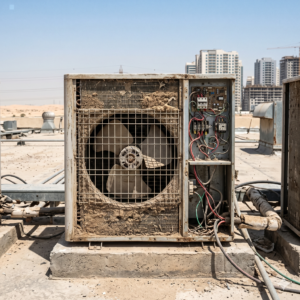
Dust storms can push debris into the outdoor unit. This can block airflow or interfere with moving parts, causing vibration or grinding sounds.
Sand Damage to Fan Motor Bearings
Fine sand particles can enter the motor housing over time, leading to wear in bearings and resulting in grinding or squealing noise.
Salt-Air Corrosion (Coastal Areas)
In areas like Dubai Marina or Jumeirah, salt in the air accelerates corrosion. This weakens metal components and can cause unusual noise over time.
Improper Installation and Vibration
Outdoor units installed on balconies or rooftops may not be properly stabilized. This can cause vibration noise, especially when the compressor starts.
Balcony Units vs Rooftop Units Noise Differences
| Location | Common Noise Issue | Reason |
|---|---|---|
| High-rise balcony | Vibration and echo | Limited space and reflective surfaces |
| Villa rooftop | Debris and weather damage | Direct exposure to dust and sun |
Balcony units often amplify sound due to enclosed space, while rooftop units face more environmental damage.
Safe Pre-Technician Checks You Can Do
Before calling a technician, there are simple checks you can safely perform.
- Turn off the AC and inspect visually
- Check for loose screws or panels
- Look for debris inside or around the unit
- Ensure the unit is stable and not shaking excessively
- Clean visible dust from outer fins (gently)
Do not open sealed components or touch electrical parts.
Warning Signs of Serious Compressor Damage
The compressor is the most critical and expensive component.
Signs of possible compressor damage:
- Loud banging during startup
- Repeated shutdowns
- Weak cooling combined with noise
- Circuit breaker tripping
If these symptoms appear, immediate inspection is necessary.
Cost Awareness for Outdoor Unit Noise Issues
Understanding cost helps you avoid overpaying or unnecessary replacement.
| Issue | Estimated Cost (AED) |
|---|---|
| Capacitor replacement | 150 – 400 |
| Fan motor repair | 300 – 800 |
| Gas leak repair | 300 – 1,200 |
| Compressor repair | 1,500 – 3,500+ |
Note: These estimates are slightly below average market pricing and may vary depending on system condition and access.
This awareness helps prevent unnecessary upselling or premature replacement suggestions.
When Repair Is Better Than Replacement
Not every noise means you need a new AC system.
- If the issue is electrical → repair is usually enough
- If the issue is airflow or debris → cleaning may solve it
- If the compressor is intact → system can often be restored
Replacement is only necessary in severe cases such as complete compressor failure.
Why Early Action Matters
Ignoring noise can turn a small problem into a major failure.
- Minor vibration → structural damage
- Small electrical issue → full system shutdown
- Debris buildup → motor failure
Early diagnosis saves both time and cost.
How Proper Repair Should Be Handled
A proper repair process should always include inspection, diagnosis, and confirmation of the root cause.
If you want to understand how a structured AC repair process works, it helps ensure that the issue is solved correctly instead of temporarily.
If your outdoor unit is making loud noise, it is important not to ignore it or rely on guesswork. What starts as a small vibration or sound can quickly lead to serious internal damage, reduced air quality, and higher energy consumption. In UAE conditions, continuous AC usage can accelerate these issues if left unchecked. Taking action early helps prevent larger repair costs and system failure. If you are unsure about the condition of your AC, you can use the WhatsApp or Call button on the top right to connect with the Bio On Air team and get clarity on the safest next step for your system.
Conclusion
An outdoor unit making loud noise is a warning sign that should not be ignored. By understanding the type of sound, its cause, and when to act, you can protect your AC system, reduce repair costs, and maintain a comfortable indoor environment.