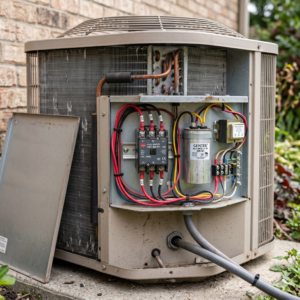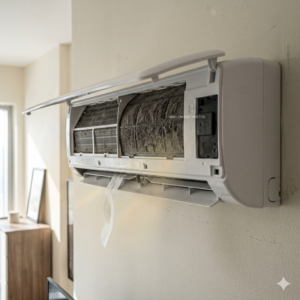





Choosing the right indoor unit for split ac is not as simple as replacing one part. In the UAE, compatibility between indoor and outdoor units, refrigerant type, and system design plays a major role. This guide explains when replacement works, when it doesn’t, and how to make the right decision.
Table of Contents
ToggleUnderstanding What an Indoor Unit Does
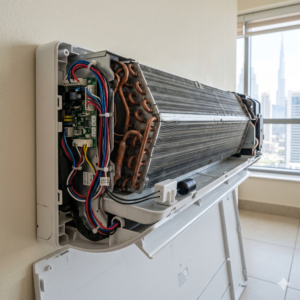
The indoor unit is the part of your AC system that delivers cool air into your space. It contains the evaporator coil, fan, and air filters. While it may look like a simple box on the wall or ceiling, it is closely connected to the outdoor unit.
In UAE homes, indoor units are designed to handle continuous cooling demand, high humidity, and dust-heavy conditions. Because of this, replacing only the indoor unit without proper checks can lead to performance issues.
Can You Replace Only the Indoor Unit
In theory, yes—you can replace only the indoor unit. In practice, it depends on compatibility.
Many homeowners consider this option when:
- The indoor unit is damaged or leaking
- The unit looks outdated
- Cooling feels weak in specific rooms
However, replacing only the indoor unit is only possible when key technical conditions match.
Compatibility Rules You Must Follow
1. Brand Matching Is Critical
Most manufacturers design indoor and outdoor units to work as a matched pair. Mixing brands is risky because:
- Communication protocols may differ
- Performance may not be optimized
- Error codes and system failures may occur
In most cases, using the same brand ensures better compatibility and reliability.
2. Inverter vs Non-Inverter Systems
This is one of the most important compatibility rules.
- Inverter systems adjust compressor speed dynamically
- Non-inverter systems operate at fixed speed
Mixing an inverter indoor unit with a non-inverter outdoor unit (or vice versa) usually does not work. Even if it runs, performance will be unstable and inefficient.
3. Refrigerant Type Must Match
Different AC systems use different refrigerants. The most common in the UAE are:
- R22 (older systems)
- R410A (widely used)
- R32 (newer, more efficient)
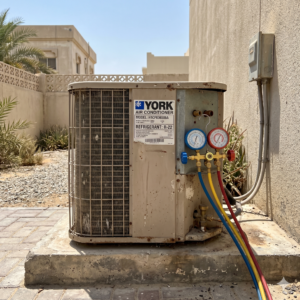
You cannot safely connect an indoor unit designed for R32 with an outdoor unit using R22. Pressure levels, oil compatibility, and system design are completely different.
4. BTU Capacity Must Be Balanced
The indoor unit must match the cooling capacity of the outdoor unit. If the indoor unit is too large or too small:
- Cooling becomes inefficient
- Energy consumption increases
- System lifespan decreases
Proper sizing is essential for performance.
Common Indoor Unit Types in UAE Homes
Wall-Mounted Units
This is the most common type in apartments and villas. It is installed high on the wall and is suitable for single rooms.
Advantages:
- Affordable
- Easy installation
- Widely available
Ceiling Cassette Units
Installed in the ceiling, these units distribute air evenly in all directions.
Used in:
- Offices
- Retail spaces
- Large living rooms
They require ceiling space and proper drainage setup.
Concealed Ducted Units
These are hidden inside ceilings and connected to duct systems. They are common in modern UAE homes.
Advantages:
- Clean interior design
- Centralized cooling
- Better airflow distribution
However, installation and maintenance are more complex.
Multi-Split System Expansion Limits
Multi-split systems allow multiple indoor units to connect to one outdoor unit. However, expansion is not unlimited.
Port Availability
The outdoor unit has a fixed number of connection ports. If all ports are used, adding another indoor unit is not possible without upgrading the outdoor unit.
BTU Load Balancing
The total cooling capacity must be shared across all indoor units. Adding more units reduces available capacity per room.
If the system is overloaded:
- Cooling performance drops
- Compressor works harder
- Energy consumption increases
When Deep Cleaning Is Better Than Replacement
Not every indoor unit problem requires replacement.
In many UAE homes, poor performance is caused by:
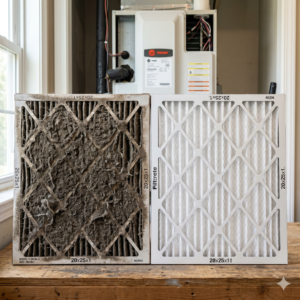
- Dust buildup on coils
- Clogged filters
- Bacteria and mold growth
In these cases, proper AC deep cleaning can restore performance without replacing the unit.
Cleaning is usually a better option when:
- The unit is structurally intact
- Cooling is reduced but not completely lost
- No major component failure exists
Cost Comparison Indoor Unit vs Full System
| Option | Estimated Cost (AED) | Notes |
|---|---|---|
| Indoor Unit Only | 700 – 2,000 | Depends on type and capacity |
| Full Split System | 1,800 – 5,500+ | Matched indoor + outdoor units |
Note: These prices are slightly below typical UAE market estimates and may vary based on brand, system type, and installation requirements.
While replacing only the indoor unit seems cheaper, it may not always be the best long-term solution.
Installation Labor Realities
Many people assume indoor unit replacement is simple, but installation involves:
- Reconnecting refrigerant lines
- Electrical rewiring
- System vacuum and pressure testing
- Drain line adjustments
Improper installation can lead to:
- Gas leaks
- Poor cooling
- Water leakage
This is why proper AC installation handling is essential.
When Replacing the Entire System Makes More Sense
In some cases, replacing the full system is more practical.
This is recommended when:
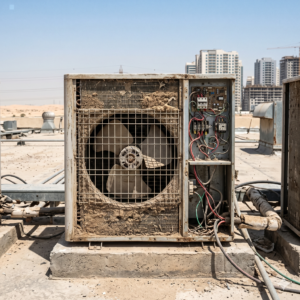
- The outdoor unit is old or inefficient
- Refrigerant type is outdated (e.g., R22)
- System frequently breaks down
- Energy bills are increasing
Upgrading to a matched system ensures:
- Better efficiency
- Stable performance
- Lower long-term costs
Hidden Risks of Partial Replacement
Replacing only the indoor unit can introduce hidden risks:
- Mismatch between components
- Reduced system lifespan
- Higher maintenance needs
These risks often outweigh the short-term savings.
How to Decide the Best Option
Before making a decision, consider:
- Age of your current system
- Type of refrigerant used
- Frequency of repairs
- Overall cooling performance
This helps you choose between cleaning, partial replacement, or full system upgrade.
Long-Term Cost Thinking
The cheapest option today is not always the most cost-effective in the long run.
A proper decision should balance:
- Initial cost
- Energy efficiency
- Maintenance frequency
- System lifespan
If you are currently considering replacing your indoor unit, it is important to evaluate the entire system rather than focusing on one component. Compatibility issues, hidden performance problems, and installation risks can affect both comfort and long-term cost. In many cases, problems that seem like unit failure are actually caused by airflow restriction, dirt buildup, or system imbalance. Addressing these issues early helps avoid unnecessary replacement and prevents further damage. If you need clarity about your AC condition or the most practical solution, you can use the WhatsApp or Call button on the top right to connect with the Bio On Air team and understand the best next step for your system.
Conclusion
Choosing the right indoor unit for split ac requires more than just matching size and price. By understanding compatibility rules, system types, and long-term cost implications, you can make a decision that ensures efficient cooling, better air quality, and reliable performance in UAE conditions.