




If your indoor AC unit is leaking water, you need to act quickly. In UAE homes, where AC runs almost non-stop, water leaks can escalate fast—damaging ceilings, walls, and even electrical systems. This guide starts with immediate steps to stop damage, then explains real causes, diagnostics, and what to do next.
Table of Contents
ToggleImmediate Steps to Stop Water Damage
Before trying to understand the cause, your priority is to control the situation. Water leakage from an indoor AC unit can spread quickly, especially in apartments and villas with gypsum ceilings.
Follow these steps immediately:
- Turn off the AC unit – This stops further condensation buildup
- Switch off power from the breaker if needed – Important if water is near electrical parts
- Place a bucket or towel under the leak – Prevent floor and furniture damage
- Dry the surrounding area – Reduces risk of mold and ceiling damage
- Check if water is spreading inside ceiling – Especially critical in ducted systems
These steps are not a fix—they are damage control. Once stabilized, you can start identifying the cause.
Why Indoor AC Units Leak Water in UAE Homes
In many countries, AC leaks are occasional. In the UAE, they are extremely common due to unique environmental conditions.
The most important factor is continuous cooling. AC systems often run for 12–24 hours daily, creating constant condensation inside the unit.
Combine this with:
- Fine desert dust entering the system
- High humidity from coastal air
- Limited ventilation in sealed apartments
This creates a perfect environment for drain line sludge buildup. Over time, dust mixes with moisture and forms a thick, sticky blockage inside the condensate drain line.
Once blocked, water has nowhere to go—and starts leaking from the indoor unit.
Most Common Cause Drain Line Blockage
In UAE properties, more than 70% of indoor AC leaks are caused by clogged drain lines.
Here is what happens inside your system:
- AC cools air → produces condensation
- Water flows into drain pan
- Drain line carries water out
- Dust + moisture forms sludge inside pipe
- Pipe gets blocked → water overflows
This is not a mechanical failure—it is a maintenance issue that builds slowly over time.
How to Identify the Type of Leak
Not all AC leaks are the same. Understanding the type helps you decide urgency and next steps.
1. Drainage Blockage Leak
- Water dripping steadily from unit
- No ice visible
- AC still cooling normally
- Leak increases over time
This is the most common scenario in UAE homes.
2. Ice-Related Leak
- Ice visible on coils or pipes
- Water leak occurs after AC turns off
- Weak airflow or reduced cooling
This happens when airflow is restricted or refrigerant levels are incorrect.
3. Sudden Heavy Leak
- Large volume of water at once
- Often from ceiling in ducted systems
- May indicate drain disconnection or pump failure
This type requires immediate attention.
UAE System Types and Leak Differences
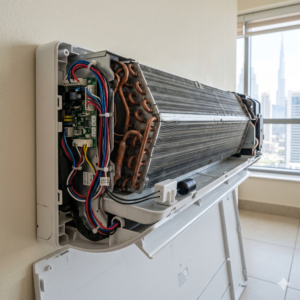
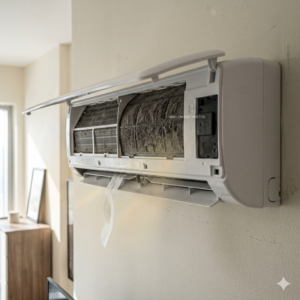
Wall-Mounted Split Units
Common in apartments and small villas. These units usually leak due to:
- Blocked drain pipe
- Dirty filters causing ice formation
- Improper installation angle
Leaks are usually visible and localized.
Ducted AC Systems
Hidden inside ceilings, these systems are more complex.
Leaks often appear as:
- Water stains on ceiling
- Bulging gypsum boards
- Dripping from light fixtures
Because ducts are hidden, the problem may go unnoticed until damage becomes severe.
FCU Systems with Condensate Pump
Used in many modern buildings.
Leaks occur when:
- Pump fails
- Drain line blocked before pump
- Float switch malfunctions
These systems require more technical diagnosis.
Visual Warning Signs You Should Not Ignore
- Water stains on walls or ceilings
- Paint peeling near AC unit
- Musty smell when AC runs
- Unusual dripping sound inside ceiling
These signs often appear before major leaks happen.
Why Ice Formation Happens
Ice formation is often misunderstood. It is not always related to refrigerant.
Common causes include:
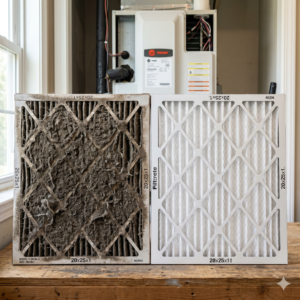
- Dirty air filters blocking airflow
- Blocked return air vents
- Low airflow due to fan issues
When airflow drops, coils become too cold and freeze. When ice melts, it creates water overflow.
Important Warning About Refrigerant Top-Ups
Many people assume leaks are caused by low gas. This leads to unnecessary refrigerant top-ups.
This is often incorrect.
If your AC is leaking water due to drainage blockage, adding refrigerant will not fix the problem.
In fact, it can:
- Increase system pressure unnecessarily
- Hide the real issue temporarily
- Lead to more expensive repairs later
Proper diagnosis is always required before any gas refill.
Professional Repair Process
A proper AC leak repair involves more than just clearing water.
Typical professional steps include:
- Inspect drain line and pan
- Flush or vacuum drain blockage
- Check slope and drainage flow
- Inspect coils for ice buildup
- Clean filters and airflow pathways
- Test system after repair
In more complex cases, technicians may also check internal duct conditions or condensate pumps.
If the issue is related to system malfunction, a structured AC repair process ensures the problem is fixed at its source, not just temporarily.
Hidden Risk Ceiling Damage in UAE Homes
One of the most serious risks of AC leaks in the UAE is ceiling damage.
Most buildings use gypsum board ceilings, which are highly sensitive to moisture.
When water accumulates:
- Ceiling absorbs moisture
- Structure weakens
- Bulging or sagging appears
- In severe cases, ceiling can collapse
This is not just cosmetic damage—it can be a safety risk.
When the Situation Is Urgent
Take immediate action if:
- Water is leaking from ceiling
- Leak is increasing rapidly
- Electrical fixtures are affected
- AC stops working suddenly with leak
These situations require professional inspection as soon as possible.
When It Is Manageable
You may have short time to act if:
- Leak is small and slow
- No ceiling damage yet
- AC still working normally
However, even small leaks should not be ignored—they often worsen over time.
Prevention Tips for UAE Homes
- Clean AC filters every 2–4 weeks
- Schedule regular maintenance
- Check drainage flow periodically
- Avoid running AC at extremely low temperatures continuously
Preventive care is the most effective way to avoid leaks.
Why This Problem Should Not Be Ignored
An indoor AC unit leaking water is not just a minor inconvenience. It is often a warning sign of internal system imbalance.
If ignored, it can lead to:
- Poor indoor air quality
- Mold growth inside ducts
- Structural damage to ceilings and walls
- Higher electricity consumption
If you are currently experiencing an indoor AC leak, it is important to address it early before it leads to more serious damage. What may seem like a simple drainage issue can gradually affect airflow, air quality, and structural integrity of your property. With proper diagnosis, these issues can be resolved safely and efficiently. If you need clarity on your AC condition, you can use the WhatsApp or Call button on the top right to connect with the Bio On Air team and understand the most suitable next step based on your situation.
Conclusion
An indoor AC unit leaking water is a common issue in UAE homes, but it should never be ignored. By taking immediate action, understanding the root cause, and addressing it properly, you can prevent property damage, maintain air quality, and keep your AC system running efficiently.