




Many people search whether a humidifier can clean air, especially when dealing with dryness, dust, or breathing discomfort indoors. The short answer is simple: a humidifier does not clean air. It only adds moisture. However, understanding what it actually does—and what you really need—can help you improve indoor air quality properly.
Table of Contents
ToggleHumidifier Can Clean Air or Not
A humidifier does not remove dust, allergens, bacteria, or pollutants from the air. Its only function is to increase humidity by adding moisture into the air.
This means:
- It does not filter particles
- It does not kill bacteria or mold
- It does not remove odors
What it can do is change how the air feels. In some cases, it may indirectly make the air feel more comfortable—but this is not the same as cleaning the air.
Humidifier vs Air Purifier Understanding the Difference
To avoid confusion, it is important to understand the core difference between these two devices.
| Feature | Humidifier | Air Purifier |
|---|---|---|
| Main Function | Adds moisture | Removes particles |
| Dust Removal | No | Yes |
| Allergen Reduction | No | Yes |
| Air Quality Improvement | Indirect | Direct |
If your main goal is to remove dust or improve air quality, a humidifier alone is not enough.
Why People Think Humidifier Can Clean Air
This belief often comes from a physical effect called the “dust drop effect.”
When humidity increases:
- Airborne particles become heavier
- Dust settles faster on surfaces
- The air feels less “dry and dusty”
This can create the impression that the air is cleaner. In reality, the particles are still present—they are just no longer floating in the air.
Without proper cleaning, those particles remain in your indoor environment.
Dry AC Air vs Dirty Air What You Are Actually Experiencing
In the UAE, most indoor environments rely heavily on air conditioning. This creates two different types of discomfort that people often confuse.
Dry Air Symptoms
- Dry throat or cough
- Skin dryness
- Eye irritation
- Static electricity
Dirty Air Symptoms
- Sneezing or allergies
- Dust buildup on furniture
- Musty or unpleasant smell
- Breathing discomfort
A humidifier helps with dry air symptoms, but it does not solve dirty air problems.
Why UAE Homes Experience Both Dryness and Dust
The UAE indoor environment creates a unique combination of conditions.
- AC runs continuously
- Indoor air becomes dry over time
- Outdoor dust enters through ventilation and movement
- Limited fresh air exchange keeps particles inside
This means you may feel dryness and poor air quality at the same time.
Using a humidifier alone will not solve both issues.
Optimal Indoor Humidity Level for Health
Maintaining proper humidity is important for comfort and safety.
Recommended range:
- 40% – 60% humidity
Below 40%:
- Air becomes too dry
- Respiratory discomfort increases
Above 60%:
- Mold growth risk increases
- Bacteria thrive in moist environments
This balance is especially important in the UAE, where indoor and outdoor conditions differ significantly.
Mold Risk When Humidity Becomes Too High
Adding moisture without control can create new problems.
If humidity exceeds safe levels:
- Mold can grow on walls, ceilings, and AC ducts
- Condensation forms on cold surfaces
- Air quality may worsen instead of improving
This is a common issue when humidifiers are used incorrectly in air-conditioned environments.
White Dust Problem from Humidifiers
Another issue often overlooked is white dust.
This occurs when:
- Tap water contains minerals
- Humidifier disperses those minerals into the air
Result:
- Fine white powder on furniture
- Particles inhaled into lungs
This is not air cleaning—it can actually add more particles into the air.
How to Prevent White Dust from Humidifiers
- Use distilled or demineralized water
- Choose humidifiers with built-in filters
- Clean the device regularly
This reduces mineral release into the air.
When You Should Use a Humidifier
A humidifier is useful when dealing with dry air conditions.
- Dry throat or nasal irritation
- Dry skin due to AC
- Sleeping discomfort from dry air
In these cases, adding moisture improves comfort.
When You Should Use an Air Purifier
An air purifier is necessary when dealing with air contamination.
- Dust and allergens
- Pet dander
- Indoor pollutants
- Smell or odor issues
Purifiers actively remove particles from the air.
When You Need Both Humidifier and Air Purifier
In many UAE homes, both devices may be needed.
- Humidifier for dryness
- Air purifier for dust and pollutants
Using both together addresses both comfort and air quality.
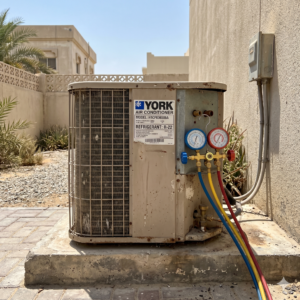
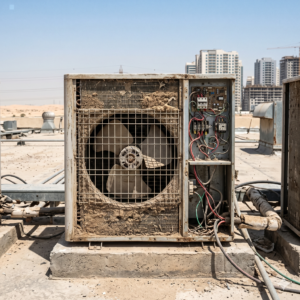
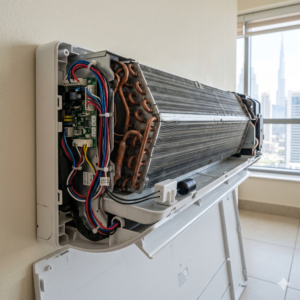
The Hidden Role of Your AC System
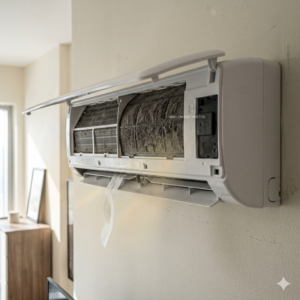
Many indoor air issues actually come from the AC system itself.
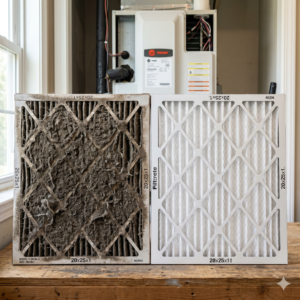
- Dust buildup inside ducts
- Dirty filters reducing airflow
- Circulation of contaminants
This is why improving indoor air quality is not just about adding devices, but also maintaining the AC system.
Why Air Feels Worse Even After Using a Humidifier
If your air still feels uncomfortable, the problem may not be humidity.
Possible causes:
- Dirty AC ducts
- Poor ventilation
- High indoor dust levels
In such cases, addressing the source is more effective than adding moisture.
Long Term Approach to Indoor Air Quality
Improving indoor air requires a combined approach.
- Maintain AC system regularly
- Control humidity levels properly
- Use the right devices for the right problem
Relying on a single solution often leads to incomplete results.
If you are experiencing ongoing air quality issues or discomfort indoors, it is important to understand the root cause rather than relying on quick solutions. Problems related to dust buildup, airflow restriction, or hidden contamination inside the AC system can affect both comfort and health over time. Addressing these issues early helps prevent more serious air quality problems, increased energy consumption, and system strain. If you need clarity about your indoor air condition, you can use the WhatsApp or Call button on the top right to connect with the Bio On Air team and understand the most suitable next step based on your environment.
Conclusion
A humidifier can not clean air—it only adds moisture. While it can improve comfort in dry environments, it does not remove dust or pollutants. Understanding when to use a humidifier, an air purifier, or both is essential for maintaining a healthy indoor environment, especially in UAE conditions where AC usage plays a major role.