




If you are searching for how to stop ac vibration, it usually means something in your AC system is no longer stable. In UAE conditions, vibration is not just noise—it often signals mounting failure, airflow imbalance, or internal mechanical stress. This guide explains how to identify the exact source and fix it properly.
Table of Contents
ToggleWhy AC Vibration Should Not Be Ignored
AC vibration is not a minor issue. What starts as a small shaking or humming sound can quickly turn into structural damage, refrigerant leaks, or compressor failure.
In UAE environments, vibration problems tend to worsen faster due to:
- Extreme outdoor temperatures
- UV exposure degrading rubber components
- Continuous AC operation under heavy load
- Dust and sand affecting moving parts
This means early detection is critical. The key is not just to “reduce vibration,” but to identify where it is coming from.
Step 1: Identify Where the Vibration Is Coming From
Before attempting any fix, you need to locate the source. AC vibration can originate from different parts of the system:
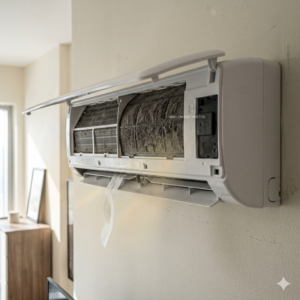
- Indoor unit (wall-mounted or ceiling cassette)
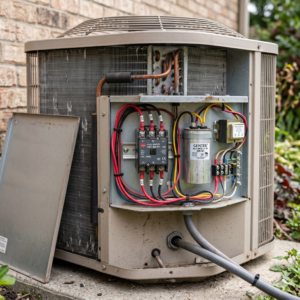
- Outdoor condenser unit
- Refrigerant piping
- Structural mounting surfaces
Each source has different causes and solutions. Fixing the wrong component will not solve the issue.
Indoor Unit Vibration Problems
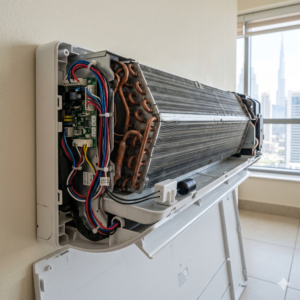
1. Loose or Failed Wall Bracket
Indoor units are typically mounted on brackets. Over time, screws can loosen or anchors can weaken.
Symptoms:
- Rattling sound from wall
- Unit slightly shaking when running
- Noise increases with fan speed
Solution:
- Tighten mounting screws
- Replace weak wall plugs
- Reinstall bracket if alignment is off
If the wall itself is weak (common in gypsum partitions), reinforcement may be required.
2. Improper Installation Alignment
If the indoor unit is not level, internal components can vibrate unevenly.
Solution:
- Re-level the unit using a spirit level
- Adjust mounting plate alignment
Outdoor Unit Vibration Problems
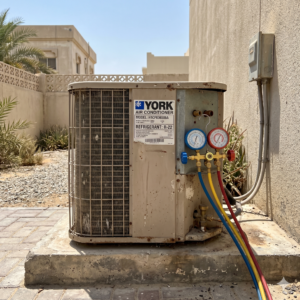
1. Worn or Damaged Rubber Isolation Pads
Outdoor units sit on rubber pads designed to absorb vibration. In UAE heat, these pads degrade quickly.
Symptoms:
- Hard vibration transferred to floor or wall
- Noise increases during peak heat hours
Cause:
- UV exposure breaks down rubber
- Heat causes hardening and cracking
Solution:
- Replace rubber pads with UV-resistant types
- Use higher-grade anti-vibration mounts
2. Failed Inertia Base or Spring Isolators
For larger systems, especially VRF or commercial setups, units may sit on inertia bases or spring isolators.
Symptoms:
- Heavy low-frequency vibration
- Vibration spreading through building structure
Solution:
- Inspect and replace worn springs
- Rebalance inertia base
This type of issue usually requires professional inspection.
Fan Blade Imbalance and Airflow Issues
Dust and Sand Buildup
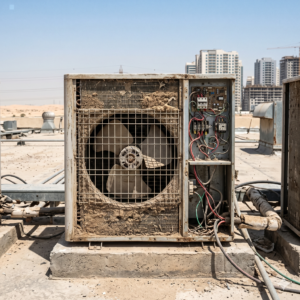
In UAE conditions, dust accumulation is a major cause of imbalance.
Symptoms:
- Vibration increases gradually over time
- Uneven airflow
Cause:
- Sand sticks to fan blades
- Weight distribution becomes uneven
Solution:
- Clean fan blades thoroughly
- Perform deep cleaning if buildup is heavy
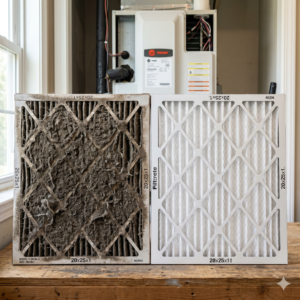
This is where proper AC deep cleaning becomes important, as internal dirt can directly affect balance and performance.
Compressor-Related Vibration
Internal Suspension Failure
The compressor is mounted internally with springs. If these fail, vibration increases significantly.
Symptoms:
- Strong vibration from outdoor unit
- Loud humming or knocking sound
Solution:
- Compressor replacement (not repairable internally)
Hard Starting Issues
Electrical problems can cause the compressor to struggle when starting.
Symptoms:
- Sudden vibration during startup
- Clicking or buzzing sound
Solution:
- Check capacitor and electrical components
- Repair or replace faulty parts
Refrigerant Piping Vibration (Often Overlooked)
Poor Pipe Support
Refrigerant pipes should be properly secured. Loose pipes can vibrate against walls or ceilings.
Symptoms:
- Tapping or knocking sound
- Vibration along walls or ceiling
Solution:
- Add proper clamps and supports
- Secure pipes at regular intervals
Pipe Resonance
Sometimes pipes vibrate due to resonance caused by refrigerant flow.
Solution:
- Add insulation around pipes
- Adjust pipe routing
Large System Considerations (VRF and Chiller Systems)
In larger installations, vibration can travel through structure.
Common issues:
- Vibration transmitted through piping network
- Improper mounting on building structure
- Inadequate isolation systems
Solutions involve:
- Advanced vibration isolators
- Flexible pipe connectors
- Professional system balancing
Repair vs Replacement Decision
| Issue | Fixable | Replacement Needed |
|---|---|---|
| Loose bracket | Yes | No |
| Rubber pad wear | Yes | No |
| Fan imbalance | Yes | Sometimes |
| Compressor failure | No | Yes |
| Spring isolator failure | Sometimes | Yes |
When DIY Fixes Are Not Enough
Some vibration issues can be resolved with simple adjustments. However, others require proper inspection and tools.
You should not attempt DIY if:
- Vibration is strong or worsening
- Noise comes from compressor
- System shuts down unexpectedly
- You suspect internal mechanical failure
How to Prevent AC Vibration in the Future
- Regular cleaning to prevent imbalance
- Periodic inspection of mounts and brackets
- Replace rubber components before they harden
- Ensure proper installation alignment
Prevention is always more cost-effective than repair.
Long-Term Impact of Ignoring Vibration
Ignoring AC vibration can lead to:
- Loose electrical connections
- Refrigerant leaks
- Structural damage to mounting surfaces
- Complete compressor failure
These issues are significantly more expensive than early fixes.
If your AC is vibrating, it is important not to ignore it. What may seem like a small noise can indicate deeper issues affecting system stability, energy efficiency, and indoor comfort. Over time, vibration can damage internal components, increase electricity consumption, and reduce air quality due to airflow imbalance. Addressing the issue early helps prevent more serious failures. If you are unsure about the source of vibration, you can use the WhatsApp or Call button on the top right to connect with the Bio On Air team and better understand the condition of your system and the most appropriate next step.
Conclusion
Understanding how to stop ac vibration starts with identifying the exact source. Whether it is mounting issues, airflow imbalance, or internal mechanical failure, each cause requires a different solution. Addressing vibration early helps maintain system performance, prevent costly repairs, and ensure a stable and comfortable indoor environment.