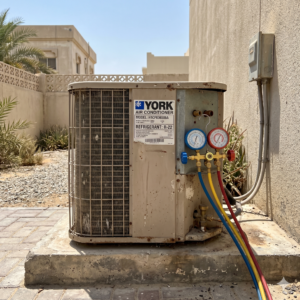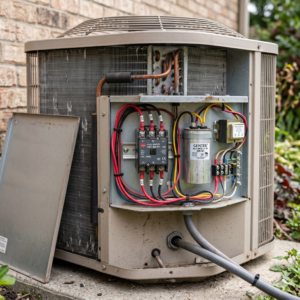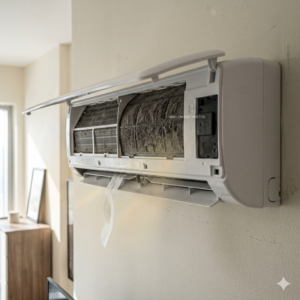





Knowing how to clean ac outdoor unit properly is essential in the UAE, where dust, sand, and extreme heat constantly affect AC performance. Cleaning is not just about removing dirt—it is about protecting the condenser, improving cooling efficiency, and preventing long-term damage in harsh desert conditions.
Table of Contents
ToggleWhy Cleaning AC Outdoor Units Is Critical in UAE Conditions
In the UAE, outdoor AC units (condensers) operate in one of the harshest environments for HVAC systems. Unlike milder climates, AC units here are exposed to:
- Fine desert sand that sticks to coils
- High temperatures exceeding 40°C
- Continuous operation for most of the year
- Humidity near coastal areas like Dubai and Sharjah
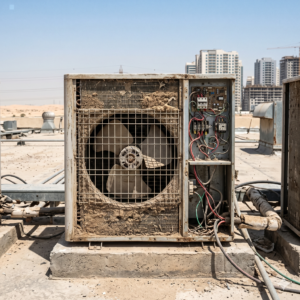
This combination causes dust to mix with moisture, forming a sticky layer on condenser coils. Over time, this layer blocks heat transfer, forcing your AC system to work harder.
The result is not just reduced cooling—it directly impacts your electricity bill and system lifespan.
Villa vs High-Rise AC Outdoor Units What’s Different
Cleaning approach depends heavily on where your outdoor unit is located.
Villa Setup
- Units are usually placed on the ground or rooftop
- Higher exposure to sand storms and dust accumulation
- Easier access for full cleaning
High-Rise Balcony Setup
- Units are often mounted in tight spaces
- Limited airflow increases heat buildup
- Cleaning must be more controlled due to water drainage concerns
In high-rise setups, improper cleaning can cause water to drip into neighboring areas or damage nearby surfaces.
Why You Must Never Start With Water
One of the biggest mistakes when cleaning AC outdoor units in the UAE is using water first.
Desert dust is extremely fine. When mixed with water, it forms mud that sticks deeper into condenser fins. This makes cleaning more difficult and can permanently block airflow.
That is why dry cleaning must always come first.
- Dry dust = removable
- Wet dust = sticky and harder to clean
This simple rule determines whether your cleaning is effective or damaging.
Why Pressure Washers Can Damage Your AC
Many people assume high-pressure water will clean faster. In reality, it often causes damage.
AC condenser fins are made of thin aluminum. High pressure can:
- Bend or flatten fins
- Block airflow permanently
- Reduce heat exchange efficiency
Once fins are bent, airflow is restricted, and cooling performance drops significantly.
This is why low-pressure rinsing is always recommended instead of forceful washing.
Step-by-Step Guide How to Clean AC Outdoor Unit Safely
Step 1 Turn Off Power Completely
Before cleaning, always shut down the AC system from the isolator switch. This prevents electrical risks and protects internal components.
- Switch off AC from thermostat
- Turn off isolator near the outdoor unit
Never clean while the unit is running.
Step 2 Remove Loose Debris
Start by clearing visible debris around the unit:
- Leaves
- Plastic pieces
- Sand accumulation
This ensures proper airflow around the unit.
Step 3 Dry Brushing and Vacuuming
This is the most important step in UAE conditions.
Use a soft brush or vacuum cleaner to remove dry dust from condenser fins.
- Brush gently in vertical direction
- Avoid bending fins
- Remove as much dust as possible before using water
This step prevents mud formation during rinsing.
Step 4 Apply Foaming Coil Cleaner
After dry cleaning, apply a specialized coil cleaner.
- Use AC-safe foaming cleaner
- Spray evenly across coils
- Allow it to sit for several minutes
The foam breaks down dirt and grease trapped inside the fins.
Step 5 Low-Pressure Rinse
Use gentle water flow to rinse the cleaner.
- Use hose with low pressure
- Spray from top to bottom
- Avoid direct force on fins
This removes loosened dirt without damaging the coil structure.
Step 6 Clear Drainage Areas
Ensure water can flow out properly:
- Check drainage holes
- Remove blockages
- Ensure no water pooling inside unit
Poor drainage can lead to corrosion and mold buildup.
Safety Boundaries You Should Never Cross
While cleaning is helpful, certain areas should not be touched unless you are trained.
- Fan motor and wiring
- Electrical panels
- Capacitors and internal components
These parts are sensitive and can be dangerous if handled incorrectly.
How Clean Condenser Improves Cooling Efficiency
The outdoor unit releases heat from your indoor space. When coils are dirty, heat cannot escape efficiently.
This leads to:
- Longer cooling cycles
- Higher electricity consumption
- Reduced cooling performance
Cleaning restores proper heat exchange, allowing your AC to cool faster and more efficiently.
Impact on Electricity Bills in UAE Heat
In extreme UAE temperatures, even small inefficiencies can significantly increase energy usage.
A dirty condenser can increase energy consumption by:
- 10% to 30% depending on condition
Regular cleaning helps reduce unnecessary load on the system, which directly lowers electricity costs.
How Often Should You Clean Outdoor Units in UAE
Due to dust and sand exposure, outdoor units should be cleaned more frequently than in other regions.
- Light usage: every 3–6 months
- Heavy usage: every 2–3 months
- After sandstorms: immediate inspection recommended
Regular cleaning prevents buildup from reaching damaging levels.
Common Mistakes to Avoid
- Using water before removing dust
- Using high-pressure washers
- Ignoring drainage blockages
- Cleaning only the visible parts
- Skipping regular maintenance
These mistakes reduce effectiveness and may cause long-term damage.
When DIY Cleaning Is Not Enough
There are situations where professional cleaning is required:
- Heavy dirt buildup inside coils
- Reduced cooling despite cleaning
- Strange noises or overheating
- Electrical or internal component issues
In such cases, deeper inspection and cleaning are necessary. You can learn more about professional AC deep cleaning to understand how full system cleaning is handled.
Long-Term Benefits of Proper Outdoor Unit Cleaning
- Improved cooling efficiency
- Lower electricity bills
- Reduced strain on compressor
- Extended AC lifespan
Cleaning is not just maintenance—it is protection for your entire AC system.
If your outdoor unit has not been cleaned for a long time or you are noticing reduced cooling performance, it is important not to delay. Dust buildup, airflow blockage, and hidden contamination can gradually reduce efficiency, increase electricity usage, and lead to more serious system damage. Addressing these issues early helps maintain performance and avoid costly repairs. If you need clarity about your AC condition or proper cleaning approach, you can use the WhatsApp or Call button on the top right to connect with the Bio On Air team and understand the most suitable next step.
Conclusion
Learning how to clean ac outdoor unit correctly is essential in UAE conditions. By following proper dry cleaning, safe rinsing, and avoiding common mistakes, you can improve cooling efficiency, reduce energy costs, and extend the life of your AC system.