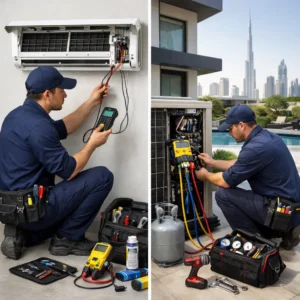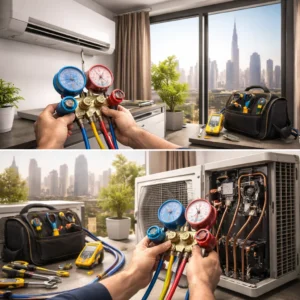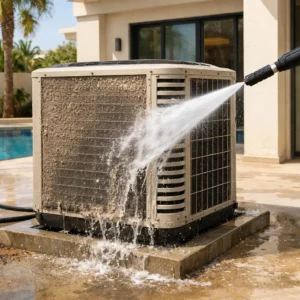





Searching for gas leak detection in an AC context usually means something feels urgent and uncertain. Your AC may be blowing lukewarm air, ice is forming on the pipes, you hear a faint hissing sound, or cooling keeps dropping even after a recent service. In the UAE climate, these signs raise immediate concerns about comfort, safety, and cost, which is why this guide focuses on clear diagnosis, realistic pricing, professional methods, and practical decisions you can make right now.
Table of Contents
ToggleWhat Gas Leak Detection Means in an AC System
In air conditioning systems, “gas” usually refers to refrigerant. This refrigerant circulates inside a closed loop, absorbing heat from indoor air and releasing it outside. Under normal conditions, refrigerant does not get used up or disappear.
If refrigerant levels drop, it almost always means there is a leak somewhere in the system. Gas leak detection is the process of identifying whether a leak exists, locating where it is happening, and determining how serious it is.
For most users, the main concern is simple: is the problem really a leak, how much will it cost, and can it be fixed safely without turning into a bigger expense later?
Quick Checklist: Are Your AC Problems Likely Caused by a Gas Leak?
Before calling for service, many people want reassurance that their symptoms point to a refrigerant leak and not something else. While only professional inspection can confirm it, the checklist below helps you understand the likelihood.
- Weak or lukewarm air: The AC runs, but the air never feels properly cold.
- Ice buildup: Ice forms on the indoor coil, copper pipes, or outdoor unit.
- Hissing or bubbling sound: A faint noise near the indoor or outdoor unit.
- Longer running time: The AC works harder but cools less.
- Rising electricity bills: Higher energy use without improved cooling.
These symptoms strongly suggest a refrigerant-related issue, but they do not automatically mean “just add gas.” In many cases, airflow restriction, dirty coils, or control issues can create similar symptoms. That is why proper gas leak detection is critical before any refill or repair.
Why You Should Never Skip Gas Leak Detection
A common mistake is refilling refrigerant without finding the leak. This may restore cooling temporarily, but it rarely lasts.
Skipping leak detection can lead to:
- Repeated loss of cooling within weeks or months
- Higher total cost due to multiple refills
- Compressor strain and early failure
- Increased energy consumption
Proper detection protects both your system and your budget. It ensures that any refill or repair actually solves the underlying problem rather than masking it.
How Professional Gas Leak Detection Is Performed
Many users want confirmation that technicians are using modern, reliable methods. Professional HVAC teams typically use one or more of the following techniques.
Electronic Leak Detection
Electronic detectors, often called “sniffers,” sense refrigerant molecules in the air. They are fast, accurate, and suitable for most residential and commercial systems.
This method is ideal when:
- The leak is small and not visually obvious
- The system has complex piping
- Quick confirmation is needed
Dye Injection Testing
A UV dye is added to the refrigerant circuit. If there is a leak, the dye escapes and becomes visible under ultraviolet light.
Dye testing is useful when:
- The leak is intermittent
- Multiple suspected areas exist
- Long-term confirmation is required
Pressure Testing and Visual Inspection
In some cases, technicians combine pressure testing with visual checks of joints, valves, and coils. This method is often used after electronic detection to confirm the exact repair point.
Professional AC gas refill and leak repair services usually involve a combination of these techniques to ensure accuracy.
Is a Refrigerant Leak Dangerous to Your Family or Pets?
This is a common concern, especially for households with children or pets.
Most modern refrigerants used in residential AC systems are not toxic in small amounts. However, a leak is still not something to ignore.
Potential risks include:
- Reduced oxygen levels in poorly ventilated spaces (rare but possible)
- Irritation if refrigerant contacts skin or eyes during active leakage
- Environmental harm from continued leakage
The larger concern is not immediate poisoning, but system damage and prolonged exposure to inefficient cooling that affects comfort and indoor air quality.
Pricing Expectations for Gas Leak Detection and Repair
Cost transparency is one of the biggest pain points when searching for gas leak detection. Users want to know what they are paying for before committing.
In general, pricing is divided into two parts: detection (the inspection and diagnosis) and repair or recharge.
Gas Leak Detection and Inspection
The initial service usually includes a site visit, system inspection, and use of detection equipment. This is often part of a professional repair call-out rather than a separate charge.
Repair and Refrigerant Recharge
Based on common AC scenarios, typical costs include:
- Refrigerant refill (R22, 1.0–1.5 ton): AED 130–270
- Refrigerant refill (R410A or R32, 1.5–3.0 ton): AED 230–450
- Leak repair with full gas recharge: AED 450–810
- Emergency or after-hours refill: AED 550–1,100
Actual costs depend on system size, refrigerant type, and the location of the leak. Prices may change due to spare part availability, but a professional team should always explain the scope and confirm costs before starting work.
For the most current pricing reference, you can check our pricing page.
Emergency and 24/7 Gas Leak Detection Services
Many refrigerant leaks become urgent because cooling fails during peak heat hours or at night. This is why users often search for emergency or 24/7 service.
A reliable HVAC provider should clearly communicate:
- Availability for after-hours calls
- Emergency response scope
- Any additional call-out considerations
Quick response matters, but accuracy matters more. Fast detection without proper diagnosis can still lead to repeat failures.
Repair vs. Replace: Is Fixing a Leak Always Worth It?
This is one of the most important questions users ask, especially for older systems.
When Repair Makes Sense
- The unit is relatively new
- The leak is accessible and localized
- The refrigerant type is still supported
In these cases, proper leak repair and recharge can restore performance reliably.
When Replacement Should Be Considered
- The system uses R-22 refrigerant
- Leaks are recurring or widespread
- Major components like the compressor are affected
R-22 systems are especially important to evaluate carefully. The refrigerant is being phased out, making refills more expensive over time. In such cases, continuing to repair leaks may cost more than upgrading to a newer, efficient system.
Professional guidance from an experienced AC repair service helps you make this decision based on facts, not pressure.
Common Myths About Gas Leaks in AC Systems
“Gas runs out naturally.”
Refrigerant does not get consumed. Loss always indicates a leak.
“Just topping up is enough.”
Without leak detection, refills are temporary solutions.
“Leaks always mean replacement.”
Many leaks are repairable if detected early.
How to Reduce the Risk of Future Refrigerant Leaks
While some leaks happen due to age or manufacturing defects, many are preventable.
- Schedule regular inspections before peak summer
- Do not ignore early cooling performance changes
- Keep coils and airflow paths clean
- Avoid repeated refills without proper diagnosis
Preventive care reduces system stress and helps catch small issues before they become expensive repairs.
When Gas Leak Detection Should Be Handled Properly
Gas leaks rarely fix themselves. If ignored, they can lead to poor cooling, unhealthy indoor conditions, higher electricity bills, and permanent damage to expensive components. Bio On Air helps address these risks through accurate gas leak detection, safe repair procedures, and clear explanations so you understand your options. Acting early is a preventive step, not a reaction. If you need immediate help or want professional confirmation, you can use the WhatsApp or Call button at the top right of this page to reach our team.
Conclusion
Searching for gas leak detection is usually driven by urgency, confusion, and the fear of making the wrong decision. Understanding the symptoms, knowing how leaks are properly detected, and having clear cost expectations gives you control during a stressful moment.
Professional gas leak detection is not just about finding a leak. It is about protecting your AC system, avoiding repeated costs, and ensuring safe, reliable cooling. Whether the solution is repair or replacement, making the decision with accurate information and expert guidance helps you avoid unnecessary expense and restore comfort with confidence.