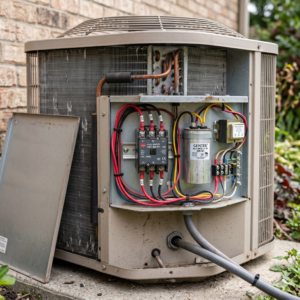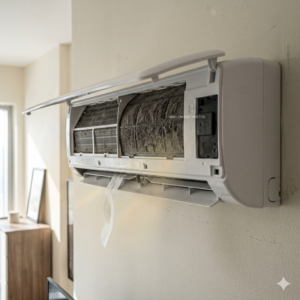





The expansion valve on ac unit is one of the most important but least understood components in your AC system. In the UAE, where AC runs almost non-stop, this small part plays a critical role in cooling performance. In this guide, we explain what it does, why repairs can be expensive, common failure signs, and how to evaluate technician recommendations properly.
Table of Contents
ToggleWhat an Expansion Valve Does in Simple Terms
To understand the expansion valve, imagine your AC system as a controlled cooling cycle. Refrigerant flows through different components, changing pressure and temperature to remove heat from your indoor air.
The expansion valve acts as a gatekeeper between the high-pressure and low-pressure sides of the system.
In simple terms, it does three key things:
- Controls how much refrigerant enters the evaporator coil
- Reduces pressure so the refrigerant can cool properly
- Ensures efficient heat absorption from indoor air
If the valve does not regulate refrigerant correctly, the entire cooling process becomes unstable.
Why Expansion Valve Problems Are Common in UAE
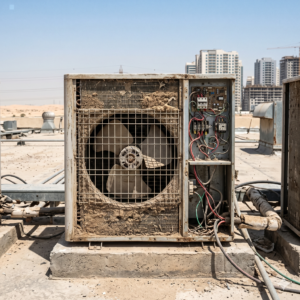
In the UAE, AC systems operate under extreme conditions. Continuous usage, dust, and temperature differences create stress on internal components.
This leads to:
- Blockages inside the valve due to debris
- Wear and tear from constant operation
- Moisture contamination affecting internal parts
Unlike occasional-use systems, AC units in Dubai often run for long hours daily, making components like the expansion valve more prone to failure over time.
Types of Expansion Devices in AC Systems
Not all AC systems use the same type of expansion control. Understanding the difference helps you better evaluate repair recommendations.
1. Capillary Tube (Basic Systems)
This is a simple, fixed tube that restricts refrigerant flow.
- Low cost
- No adjustment capability
- Common in smaller or older systems
Because it cannot adjust flow, performance depends heavily on correct refrigerant charge.
2. Thermostatic Expansion Valve (TXV)
The TXV is the most common in modern residential systems.
- Automatically adjusts refrigerant flow
- Improves efficiency and stability
- Responds to temperature changes
This is why TXV-related repairs are often more complex and expensive.
3. Electronic Expansion Valve (EEV)
Used in advanced or commercial systems.
- Highly precise control
- Integrated with system electronics
- Requires specialized diagnostics
EEV systems are more efficient but also more expensive to repair.
Why Expansion Valve Repair Is Often Expensive
Many people are surprised when technicians quote a high price for expansion valve replacement. The cost is not just for the part—it is for the entire process.
Typical price range in UAE:
- Capillary tube replacement: AED 300 – 700
- TXV replacement: AED 800 – 1,800
- EEV replacement: AED 1,500 – 3,500+
Note: These are estimated ranges slightly below typical market pricing. Actual cost may vary depending on system type, accessibility, and refrigerant condition.
The reason for high cost is the labor-intensive process required.
Full Expansion Valve Replacement Process
Replacing an expansion valve is not a simple part swap. It involves multiple technical steps:
1. Refrigerant Recovery
The technician must safely remove existing refrigerant from the system.
2. Access and Disassembly
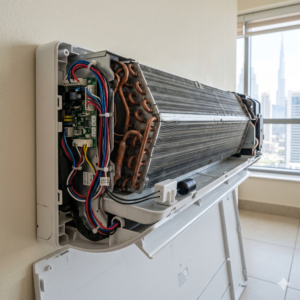
The evaporator section is opened to access the valve, which is often hidden inside the unit.
3. Brazing Removal and Installation
The old valve is removed using heat, and the new valve is installed using brazing techniques.
4. Vacuum Process
The system is vacuumed to remove air and moisture.
5. Refrigerant Recharge
New refrigerant is added according to system specifications. In some cases, AC gas refill procedures are required as part of the process.
6. Testing and Calibration
The system is tested to ensure proper operation and correct refrigerant flow.
Each of these steps requires time, skill, and specialized tools, which explains the labor cost.
Common Symptoms of Expansion Valve Failure
1. Frozen Evaporator Coil
If the valve allows too little refrigerant, the coil can freeze due to low pressure.
2. Warm Air from AC
If refrigerant flow is restricted, cooling performance drops even if the system is running.
3. Compressor Short Cycling
The system may turn on and off frequently due to unstable pressure conditions.
4. Inconsistent Cooling
Some rooms may feel colder while others remain warm.
How to Distinguish Valve Issues from Refrigerant Problems
This is where many misdiagnoses happen.
Similar symptoms can occur with:
- Low refrigerant (leak)
- Overcharged system
- Dirty coils or airflow blockage
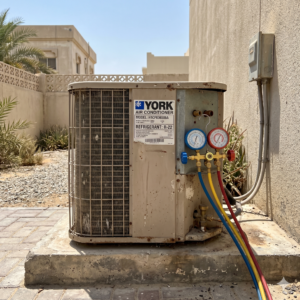
Proper diagnosis requires:
- Pressure readings
- Temperature measurement
- System performance analysis
This is why proper AC repair diagnosis is essential before replacing expensive components.
Why Misdiagnosis Happens Often
Expansion valve issues are sometimes wrongly diagnosed because symptoms overlap with other problems.
Common reasons include:
- Technician skipping full inspection
- Assuming based on surface symptoms
- Lack of proper testing tools
This can lead to unnecessary replacement costs.
How to Verify a Technician’s Quote
Before approving an expensive repair, ask these questions:
- Was pressure testing done?
- Is there proof of valve malfunction?
- Are there alternative causes ruled out?
- What is included in the replacement process?
A professional technician should be able to explain clearly.
When Replacement Is Actually Necessary
Expansion valve replacement is justified when:
- Internal blockage cannot be cleared
- Valve is stuck open or closed
- System performance is unstable despite correct refrigerant level
Otherwise, cleaning or adjustment may solve the issue.
Preventing Expansion Valve Problems
Most valve issues are linked to system contamination or poor maintenance.
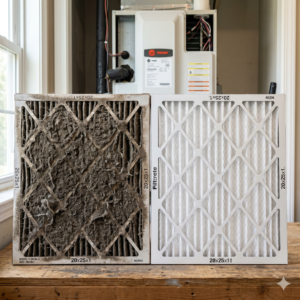
- Regular filter cleaning
- Periodic AC servicing
- Proper refrigerant handling
- Avoiding moisture entry into system
These steps reduce the risk of valve failure.
Why Labor Cost Is High in UAE
Labor cost is often the largest part of the total price.
This is because:
- AC systems are complex and tightly installed
- Work requires skilled technicians
- Special tools and safety procedures are needed
- Time required can be several hours
Unlike simple repairs, expansion valve replacement is a precision job.
Cost vs Value Perspective
While the repair cost may seem high, ignoring the issue can lead to:
- Compressor damage (much more expensive)
- Increased electricity consumption
- Poor cooling performance
Fixing the issue early is often more cost-effective.
If you are experiencing symptoms like weak cooling, frozen coils, or inconsistent performance, it is important to address them early rather than waiting for the system to fail completely. Issues related to the expansion valve, refrigerant flow, or internal system imbalance can worsen over time, affecting both comfort and efficiency. If you need clarity about your AC condition or want to verify whether a quoted repair is necessary, you can use the WhatsApp or Call button on the top right to connect with the Bio On Air team and understand the most suitable next step.
Conclusion
The expansion valve on ac unit plays a critical role in cooling performance. Understanding how it works, why repairs are costly, and how to verify diagnoses helps you make informed decisions, avoid unnecessary expenses, and maintain a reliable AC system in UAE conditions.