




The energy efficiency ratio ac is one of the most misunderstood metrics when buying or evaluating air conditioning systems in the UAE. Many people rely on advertised numbers without realizing those values may not reflect real performance under extreme heat. In this guide, we explain how EER works, why UAE T3 conditions matter, how to read star labels, and how efficiency directly impacts your DEWA electricity bills.
Table of Contents
ToggleWhat Is Energy Efficiency Ratio AC and How It Is Calculated
The energy efficiency ratio (EER) is a simple formula used to measure how efficiently an air conditioner converts electricity into cooling output.
The formula is:
EER = Cooling Capacity (BTU/h) ÷ Power Input (Watts)
For example:
- An AC producing 12,000 BTU/h
- Using 1,200 watts
Would have:
EER = 10
This means for every watt of electricity, the AC produces 10 units of cooling. The higher the EER, the more efficient the system.
However, this formula alone does not tell the full story—especially in the UAE.
The T1 vs T3 Climate Trap in UAE
This is the most critical concept that many buyers overlook.
What Is T1 Rating
T1 is the standard testing condition used globally, based on an outdoor temperature of around 35°C.
This may work in mild climates—but not in the UAE.
What Is T3 Rating
T3 is the testing condition specifically designed for hot climates like the Middle East. It evaluates AC performance at approximately 46°C.
In Dubai, temperatures often exceed 40°C daily during summer, which means:
- T1 ratings are unrealistic
- T3 ratings reflect actual performance
An AC unit that looks efficient under T1 may lose significant efficiency under T3.
This is why comparing EER without checking the testing condition can lead to wrong decisions.
Why T3 EER Is the Only Relevant Metric in UAE
Under high temperatures, AC systems require more energy to maintain cooling. This reduces efficiency.
For example:
- AC with EER 12 (T1) may drop to EER 8–9 (T3)
- AC with strong T3 design may maintain EER 10–11
This difference directly affects your electricity bill and cooling performance.
In real UAE conditions, T3 EER is what determines:
- Cooling strength during peak heat
- Electricity consumption
- System lifespan under stress
Understanding UAE Star Label (ESMA / MoIAT)
In the UAE, air conditioners are regulated and labeled under standards managed by authorities such as ESMA (now under MoIAT).
The star rating system helps consumers understand efficiency levels.
| Star Rating | EER (Approx T3) | Efficiency Level |
|---|---|---|
| 1 Star | Low EER | Basic efficiency |
| 2 Star | Moderate | Acceptable |
| 3 Star | Good | Balanced performance |
| 4 Star | High | Efficient |
| 5 Star | Very High | Top efficiency |
The key point is that these ratings are based on T3 conditions, making them relevant for UAE users.
Higher star rating = lower electricity consumption.
Real Meaning of EER Numbers in UAE Conditions
To understand EER practically, you need to relate it to power consumption.
Example comparison:
| EER | Efficiency | Impact |
|---|---|---|
| 8 | Low | Higher electricity usage |
| 10 | Moderate | Balanced consumption |
| 12+ | High | Lower electricity bills |
Even a small difference in EER can result in significant cost changes over time.
Efficiency Differences Across AC System Types
Split AC Systems
Most common in apartments. Typically have moderate EER values.
Ducted AC Systems
Used in villas. Slightly lower efficiency due to airflow losses in ducts.
VRF / VRV Systems
Advanced systems with variable flow. More efficient under partial load conditions.
Chillers (Commercial Systems)
Measured differently using kW per ton instead of EER.
| System | Metric | Efficiency Insight |
|---|---|---|
| Split | EER | Simple comparison |
| Ducted | EER | Includes airflow loss |
| VRF/VRV | COP/EER | Variable efficiency |
| Chiller | kW/ton | Lower is better |
Limitations of EER for Inverter AC
EER is a single-point measurement, meaning it only reflects performance at a fixed condition.
Modern inverter AC systems operate dynamically, adjusting power based on cooling demand.
This is where CSPF (Cooling Seasonal Performance Factor) becomes important.
EER vs CSPF
- EER: fixed condition measurement
- CSPF: seasonal efficiency over time
For inverter systems, CSPF provides a more realistic view of actual energy consumption.
How EER Affects Your DEWA Electricity Bill
This is where efficiency becomes financially important.
Let’s compare two AC units:
| Unit | EER | Monthly Cost Impact |
|---|---|---|
| Low Efficiency | 8 | Higher bill |
| High Efficiency | 12 | Lower bill |
Estimated savings:
- 10% to 30% lower electricity consumption
- Higher savings during peak summer usage
In Dubai, where AC runs almost continuously, this difference becomes significant.
Payback Period of High Efficiency AC
High-efficiency units usually cost more upfront. However, they recover cost over time.
Typical payback:
- 1 to 3 years depending on usage
- Faster in villas and high-usage environments
After the payback period, savings continue for the rest of the system lifespan.
Real UAE Scenario Example
Consider a villa using AC for 10–12 hours daily:
- Low EER system → high electricity bill
- High EER system → noticeable reduction
Over a year, the difference can be substantial.
Why Efficiency Alone Is Not Enough
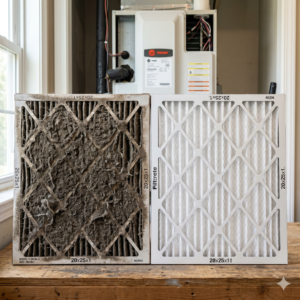
Even the best EER rating will not perform well if the system is poorly maintained.
Common issues that reduce efficiency:
- Dirty filters
- Blocked ducts
- Low refrigerant levels
This is why proper AC maintenance planning is essential to maintain efficiency over time.
How to Choose the Right EER in UAE
When selecting an AC unit:
- Check T3 EER, not T1
- Look at UAE star label
- Consider CSPF for inverter systems
- Match system type with property needs
This ensures realistic performance expectations.
Common Mistakes When Evaluating EER
- Comparing T1 ratings instead of T3
- Ignoring star label information
- Choosing based only on price
- Overlooking installation quality
These mistakes often lead to higher long-term costs.
Long-Term Impact of Choosing the Right Efficiency
Choosing a higher EER system leads to:
- Lower energy bills
- Better cooling performance
- Reduced system stress
- Longer lifespan
If you are planning to install or upgrade your AC system, it is important to evaluate efficiency correctly rather than relying on misleading ratings. Choosing the wrong system or ignoring maintenance can result in higher electricity bills, reduced cooling performance, and unnecessary long-term costs. With the right approach, these issues can be avoided early. If you need clarity about your AC system efficiency or performance, you can use the WhatsApp or Call button on the top right to connect with the Bio On Air team and understand the most suitable next step.
Conclusion
The energy efficiency ratio ac is a powerful metric, but only when understood correctly under UAE T3 conditions. By focusing on realistic ratings, system type, and long-term efficiency, you can reduce costs, improve comfort, and make smarter AC decisions in extreme climates.