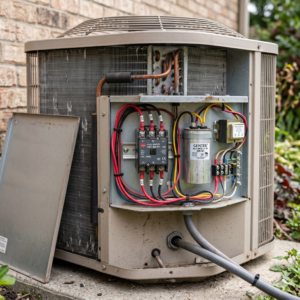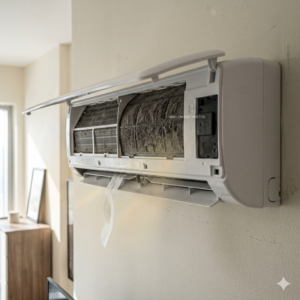





An energy efficiency company in the UAE plays a critical role in reducing energy consumption, lowering operational costs, and improving building performance without requiring heavy upfront investment. This guide explains how ESCO models work, how savings are guaranteed, and what to look for when choosing a reliable partner.
Table of Contents
ToggleWhat Is an Energy Efficiency Company in the UAE Context
An energy efficiency company, often referred to as an ESCO (Energy Service Company), helps buildings reduce energy usage through technical upgrades, system optimization, and long-term performance management. In the UAE, this model has evolved beyond simple consulting. It is now structured around measurable outcomes, financial guarantees, and regulated frameworks.
Unlike traditional contractors, an ESCO does not simply install equipment. Instead, it takes responsibility for delivering actual energy savings over time. This shifts the focus from “installation” to “performance.”
For building owners, this means the success of the project is tied to real results, not just completed work.
The ESCO Business Model Explained
The ESCO model is designed to remove barriers that typically prevent energy upgrades, such as high upfront costs and uncertainty about returns.
In a traditional project:
- The client pays upfront (CAPEX)
- The contractor installs equipment
- The client carries performance risk
In an ESCO model:
- The ESCO designs and implements upgrades
- Energy savings are measured over time
- Payment is linked to achieved savings
This creates alignment between the client and the service provider.
Energy Savings Performance Contracts (ESPC)
The core of the ESCO model is the Energy Savings Performance Contract (ESPC). This is a structured agreement where the ESCO guarantees a certain level of energy savings.
Under ESPC:
- Baseline energy consumption is established
- Energy-saving measures are implemented
- Actual savings are measured and verified
- The ESCO is paid based on achieved performance
This means the client does not pay for promises—they pay for verified results.
Guaranteed Savings vs Shared Savings Models
Guaranteed Savings Model
In this model, the client typically finances the project (or uses third-party financing), but the ESCO guarantees a minimum level of savings.
- If savings meet expectations → normal repayment
- If savings fall short → ESCO compensates the difference
This reduces financial risk for the client.
Shared Savings Model
In this structure, the ESCO funds the project, and the savings are shared between the ESCO and the client over time.
- No upfront investment (zero CAPEX)
- ESCO recovers cost from savings
- Client benefits from reduced energy bills immediately
This model is popular in UAE projects where capital preservation is important.
Zero CAPEX Financing Explained
One of the most attractive aspects of working with an energy efficiency company is zero CAPEX implementation.
Instead of paying upfront:
- The ESCO or a financing partner funds the upgrade
- Repayment comes from energy savings
- Cash flow remains positive from day one
This approach makes energy efficiency accessible even for large-scale facilities.
Who Carries the Risk
A key advantage of ESCO projects is the clear allocation of risk.
| Risk Type | ESCO Responsibility | Client Responsibility |
|---|---|---|
| Performance Risk | ESCO guarantees savings | Minimal |
| Financial Risk | ESCO (shared model) | Client (guaranteed model) |
| Operational Risk | Shared | Shared |
This structure ensures that the ESCO is accountable for delivering measurable outcomes.
UAE Regulatory Framework and Accreditation
The UAE has established strong regulatory support for energy efficiency projects.
RSB Certification
In Dubai, ESCOs must often align with standards set by the Regulatory and Supervisory Bureau (RSB). Certification ensures that companies meet technical and financial requirements.
Etihad ESCO
Etihad ESCO is a government-backed initiative that drives energy efficiency projects across Dubai. It standardizes processes and ensures project quality.
Dubai DSM Strategy 2050
The Demand Side Management (DSM) Strategy aims to reduce energy and water consumption significantly by 2050. ESCOs play a major role in achieving these targets.
Working with certified companies ensures compliance and long-term reliability.
Core Retrofit Areas in Energy Efficiency Projects
HVAC and Chiller Optimization
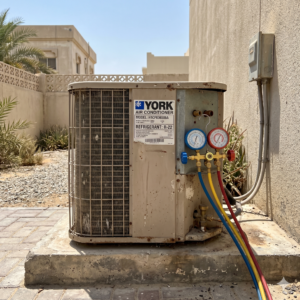
HVAC systems account for the majority of energy consumption in UAE buildings. Optimization includes:
- Upgrading chillers
- Improving airflow systems
- Enhancing control systems
This is where solutions like structured AC maintenance programs become part of long-term efficiency strategies.
Building Envelope Improvements
This includes insulation, window sealing, and reducing heat transfer. A better envelope reduces cooling demand.
Solar PV Integration
Solar panels reduce dependency on grid electricity and improve sustainability metrics.
District Cooling Systems
District cooling is widely used in UAE developments. Optimization focuses on efficiency and load balancing.
Measurement and Verification Using IPMVP
One of the most critical aspects of ESCO projects is proving that savings are real.
This is done using IPMVP (International Performance Measurement and Verification Protocol).
Key elements:
- Establishing baseline energy usage
- Measuring post-implementation consumption
- Adjusting for external factors (weather, occupancy)
- Providing auditable reports
This ensures transparency and accountability.
Why Measurement Matters for Corporate and Government Clients
Large organizations require verifiable data, not assumptions.
- Budget justification
- Regulatory compliance
- Sustainability reporting
- Audit requirements
Without proper verification, energy savings cannot be trusted or reported.
How Energy Efficiency Impacts HVAC Systems
HVAC optimization is one of the fastest ways to reduce energy consumption.
Common improvements include:
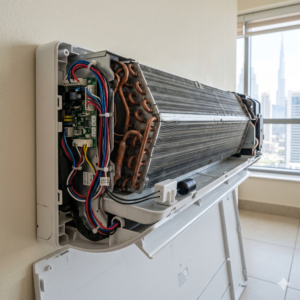
- Cleaning and maintaining ducts
- Optimizing airflow
- Reducing system strain
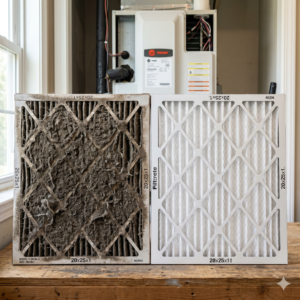
Even simple improvements like proper AC deep cleaning can significantly improve efficiency when part of a larger strategy.
Common Challenges in Energy Efficiency Projects
- Incorrect baseline data
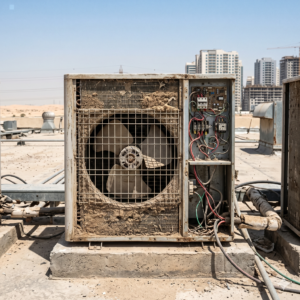
- Poor system maintenance
- Lack of monitoring
- Unrealistic savings expectations
These challenges highlight the importance of working with experienced ESCO providers.
Long-Term Benefits of Working with an Energy Efficiency Company
- Reduced operational costs
- Improved indoor comfort
- Better system reliability
- Lower environmental impact
These benefits go beyond immediate savings and contribute to long-term building performance.
How to Choose the Right Energy Efficiency Company
- Check certifications and regulatory alignment
- Review past projects and case studies
- Understand contract structure
- Verify measurement and reporting methods
A strong partner focuses on performance, not just installation.
If you are exploring energy efficiency improvements, it is important to act early rather than waiting for energy costs to continue rising. Inefficient HVAC systems, poor airflow, and unoptimized cooling can quietly increase electricity consumption and reduce indoor comfort over time. Addressing these issues with the right approach helps maintain both system performance and operational efficiency. If you need clarity on where your system stands, you can use the WhatsApp or Call button on the top right to connect with the Bio On Air team and discuss practical next steps.
Conclusion
An energy efficiency company in the UAE offers more than technical upgrades—it provides a structured, performance-driven approach to reducing energy consumption. With ESCO models, guaranteed savings, and proper verification, businesses and property owners can achieve measurable results while minimizing financial risk.