




Facing a dust problem in house in the UAE is extremely common, even in clean and well-maintained homes. Dust keeps returning no matter how often you clean. This guide explains why it happens in UAE conditions, how AC systems contribute, and the correct way to control dust effectively—not just temporarily.
Table of Contents
ToggleWhy Dust Problem in House Is Worse in UAE
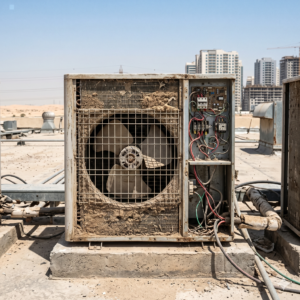
Unlike many countries, dust in the UAE is not just from indoor sources. It is heavily influenced by the environment. Even if your home is sealed, external dust still finds ways inside.
Main sources of dust in UAE homes:
- Desert sand particles carried by wind
- Construction dust from nearby developments
- Fine airborne particles (PM10 and PM2.5)
- Seasonal Shamal winds bringing high dust concentration
These particles are extremely fine. Many are invisible to the eye but still circulate in your indoor air.
Understanding PM10 and PM2.5 Dust in UAE Homes
Not all dust is the same. The most problematic types in UAE are PM10 and PM2.5 particles.
| Type | Size | Impact |
|---|---|---|
| PM10 | Coarse particles | Settle on surfaces quickly |
| PM2.5 | Fine particles | Stay airborne longer and enter lungs |
PM2.5 particles are particularly concerning because they remain suspended in the air and are easily circulated by AC systems.
Why Traditional Cleaning Methods Fail
Many households rely on sweeping, dry dusting, or basic vacuuming. These methods often make the problem worse.
- Sweeping lifts dust back into the air
- Dry cloth spreads fine particles instead of capturing them
- Basic vacuums release dust back into the room
This creates a cycle where dust never truly leaves the environment—it just moves around.
How HVAC Systems Contribute to Dust Circulation
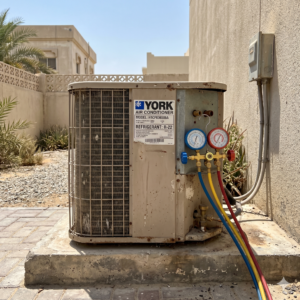
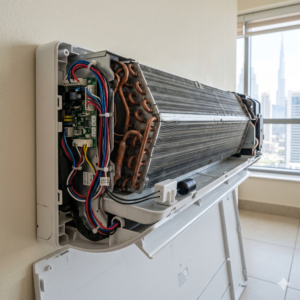
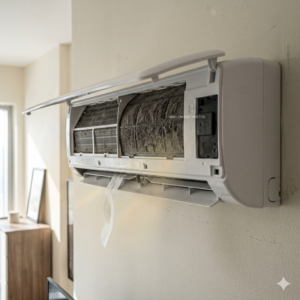
Your AC system is one of the biggest contributors to indoor dust circulation if not properly maintained.
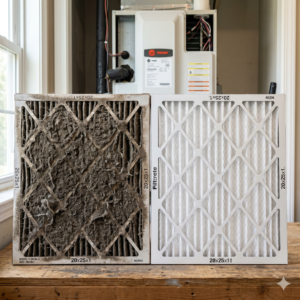
Clogged Air Filters
When filters are dirty, they stop capturing dust effectively. Instead, particles pass through and circulate back into your home.
Duct Contamination
Dust builds up inside AC ducts over time. Every time the AC runs, it pushes these particles back into your living space.
Duct Leaks and Return Air Bypass
Leaks in duct systems allow unfiltered air to enter. Return air bypass occurs when air skips filtration entirely and re-enters circulation.
This is why many homes experience continuous dust even after cleaning. In such cases, understanding how AC duct cleaning works becomes important to break the cycle.
Signs Your AC System Is Causing Dust Problems
- Dust reappears within hours after cleaning
- Visible buildup near vents
- Musty or stale smell when AC starts
- Uneven airflow across rooms
These signs usually indicate internal airflow contamination.
Multi-Layer Filtration Explained
Standard filters are often not enough for UAE conditions. Effective dust control requires multi-layer filtration.
1. Pre-Filters
Capture large particles like hair and coarse dust.
2. Fine Filters
Capture smaller particles such as PM10.
3. True HEPA Filters
Capture ultra-fine particles including PM2.5.
4. Activated Carbon Filters
Remove odors and chemical pollutants.
This layered approach ensures better air quality and reduces dust circulation.
Structural Gaps That Let Dust Enter
Even with good filtration, structural gaps allow dust to enter continuously.
- Balcony door gaps
- Window frame leaks
- AC pipe openings
- Electrical socket gaps
Sealing these areas significantly reduces dust entry.
Indoor Pressure and Airflow Balance
Air pressure plays a major role in dust movement.
- Negative pressure pulls dusty air inside
- Positive pressure helps keep dust out
Proper airflow balance prevents uncontrolled air entry from outside.
Role of Humidity in Dust Control
Humidity affects how dust behaves indoors.
- Low humidity keeps dust airborne
- Moderate humidity helps particles settle
In UAE homes, AC systems often reduce humidity too much, making dust stay suspended longer.
Correct Cleaning Methods for UAE Homes
To control dust effectively, cleaning methods must change.
Damp Microfiber Cleaning
- Traps dust instead of spreading it
- Works better than dry cloth
HEPA Vacuum Cleaning
- Captures fine particles without releasing them
- Essential for carpets and upholstery
Avoid Dry Tools
- No feather dusters
- No dry sweeping
These adjustments significantly reduce airborne dust.
Why Dust Keeps Coming Back Even After Cleaning
Cleaning removes visible dust, but it does not solve the source.
Main reasons dust returns:
- Unsealed entry points
- Dirty AC system
- Poor filtration
- Continuous outdoor dust exposure
Without addressing these, cleaning becomes a temporary solution.
Advanced Solutions for Persistent Dust Problems
Professional Duct Cleaning
Removes accumulated dust inside airflow systems.
Air Purification Systems
Continuously filter indoor air.
Sealing and Insulation Improvements
Prevent external dust from entering.
Regular Maintenance
Keeps system components clean and efficient.
Cost Considerations for Dust Control Solutions
Costs vary depending on the solution:
| Solution | Estimated Range (AED) |
|---|---|
| HEPA vacuum | 300 – 1,000 |
| Air purifier | 500 – 2,500 |
| Duct cleaning | 500 – 3,000+ |
| Sealing work | 200 – 1,000 |
Note: Prices are indicative and may vary depending on brand, system size, and property condition.
Long-Term Strategy to Control Dust
The most effective approach combines multiple steps:
- Seal entry points
- Upgrade filtration
- Maintain AC system
- Use proper cleaning methods
This combination provides lasting results rather than temporary relief.
If you are dealing with constant dust inside your home, it is important not to rely only on repeated cleaning. Dust buildup often indicates deeper airflow or filtration issues that can affect indoor air quality, increase allergies, and reduce AC efficiency over time. Addressing the root cause early helps prevent ongoing discomfort and higher maintenance costs. If you need a clearer understanding of your indoor air condition or AC system performance, you can use the WhatsApp or Call button on the top right to connect with the Bio On Air team and explore the most suitable next step.
Conclusion
A dust problem in house in the UAE is not just a cleaning issue—it is an airflow, filtration, and environmental challenge. By understanding the real causes and applying the right solutions, you can significantly reduce dust levels and improve indoor comfort and air quality.