




The dubai air quality index is an important indicator of how safe the air is for your daily activities. In a city where dust, traffic, and climate conditions constantly affect air quality, understanding AQI levels helps you make smarter decisions for your health, especially when spending time outdoors or managing indoor environments.
Table of Contents
ToggleCurrent Dubai Air Quality Index and What It Means
The Dubai air quality index (AQI) changes throughout the day depending on weather conditions, traffic emissions, and dust levels. On a typical day, AQI in Dubai can range from moderate to unhealthy for sensitive groups.
Common real-time observations:
- AQI 50–100: Moderate air quality
- AQI 100–150: Unhealthy for sensitive groups
- AQI 150+: Unhealthy for general public during dust events
The primary pollutants affecting Dubai air quality usually include:
- PM2.5 (fine particles)
- PM10 (coarse dust particles)
- NO₂ (traffic-related emissions)
- O₃ (ozone formed by sunlight reactions)
- SO₂ (industrial emissions)
Among these, PM2.5 and PM10 are the most dominant due to desert dust and construction activity.
Understanding AQI Categories and Health Impact
AQI is divided into categories that indicate how safe the air is for different groups.
| AQI Level | Category | Health Impact |
|---|---|---|
| 0 – 50 | Good | Air is clean and safe |
| 51 – 100 | Moderate | Acceptable for most people |
| 101 – 150 | Sensitive Groups | May affect children, elderly, asthma patients |
| 151 – 200 | Unhealthy | Everyone may begin to feel effects |
| 200+ | Very Unhealthy | Health warnings for all |
In Dubai, AQI often fluctuates between moderate and unhealthy, especially during dusty conditions.
Air Quality Differences Across Dubai Areas
Air quality is not the same across all parts of Dubai. Local factors such as traffic, construction, and proximity to open desert areas can influence AQI.
General patterns include:
- Downtown Dubai & Business Bay: Higher NO₂ due to traffic density
- Dubai Marina & JBR: Moderate AQI with sea breeze influence
- Al Qusais & Industrial Areas: Higher particulate pollution
- Suburban Villas (Arabian Ranches, Damac Hills): Dust exposure from open land
This means your daily exposure can vary significantly depending on where you live or work.
Main Pollutants in Dubai Air
PM2.5 (Fine Particles)
These are microscopic particles that can enter the lungs and bloodstream. They come from dust, vehicle emissions, and construction.
PM10 (Coarse Dust)
These larger particles are common during sandstorms and windy conditions.
NO₂ (Nitrogen Dioxide)
Mainly from vehicle exhaust, especially in high-traffic areas.
O₃ (Ozone)
Formed when sunlight reacts with pollutants, often higher during hot afternoons.
SO₂ (Sulfur Dioxide)
Typically linked to industrial emissions, though less dominant in residential areas.
Impact of Dust Storms and Shamal Winds
Dubai’s air quality is heavily influenced by natural weather events.
Dust storms:
- Rapid increase in PM10 levels
- Reduced visibility
- Temporary AQI spikes
Shamal winds:
- Carry dust from surrounding desert regions
- Can last for several days
- Keep AQI elevated even without visible storms
During these events, AQI can quickly move into unhealthy levels.
Short-Term Air Quality Patterns in Dubai
Dubai AQI typically follows a daily pattern:
- Morning: Moderate levels
- Afternoon: Increased ozone due to heat
- Evening: Higher pollution from traffic
- Night: Slight improvement
However, this pattern changes during dust storms or high humidity periods.
Health Recommendations Based on AQI Levels
For General Public
- Limit outdoor activity during high AQI
- Avoid peak traffic hours for exercise
- Stay hydrated
For Sensitive Groups
- Children and elderly should reduce outdoor exposure
- Asthma sufferers should monitor symptoms closely
- Use protective masks when AQI is high
Even moderate AQI can affect sensitive individuals over time.
Indoor Air Quality Matters More Than You Think
Many people assume staying indoors protects them completely. However, indoor air quality in Dubai can sometimes be worse than outdoor air.
This is because:
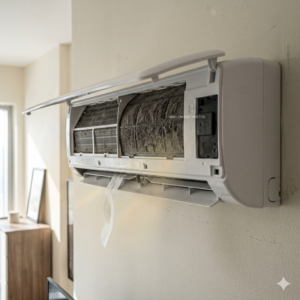
- Dust accumulates inside AC ducts
- Air is recirculated in closed environments
- Humidity can promote bacterial growth
Without proper cleaning and maintenance, pollutants remain trapped indoors.
Practical Indoor Air Safety Tips
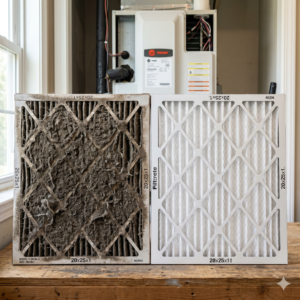
1. Maintain AC Filters
Clean or replace filters regularly to prevent dust buildup.
2. Manage Windows Carefully
Keep windows closed during high AQI or dust storms.
3. Use Proper Ventilation
Ensure controlled airflow instead of random exposure to outdoor air.
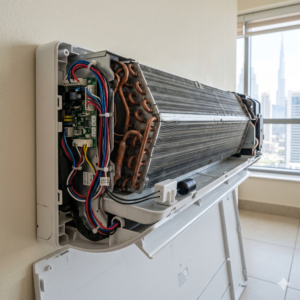
4. Clean AC Ducts Periodically
Dust and pollutants accumulate inside ducts over time. Proper AC duct cleaning helps improve indoor air quality.
5. Avoid Indoor Pollutant Sources
- Reduce incense and smoke indoors
- Limit use of strong chemicals
Why Indoor Air Quality Is a Long-Term Concern
Unlike outdoor pollution, indoor air issues are continuous. If not addressed, they can lead to:
- Allergies and respiratory irritation
- Persistent dust exposure
- Reduced AC efficiency
This makes indoor air management just as important as monitoring AQI.
How AC Systems Affect Air Quality in Dubai
In the UAE, air conditioning systems are the primary source of airflow. This means they directly impact what you breathe indoors.
If the system is not maintained:
- Dust circulates continuously
- Bacteria and mold may develop
- Airflow becomes inefficient
This is why air quality is closely linked to AC system condition.
When You Should Take Action
You should take action if you notice:
- Persistent dust inside the home
- Musty smell when AC is running
- Frequent allergy symptoms indoors
- Uneven airflow or weak cooling
These signs often indicate that indoor air is not as clean as it should be.
If you are monitoring the dubai air quality index and noticing frequent high levels, it becomes even more important to control your indoor environment. Outdoor pollution, combined with dust accumulation inside your AC system, can significantly affect the air you breathe. Ignoring this can lead to long-term health discomfort, reduced AC efficiency, and higher energy consumption. Addressing airflow, filtration, and cleanliness early helps maintain a safer indoor environment. If you need guidance on improving your indoor air quality, you can use the WhatsApp or Call button on the top right to connect with the Bio On Air team and understand the most suitable next step.
Conclusion
The dubai air quality index is a useful tool for understanding outdoor pollution levels, but real protection comes from managing your indoor environment. By combining awareness of AQI with proper AC maintenance and air management, you can maintain healthier air and better comfort in Dubai’s challenging climate.