




A clean air system is no longer optional in the UAE. With sealed buildings, constant air conditioning, and high outdoor dust levels, indoor air quality depends entirely on how well your system filters, treats, and circulates air. In this guide, we explain how clean air systems work, how residential and commercial solutions differ, and how to choose the right setup for your property.
Table of Contents
ToggleWhat Is a Clean Air System in UAE Context
A clean air system is a combination of filtration, purification, and ventilation technologies designed to remove dust, allergens, bacteria, odors, and airborne contaminants from indoor air. In the UAE, this system is usually integrated with HVAC (Heating, Ventilation, and Air Conditioning) rather than standalone.
Unlike countries with natural ventilation, UAE buildings are mostly sealed. This means indoor air is continuously recycled. Without proper filtration and purification, contaminants accumulate over time.
This is why clean air systems in the UAE must do more than just filter—they must actively manage air quality.
Residential vs Commercial Clean Air Systems
Clean air systems differ significantly based on property type. The requirements for a small apartment are very different from a commercial building or industrial facility.
| Feature | Residential System | Commercial / Industrial System |
|---|---|---|
| Scale | Small to medium | Large and complex |
| Integration | Standalone or partial HVAC | Fully integrated with HVAC system |
| Control | Manual or basic automation | Centralized building management system (BMS) |
| Filtration Level | Moderate to high | High to specialized |
| Compliance Requirements | Minimal | Strict regulations |
Residential systems focus on comfort and health, while commercial systems focus on compliance, efficiency, and scalability.
UAE Indoor Air Quality Standards and Compliance
Indoor air quality in the UAE is regulated by multiple authorities such as Dubai Municipality and environmental agencies. While enforcement varies, commercial properties are expected to maintain specific air quality standards.
Key parameters often monitored include:
- Particulate matter (PM2.5 and PM10)
- Carbon dioxide (CO2) levels
- Volatile organic compounds (VOCs)
- Humidity levels
- Microbial contamination (mold and bacteria)
For example:
- PM2.5 should typically remain below 25 µg/m³ indoors
- CO2 levels should stay under 1000 ppm for comfort and safety
Failure to meet these standards can lead to:
- Inspection failures
- Complaints from tenants or employees
- Health-related risks
For commercial spaces such as offices, clinics, and hotels, compliance is not optional—it is part of operational responsibility.
Passive Filtration Systems Explained
Passive filtration is the first layer of any clean air system. It physically removes particles from the air.
Multi-Stage Filtration
Most HVAC systems in the UAE use multi-stage filters:
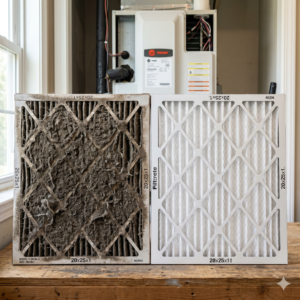
- Pre-filter (captures large dust particles)
- Fine filter (captures smaller particles)
- HEPA filter (captures microscopic particles)
This layered approach ensures progressive cleaning of air as it moves through the system.
Activated Carbon Filters
Activated carbon filters are used to remove:
- Odors
- Smoke
- Chemical pollutants (VOCs)
These filters are especially important in urban environments or indoor spaces with strong odors.
However, passive filtration alone cannot neutralize microorganisms. This is where active technologies come in.
Active Air Purification Technologies
UVGI (Ultraviolet Germicidal Irradiation)
UVGI uses ultraviolet light to deactivate bacteria, viruses, and mold spores inside the HVAC system.
It is commonly installed in:
- Air Handling Units (AHU)
- Cooling coils
- Duct systems
UVGI helps maintain system hygiene and prevent microbial growth.
Bipolar Ionization
This technology releases charged ions into the air. These ions attach to airborne particles, making them heavier and easier to filter.
It can also help neutralize certain contaminants.
However, proper installation is critical. Poorly implemented systems can lead to unwanted byproducts.
Climate Challenges in UAE Buildings
UAE buildings are designed to keep cool air inside and hot air outside. While this improves energy efficiency, it creates indoor air challenges.
Sealed Environment
Limited fresh air intake means pollutants remain trapped indoors.
High Humidity Risk
Temperature differences between indoor and outdoor air can create condensation, especially inside ducts.
Dust Exposure
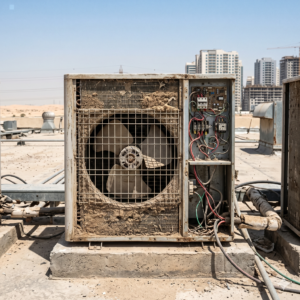
Fine desert dust enters buildings and accumulates in filters and ducts.
This combination makes clean air systems essential—not optional.
Role of ERV and HRV Systems
Energy Recovery Ventilators (ERV) and Heat Recovery Ventilators (HRV) are designed to introduce fresh air while maintaining energy efficiency.
ERV Systems
ERV transfers both heat and moisture between incoming and outgoing air.
This helps maintain humidity balance while reducing cooling load.
HRV Systems
HRV transfers heat but not moisture. It is less commonly used in humid climates like the UAE.
ERV systems are more suitable for UAE conditions because they manage both temperature and humidity.
Impact on AC Performance and Energy Efficiency
A well-designed clean air system improves overall HVAC performance.
- Reduces load on AC units
- Improves airflow efficiency
- Maintains stable cooling performance
When ducts are clean and filters are functioning properly, the AC system does not have to work harder to push air.
This directly affects:
- Electricity consumption
- Equipment lifespan
- Cooling consistency
In contrast, poor air quality systems increase strain on the entire HVAC system.
Financial and Maintenance ROI
Investing in a clean air system has long-term financial benefits.
| Factor | Impact |
|---|---|
| Energy Efficiency | Lower electricity bills |
| Maintenance Cost | Reduced breakdown frequency |
| Health Impact | Fewer complaints and medical issues |
| Asset Value | Higher property value and tenant retention |
For commercial properties, ROI is even more significant due to scale.
How to Choose the Right Clean Air System
Choosing the right system depends on your property type and needs.
For Apartments
- High-quality filters
- Optional standalone air purifier
- Periodic duct cleaning
For Villas
- Multi-stage filtration
- UVGI integration
- ERV system if possible
For Commercial Properties
- Full HVAC integration
- Advanced filtration systems
- Air quality monitoring sensors
- Compliance-ready design
Each setup should match the scale and usage of the property.
Common Mistakes When Choosing a Clean Air System
- Relying only on standalone air purifiers
- Ignoring duct contamination
- Choosing low-grade filters
- Skipping regular maintenance
These mistakes reduce effectiveness and lead to recurring problems.
Maintenance Requirements
A clean air system is only effective if maintained properly.
- Filter replacement every 2–6 months
- Duct inspection every 1–2 years
- UV system maintenance annually
Without maintenance, system performance declines over time.
Why Clean Air Systems Are Becoming Essential in UAE
Indoor air quality awareness is increasing in the UAE. Families, businesses, and property managers are now prioritizing air health.
With more time spent indoors, clean air is directly linked to comfort, productivity, and health.
This shift makes clean air systems a core part of modern building design.
If you are currently evaluating your indoor air quality or noticing issues like dust buildup, odors, or uneven airflow, it is important not to ignore them. In UAE conditions, these problems often come from deeper system-level issues such as dirty ducts or inefficient airflow. Left unaddressed, they can affect both health and AC performance while increasing energy costs over time. Taking early action helps prevent larger complications. If you need clarity about your situation, you can use the WhatsApp or Call button on the top right to connect with the Bio On Air team and understand the most suitable next step based on your property type.
Conclusion
A clean air system is not just about filtration—it is about managing indoor air quality in a controlled environment like the UAE. By understanding system types, technologies, and maintenance needs, you can create a healthier, more efficient indoor space while protecting both your AC system and long-term comfort.