




Understanding the capacitor for ac unit cost is essential if your AC suddenly stops cooling, hums loudly, or the outdoor fan refuses to spin. In the UAE, capacitor failure is one of the most common AC issues due to extreme heat. This guide explains real price ranges, symptoms, testing methods, and when it is safer to call a professional.
Table of Contents
ToggleCapacitor for AC Unit Cost in UAE Overview
In Dubai and across the UAE, the cost of an AC capacitor is relatively low compared to other components. However, the total cost depends on whether you are buying the part alone or including professional replacement.
Here is a realistic breakdown:
| Item | Estimated Cost (AED) | Description |
|---|---|---|
| Capacitor (Part Only) | 50 – 150 | Standard dual or single capacitor |
| Professional Replacement (Normal) | 150 – 350 | Includes labor and installation |
| Emergency Callout (After Hours) | 250 – 500+ | Urgent service, night or weekend |
Note: These prices are slightly below average UAE market rates and may vary depending on AC type, accessibility, and urgency.
Part Cost vs Labor Cost Breakdown
One of the most important things to understand is the difference between part cost and labor cost.
- Capacitor part: relatively inexpensive
- Labor: includes diagnosis, safety handling, installation
- Callout fee: technician travel and inspection
This separation helps you avoid overpaying. For example, if a capacitor costs AED 80, a total bill of AED 400 should include labor, testing, and service—not just the part.
Understanding how AC repair services are structured helps you evaluate quotes more accurately.
What Does an AC Capacitor Actually Do
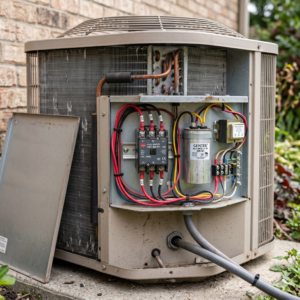
The capacitor is a small electrical component that stores and releases energy to start and run your AC motors.
It supports:
- Compressor startup
- Fan motor operation
- Stable electrical flow
Without a functioning capacitor, your AC cannot start properly, even if the compressor itself is still working.
Common Symptoms of a Failed Capacitor
Capacitor failure often mimics more serious problems like compressor damage.
Watch for these signs:
- AC not starting at all
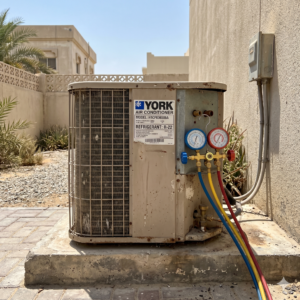
- Outdoor unit making humming sound
- Fan not spinning but motor is energized
- AC starts slowly or intermittently
- Warm air instead of cool air
These symptoms can easily be mistaken for compressor failure, which is much more expensive.
Simple Homeowner Checks Before Calling a Technician
While full diagnosis requires tools, there are simple checks you can do safely:
1. Listen for Humming Sound
If the outdoor unit hums but does not start, the capacitor may be weak or dead.
2. Check Fan Movement
If the fan is not spinning, but starts when pushed manually (not recommended), it often indicates capacitor failure.
3. Observe Cooling Performance
Weak or delayed cooling may indicate the capacitor is struggling to support the compressor.
These checks help you identify potential issues but are not a replacement for proper diagnosis.
How Technicians Test a Capacitor
Professionals use a multimeter to measure capacitance (microfarads).
Testing process:
- Power is disconnected completely
- Capacitor is safely discharged
- Multimeter measures microfarad value
- Result is compared to rated value
If the reading is outside acceptable tolerance (usually ±5–10%), the capacitor is considered faulty.
Visual Signs of a Bad Capacitor
Sometimes, a failed capacitor shows visible damage:
- Bulging or swollen top
- Leaking oil or residue
- Burn marks or corrosion
If you see any of these signs, the capacitor should be replaced immediately.
Why Capacitors Fail Faster in UAE
The UAE environment puts extreme stress on AC components.
Main reasons for capacitor failure:
- High outdoor temperatures (40°C+)
- Continuous AC usage
- Electrical fluctuations
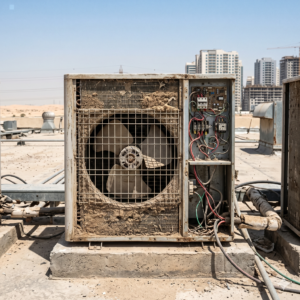
- Dust buildup causing overheating
Capacitors are heat-sensitive, so prolonged exposure to high temperatures reduces their lifespan.
Understanding Capacitor Specifications
If replacement is needed, using the correct capacitor is critical.
Key specifications:
- Microfarads (µF): energy capacity
- Voltage rating (V): electrical tolerance
- Type: single or dual capacitor
Using the wrong specification can damage your AC system.
Safety Risks of DIY Capacitor Replacement
Although the part is inexpensive, replacing a capacitor is not risk-free.
Capacitors can store electrical charge even when power is off.
- Stored voltage can reach dangerous levels
- Risk of electric shock
- Incorrect installation can damage system
This is why many technicians recommend professional handling, especially for non-technical users.
When Professional Service Is Safer
You should consider professional help if:
- You are unsure about electrical handling
- The AC issue is not clearly identified
- Multiple components may be involved
- The unit is under heavy load or frequent failure
In many cases, what appears to be a capacitor issue may involve other components such as contactors or wiring.
Hidden Costs to Watch Out For
Some services may bundle capacitor replacement with additional charges:
- Inspection fee
- Emergency callout fee
- Additional part replacement
Always ask for a clear breakdown between part cost and labor cost.
How to Avoid Overpaying
To avoid overcharging:
- Ask for part specification details
- Confirm microfarad and voltage ratings
- Request explanation of labor cost
- Compare quotes if needed
This ensures transparency and helps you make informed decisions.
Preventing Future Capacitor Failure
While capacitor failure cannot be fully avoided, you can reduce risk:
- Regular AC maintenance
- Cleaning outdoor unit
- Ensuring proper airflow
- Avoiding electrical overload
Preventive care extends the lifespan of electrical components.
Long-Term Value vs Immediate Cost
The cost of a capacitor may seem small, but ignoring the issue can lead to bigger problems.
- Compressor damage (expensive repair)
- Reduced cooling efficiency
- Increased electricity bills
Replacing a faulty capacitor early can prevent major system failure.
If you are experiencing signs of capacitor failure or inconsistent AC performance, it is important not to delay action. Electrical issues can escalate quickly, affecting both system reliability and safety. Problems such as weak airflow, overheating components, or repeated system failure can increase repair costs over time. Addressing these issues early helps protect your AC system and maintain indoor comfort. If you need clarity about your AC condition or want to confirm whether the issue is capacitor-related, you can use the WhatsApp or Call button on the top right to connect with the Bio On Air team and understand the most suitable next step.
Conclusion
The capacitor for ac unit cost in the UAE is relatively low compared to other AC components, but correct diagnosis and safe replacement are essential. By understanding price breakdowns, symptoms, and risks, you can make better decisions, avoid overpaying, and keep your AC system running efficiently.