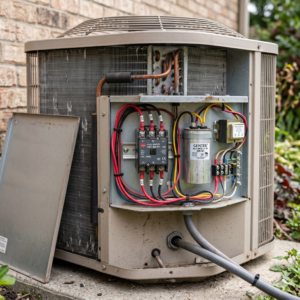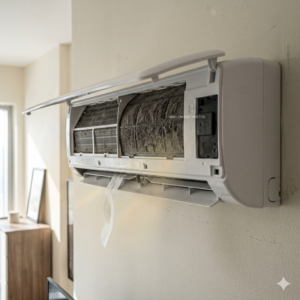





Many people search can we buy only outdoor unit of ac when their AC stops cooling or the compressor fails. In the UAE, this is a common question—but the answer is not always simple. While it may be technically possible in some cases, it is often not the best decision financially or technically.
Table of Contents
ToggleCan You Buy Only the Outdoor Unit of an AC
Yes, in certain situations, you can buy only the outdoor unit (also known as the condenser unit). However, this depends on compatibility between the new outdoor unit and your existing indoor unit.
In the UAE market, outdoor units are available through:
- Authorized AC dealers
- HVAC suppliers
- Specialized AC repair companies
However, just because it is available does not mean it is recommended.
Why People Consider Replacing Only the Outdoor Unit
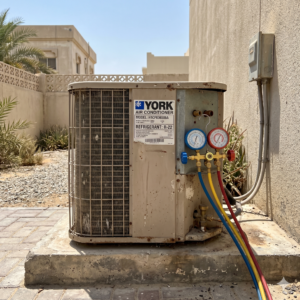
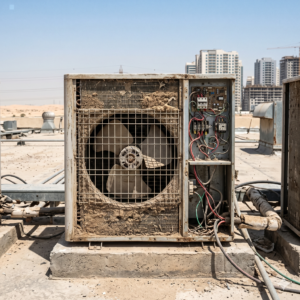
The outdoor unit is often the most expensive and most stressed part of the system. It handles heat exchange and contains key components such as:
- Compressor
- Condenser coil
- Fan motor
Common reasons people want to replace only the outdoor unit:
- Compressor failure
- Reduced cooling performance
- High repair cost for outdoor unit
- Indoor unit still looks “fine”
At first glance, replacing only one component seems like a cost-saving option. But in many cases, it creates more problems later.
Refrigerant Compatibility Issues in UAE Systems
One of the biggest challenges is refrigerant compatibility.
Older systems in the UAE commonly use R22 refrigerant, while newer systems use R410A or R32.
| Refrigerant | Status | Compatibility |
|---|---|---|
| R22 | Phased out | Not compatible with new units |
| R410A | Widely used | Requires matching indoor unit |
| R32 | New standard | Different pressure and oil type |
If your indoor unit uses R22, you cannot safely connect it to a modern outdoor unit designed for R410A or R32.
This is not just a technical limitation—it can damage the system completely.
Pressure and Oil Incompatibility Risks
Different refrigerants operate at different pressures and require different compressor oils.
- R22 systems use mineral oil
- R410A and R32 systems use synthetic oil (POE oil)
Mixing these systems can cause:
- Oil contamination
- Reduced lubrication
- Compressor failure
This is one of the main reasons why partial replacement is risky.
Inverter System Communication Problems
Modern AC systems in the UAE are often inverter-based. These systems rely on communication between indoor and outdoor units.
If the communication protocol does not match:
- The system may not start
- Error codes may appear
- Cooling performance becomes unstable
Even if both units are from the same brand, different models may not communicate properly.
Brand and Tonnage Compatibility Limitations
AC systems are designed as matched sets.
Important factors include:
- Cooling capacity (tonnage)
- Airflow design
- Control board compatibility
Using mismatched components can lead to:
- Inefficient cooling
- Overloading of components
- Shortened system lifespan
ESMA Energy Rating and DEWA Cost Impact
In the UAE, energy efficiency is regulated through ESMA standards. New AC units are designed to meet higher efficiency ratings.
If you combine an old indoor unit with a new outdoor unit:
- The system may not achieve its rated efficiency
- Energy consumption may increase
- Electricity bills (DEWA) may be higher than expected
This means you may lose the benefit of upgrading to a newer system.
Hidden Costs of Replacing Only the Outdoor Unit
Many people focus only on the price of the outdoor unit itself, but there are additional costs.
| Cost Item | Estimated Range (AED) |
|---|---|
| Outdoor Unit | 1,500 – 4,000+ |
| Installation Labor | 300 – 800 |
| Gas Refill | 200 – 600 |
| Modification Work | 200 – 700 |
Note: Prices are below typical market averages and may vary depending on system condition and installation complexity.
In many cases, the total cost approaches the price of a full system replacement.
Warranty Risks You Should Know
Manufacturers typically provide warranty only for complete matched systems.
If you install only an outdoor unit:
- Warranty may be void
- Future repairs may not be covered
- System reliability is not guaranteed
This adds long-term risk.
Cost Comparison Outdoor Unit vs Full System Replacement
| Option | Total Estimated Cost (AED) | Long-Term Value |
|---|---|---|
| Outdoor Unit Only | 2,000 – 5,500 | Uncertain, compatibility risks |
| Full AC System | 3,500 – 8,000+ | Reliable, efficient, warranty included |
While replacing only the outdoor unit appears cheaper initially, the long-term value is often lower.
When Replacing Only the Outdoor Unit Might Make Sense
There are limited scenarios where this option works:
- Same brand and model compatibility
- Same refrigerant type
- Indoor unit is relatively new
Even in these cases, professional assessment is required.
When Full Replacement Is the Better Decision
Full system replacement is usually better if:
- Your system is older than 8–10 years
- You are using R22 refrigerant
- Multiple components show wear
- Energy efficiency is a concern
This ensures long-term performance and avoids repeated issues.
Technical Reality vs Practical Decision
Technically, yes—you can buy only the outdoor unit in some cases. But practically, it is often not the best solution.
AC systems are designed to work as a complete unit. Partial replacement creates imbalance, reduces efficiency, and increases risk of failure.
If you are currently considering replacing only the outdoor unit, it is important to evaluate the full condition of your AC system first. Compatibility issues, hidden costs, and efficiency losses can turn a small decision into a larger long-term problem. In many cases, what seems like a cost-saving option may actually increase expenses over time. If you need a clear assessment based on your specific system, you can use the WhatsApp or Call button on the top right to connect with the Bio On Air team and understand the most suitable option for your situation.
Conclusion
While it is technically possible to buy only the outdoor unit of an AC in the UAE, it is rarely the best choice. Compatibility risks, hidden costs, and efficiency concerns often make full system replacement a more reliable and cost-effective solution in the long run.