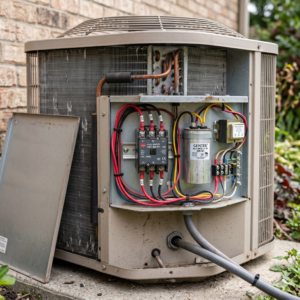
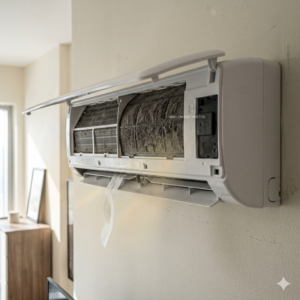
If you notice a bad odor air conditioner in your home, it is not just an inconvenience—it is often a sign of hidden issues inside your AC system. In the UAE, where AC runs almost continuously, odors can develop quickly due to moisture, dust, and poor airflow. This guide explains what each smell means, the risks involved, and what you should do next.
Table of Contents
ToggleTypes of AC Odors and What They Mean
1. Musty or Damp Smell
This is the most common AC odor in Dubai. It usually smells like wet cloth or old room air.
Likely causes:
- Mold or mildew inside ducts or coils
- Moisture trapped in the evaporator coil
- Dirty filters holding humidity
This smell is strongly linked to indoor air quality issues.
2. Burning Smell
A burning odor should never be ignored. It can indicate overheating components.
Possible causes:
- Electrical wiring issues
- Overheated motor or capacitor
- Dust burning off internal parts (less severe but still important)
If the smell is strong or persistent, the unit should be turned off immediately.
3. Rotten Egg Smell
This smell is rare but serious. It may indicate gas-related issues.
Possible causes:
- Dead animal trapped in duct system
- Sewer gas entering through drain lines
- Gas leak nearby (not directly from AC but detected through airflow)
This situation requires immediate attention and should not be ignored.
4. Chemical or Sharp Smell
This smell is often described as sweet, metallic, or sharp.
Possible causes:
- Refrigerant leak
- Cleaning chemical residue
- Electrical insulation breakdown
This can indicate system damage and may affect both performance and safety.
Health and Safety Risks of AC Odors
Different odors carry different risks. Some are mild, while others can affect health or safety.
| Odor Type | Risk Level | Impact |
|---|---|---|
| Musty | Medium | Allergies, respiratory irritation |
| Burning | High | Fire hazard, electrical damage |
| Rotten Egg | Very High | Gas exposure, safety risk |
| Chemical | High | Possible refrigerant exposure |
If you notice burning or gas-like smells, turning off the AC immediately is the safest action.
When You Should Turn Off Your AC Immediately
Some situations require immediate shutdown:
- Strong burning smell
- Gas or rotten egg odor
- Sharp chemical smell with dizziness or irritation
Continuing to run the AC in these conditions can worsen the problem and increase risks.
Why Bad Odors Are Common in UAE Homes
AC odor problems are more frequent in the UAE due to environmental and lifestyle factors.
1. High Humidity
Moisture accumulates inside AC systems, especially in coastal cities like Dubai.
2. Continuous AC Usage
Systems run almost 24/7, allowing dust and moisture to build up internally.
3. Sealed Indoor Environments
Limited ventilation traps odors inside the home.
4. High-Rise Living
Airflow patterns in apartments can trap moisture in ducts and ceiling spaces.
DIY Troubleshooting Steps
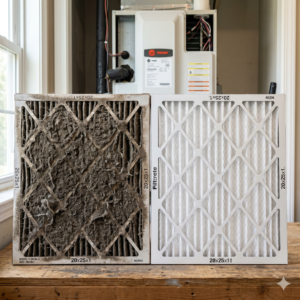
1. Clean or Replace Air Filters
Dirty filters are one of the most common causes of odor.
- Remove filter
- Wash with water (if reusable)
- Dry completely before reinstalling
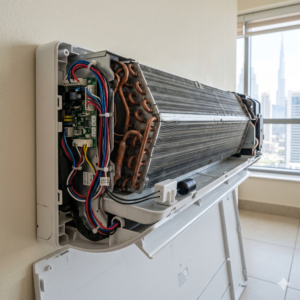
2. Dry the Evaporator Coil
Moisture on coils can create mold growth.
- Turn on fan mode (without cooling)
- Let air circulate to dry internal parts
3. Flush the Condensate Drain Line
Blocked drain lines can cause water buildup and bad smell.
- Use water or mild cleaning solution
- Ensure proper drainage
4. Clean External Vents
Dust accumulation around vents can produce odor when air flows through.
Professional Cleaning and Repair Solutions
DIY steps can help in mild cases, but persistent odor usually requires professional intervention.
Typical services include:
- AC deep cleaning
- Duct cleaning and sanitization
- Coil cleaning
- Drain line flushing
- Leak detection and repair
Understanding how AC deep cleaning works can help you see why surface cleaning is often not enough.
Typical Service Costs in Dubai
Below are estimated service costs based on UAE market conditions:
| Service | Estimated Cost (AED) |
|---|---|
| Basic AC Cleaning | 150 – 300 |
| AC Deep Cleaning | 300 – 800 |
| Duct Cleaning | 500 – 2,000+ |
| Drain Line Cleaning | 150 – 400 |
| Refrigerant Leak Repair | 500 – 1,500+ |
Note: These prices are slightly below market averages and may vary depending on system condition and service scope.
Common Hidden Causes of AC Odor
- Dust mixed with humidity forming bacteria
- Standing water inside the system
- Mold growth in hidden duct sections
- Clogged drainage system
These issues often develop gradually and are not visible from outside.
How to Prevent AC Odor from Returning
- Clean filters regularly (every 2–4 weeks)
- Schedule professional cleaning every 6–12 months
- Use fan mode occasionally to dry internal parts
- Keep indoor humidity under control
Prevention is always easier and more cost-effective than repair.
When to Call a Professional HVAC Service
You should seek professional help if:
- The smell does not go away after cleaning
- Odor becomes stronger over time
- AC performance drops
- You suspect electrical or gas-related issues
If you are experiencing bad odor from your AC, it is important not to ignore it. Odors are often early warning signs of deeper problems inside the system, such as mold buildup, airflow blockage, or internal damage. Left untreated, these issues can reduce indoor air quality, increase energy consumption, and lead to more expensive repairs over time. With the right approach, these problems can be handled early and safely. If you need clarity about your situation, you can use the WhatsApp or Call button on the top right to connect with the Bio On Air team and understand the most suitable next step based on your AC condition.
Conclusion
A bad odor air conditioner is not just about smell—it is a signal of internal system issues. By understanding odor types, causes, and solutions, you can take the right steps to maintain clean air, safe operation, and long-term AC performance.