




Looking for an ac without outdoor unit in the UAE is common when you cannot install an external compressor. Whether due to building restrictions, rental limitations, or internal room layouts, this guide explains real cooling options, what actually works in UAE conditions, and how to choose the right solution without wasting money.
Table of Contents
ToggleWhy Many UAE Properties Restrict Outdoor AC Units
In Dubai and across the UAE, installing a traditional split AC with an outdoor compressor is not always allowed. Many residential buildings—especially apartments—have strict facade control policies.
Developers such as Emaar, Nakheel, and other major property managers typically enforce:
- No visible outdoor units on balconies or external walls
- Uniform building appearance requirements
- Pre-approved AC system designs only
- Mandatory NOC (No Objection Certificate) before installation
This means even if technically possible, installing your own outdoor unit may violate building rules.
What Does “AC Without Outdoor Unit” Actually Mean
A standard split AC has two parts:
- Indoor unit (cooling air)
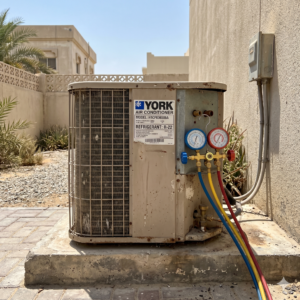
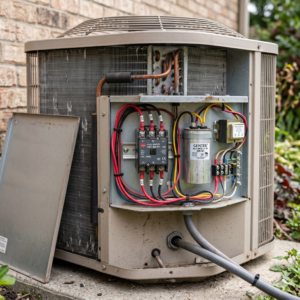
- Outdoor unit (compressor + heat rejection)
When people search for AC without outdoor unit, they are usually looking for systems where:
- The compressor is inside the room
- Heat is managed differently
- No external condenser is visible
However, it is important to understand: cooling still requires heat removal. The difference is how that heat is handled.
Main Types of AC Without Outdoor Unit in UAE
1. Monoblock Wall AC Units
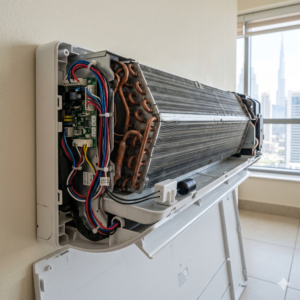
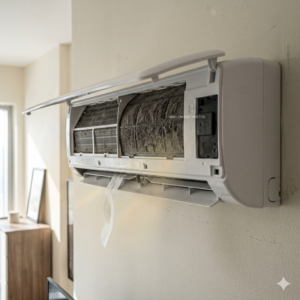
Monoblock AC units are one of the closest alternatives to traditional split systems. Everything is contained in a single indoor unit installed on a wall.
How It Works
- All components (compressor, condenser, evaporator) are inside one unit
- Two small wall openings allow air exchange for heat removal
Pros
- No external unit visible
- Permanent installation
- More stable than portable AC
Cons
- Requires wall drilling
- Less powerful than split AC
- Still produces indoor noise
Monoblock systems are suitable for apartments where facade changes are restricted but minor wall modifications are allowed.
2. Dual-Hose Portable AC Units
Portable AC units are the most common solution for renters or temporary setups.
How It Works
- Air is cooled inside the unit
- Hot air is expelled through hoses connected to a window
Dual Hose vs Single Hose
- Single hose: pulls air from room → creates negative pressure
- Dual hose: separates intake and exhaust → more efficient
Pros
- No permanent installation
- Suitable for renters
- Easy to move
Cons
- Lower cooling efficiency
- Noise from indoor compressor
- Still requires window access
In UAE conditions, dual-hose models perform better due to reduced heat re-entry.
3. Water-Cooled AC Systems
Water-cooled AC systems are used in some buildings where heat is removed through water instead of outdoor air.
How It Works
- Heat is transferred into water lines
- Building infrastructure carries heat away
Pros
- No outdoor condenser required
- Higher efficiency than portable units
Cons
- Requires building infrastructure support
- Not suitable for individual installation
This system is usually pre-installed and not a DIY option.
4. District Cooling Systems (Common in High-Rise Buildings)
Many modern UAE buildings use district cooling instead of individual AC units.
How It Works
- Central plant produces chilled water
- Cold water is distributed to multiple apartments
- Indoor units use this chilled water for cooling
Key Characteristics
- No outdoor unit in apartment
- Cooling controlled internally
- Billing based on usage
This is why many high-rise residents never see an outdoor AC unit—it is centralized.
Why Evaporative Air Coolers Do NOT Work in UAE
Evaporative coolers (air coolers) are often marketed as “AC alternatives,” but they are not suitable for UAE conditions.
How They Work
- Use water evaporation to cool air
- Add moisture into the air
Why They Fail in UAE
- UAE already has high humidity (especially coastal areas)
- Evaporation becomes ineffective
- Air feels more humid instead of cooler
In short, air coolers may work in dry climates—but not in Dubai or Abu Dhabi.
Real Performance in UAE Summer Conditions
Extreme heat (40°C+) and humidity create unique challenges.
| Type | Cooling Strength | Suitability |
|---|---|---|
| Split AC | Excellent | Best option |
| Monoblock AC | Moderate | Good alternative |
| Portable AC (Dual Hose) | Limited | Small rooms only |
| Evaporative Cooler | Very Low | Not recommended |
Understanding these limitations helps set realistic expectations.
BTU Sizing for AC Without Outdoor Unit
Choosing the right capacity is even more important for indoor compressor systems.
In UAE, standard rule:
- 100–120 BTU per square meter (normal AC)
For indoor-compressor systems:
- Add 20–30% extra capacity
Why?
- Compressor heat is released inside
- Efficiency is lower than split systems
Example:
- 20 sqm room → standard: 2,000–2,400 BTU
- Adjusted: 2,500–3,000+ BTU recommended
Best Options Based on Use Case
For Renters
- Dual-hose portable AC
- No permanent modification
For Internal Rooms (No Windows)
- Monoblock AC (if wall drilling allowed)
- Portable AC with duct solution
For Restricted Apartments
- Check building NOC requirements
- Consider approved systems only
For Villas or Custom Installations
- Water-cooled or centralized systems
- Professional consultation required
Installation and Legal Considerations
Before installing any AC system in the UAE:
- Check building management approval
- Confirm if NOC is required
- Avoid unauthorized modifications
Ignoring these steps can lead to penalties or forced removal.
Common Mistakes People Make
- Buying air coolers instead of real AC
- Choosing underpowered units
- Ignoring heat exhaust requirements
- Not considering humidity impact
These mistakes often result in poor cooling and wasted money.
Maintenance Still Matters Even Without Outdoor Unit
Even without an outdoor unit, AC systems still require maintenance:
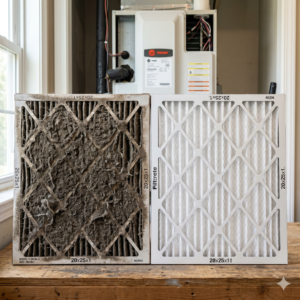
- Filter cleaning
- Internal component cleaning
- Airflow checks
Neglecting maintenance can reduce efficiency and indoor air quality.
Cost Expectations in UAE
Here are realistic cost ranges for AC without outdoor unit:
| Type | Estimated Price (AED) |
|---|---|
| Portable AC (Dual Hose) | 1,200 – 3,000 |
| Monoblock AC | 3,000 – 7,000 |
| Water-Cooled System | 5,000 – 12,000+ |
Note: Prices are slightly below market averages and may vary depending on brand, capacity, and installation complexity.
When You Should Still Consider Professional AC Solutions
In some cases, alternatives may not provide sufficient cooling. If your space experiences:
- Extreme heat exposure
- Large room size
- High humidity retention
Then a properly installed system is still the most effective solution. Understanding how AC installation and replacement works can help you evaluate long-term options that comply with building regulations.
If you are trying to manage cooling without an outdoor unit, it is important to choose the right system early. Incorrect sizing, poor installation, or unsuitable solutions can lead to weak cooling, high electricity usage, and uncomfortable indoor conditions. Over time, this can also impact air quality and system lifespan. With the right guidance, these risks can be avoided. If you need clarity on what solution fits your space, you can use the WhatsApp or Call button on the top right to connect with the Bio On Air team and understand the most suitable next step.
Conclusion
Choosing an ac without outdoor unit in the UAE requires understanding real limitations and available technologies. While alternatives exist, each comes with trade-offs. By selecting the right system based on your space and restrictions, you can achieve effective cooling without violating building regulations.