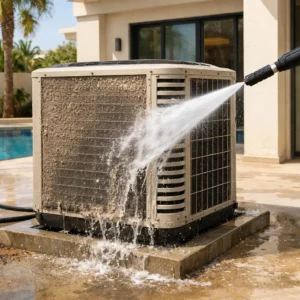





An ac water leak is one of the most stressful AC problems because it feels urgent and messy at the same time. Water dripping from your ceiling, pooling near the indoor unit, or staining walls can quickly damage property and create mold risks. The good news is that most AC water leaks follow predictable causes, and with the right triage steps, you can reduce damage immediately and understand whether the issue is a simple DIY fix or a professional repair scenario.
Table of Contents
ToggleEmergency Triage Steps for AC Water Leak
Before thinking about diagnosis, your first priority is damage control. An AC water leak can spread quickly, especially in apartments or ceiling-mounted systems.
1. Turn the Unit Off Immediately
If you see active dripping or pooling water, switch off the AC at the thermostat first. If possible, also turn off power at the breaker. Continuing to run the unit can worsen leakage, freeze components, or cause electrical risks.
2. Remove Standing Water
Use towels, a mop, or a wet vacuum to remove visible water. This prevents damage to flooring, drywall, and furniture. The longer water sits, the higher the chance of mold growth.
3. Protect Surrounding Surfaces
If water is dripping from a ceiling vent or indoor unit, place a container beneath it. In attic systems, check if water is collecting in a secondary pan.
4. Check the Air Filter Immediately
A clogged filter is one of the most common and easiest-to-fix causes of AC water leaks. A dirty filter restricts airflow, which can freeze the evaporator coil. When the ice melts, excessive water overflows.
If the filter looks dark, dusty, or blocked, replace it before restarting the system.
Diagnostic Hierarchy for AC Water Leak
After emergency steps, the next phase is diagnosis. It is best to move from simple DIY checks to more technical causes.
Step 1: Clogged Condensate Drain Line (Most Common Cause)
During normal operation, your AC removes moisture from the air. This water flows through a condensate drain line. If the line becomes clogged with dust, algae, or debris, water backs up and leaks.
DIY Check:
- Inspect the drain outlet for blockage.
- Look for standing water near the drain pan.
- Try flushing the line gently with water or mild cleaning solution.
If the clog is deep or recurring, professional cleaning is recommended.
Step 2: Frozen Evaporator Coil
If airflow is restricted, the evaporator coil can freeze. Ice blocks normal drainage, and when it melts, it may overwhelm the drain system.
Signs of frozen coils:
- Visible ice on the indoor unit
- Weak airflow
- Water leakage after the system runs for a long time
Turn off the system and allow it to thaw completely before restarting.
Step 3: Cracked or Rusted Drain Pan
Older systems may have drain pans that crack or rust. Even if the drain line works, water can leak through damaged pans.
This usually requires professional inspection and pan replacement.
Step 4: Low Refrigerant
Low refrigerant can cause coils to freeze, indirectly leading to water leaks. Unlike drain clogs, refrigerant issues cannot be solved with DIY methods.
Professional evaluation is needed to check pressure levels and detect leaks safely.
Step 5: Blocked Airflow
Blocked vents, collapsed ducts, or heavily contaminated coils restrict airflow and increase condensation imbalance.
In these cases, solutions may include airflow correction, duct inspection, or internal cleaning such as AC deep cleaning to restore normal performance.
Location-Based Troubleshooting for AC Water Leak
The installation location of your AC affects how water leaks behave.
Attic Systems
Attic units often include a primary drain pan and a secondary emergency pan. If the main drain line clogs, water may fill the secondary pan.
Check:
- Is the secondary pan filling?
- Is the drain slope correct?
- Is there a float switch installed?
If no float switch exists, the system may continue running even while water overflows.
Basement or Closet Installations
Units installed in closets or basements often leak onto flooring. Check whether the drain line slopes downward properly. Poor slope prevents water from draining effectively.
Window Units
Window AC units must be slightly tilted outward. If installed level or tilted inward, condensation will flow inside the room instead of outside.
Adjusting the slope may resolve the issue without repair.
Cost Expectation Guidance: DIY vs Professional Repair
Understanding cost expectations reduces stress. Not all AC water leaks require expensive repairs.
DIY Scenarios (Lower Cost Range)
- Replacing a clogged filter
- Clearing minor drain line blockages
- Adjusting window unit slope
These usually involve minimal cost, mostly for supplies or replacement filters.
Professional Repair Scenarios (Moderate to Higher Range)
- Drain line deep cleaning
- Coil thawing and airflow correction
- Drain pan replacement
- Refrigerant leak detection and recharge
Costs increase when major components or refrigerant systems are involved. Transparent repair companies will inspect first and explain cost expectations before proceeding.
For general service scope and updated pricing references, you can review our pricing page to understand typical service categories.
Prevention Strategies to Avoid Future AC Water Leak
Install a Float Switch
A float switch automatically shuts off the AC if water rises above safe levels. This prevents overflow and ceiling damage.
Routine Drain Flushing
Flushing the condensate drain periodically helps prevent algae buildup and blockages.
Correct Filter Selection
Using the right filter type and replacing it on schedule prevents airflow restriction and coil freezing.
Airflow Management
Keep vents open and unobstructed. Schedule regular inspections to maintain balanced airflow.
Quick Self-Assessment Checklist for AC Water Leak
Before calling for service, walk through this quick checklist:
- Is there visible ice on the indoor unit?
- Is the air filter dirty or blocked?
- Is water pooling near the drain line outlet?
- Is the unit installed level or slightly tilted outward (window type)?
- Is the water coming from a ceiling vent (possible attic pan overflow)?
Your answers can help determine whether the issue is a simple maintenance fix or a deeper mechanical problem.
When AC Water Leak Should Be Handled Properly
AC water leaks should not be ignored. Prolonged leakage can damage ceilings, walls, flooring, and encourage mold growth that affects indoor air quality. It may also indicate deeper issues such as refrigerant imbalance or airflow failure. Bio On Air can help diagnose and address AC water leak causes safely and effectively. Acting early helps prevent structural damage and higher repair costs. You can use the WhatsApp or Call button at the top right of this page to discuss your AC condition with our team.
Conclusion
An ac water leak can look alarming, but most cases follow logical patterns. Start with emergency triage: turn off the unit, remove water, and check the filter. Then move through a step-by-step diagnostic hierarchy, beginning with simple drain checks before considering complex issues. Location-specific factors also matter. With the right approach, you can reduce damage, control costs, and restore safe cooling performance.