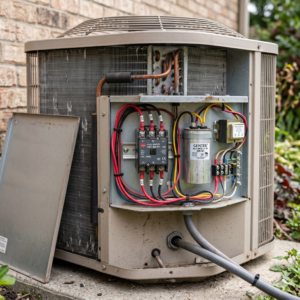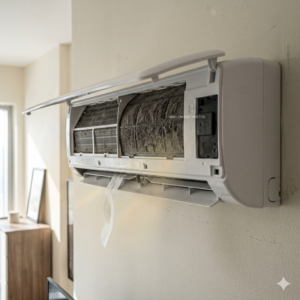





An ac vibration problem is often ignored at first, especially when the cooling still works. But in UAE conditions, vibration is rarely a minor issue. It usually signals mechanical imbalance, worn components, or installation problems that can worsen quickly. This guide helps you identify the source, understand the causes, and decide when to act.
Table of Contents
ToggleHow to Identify Where the AC Vibration Is Coming From
Before fixing anything, you need to identify the source of vibration. Not all AC vibration problems come from the same place, and misdiagnosis often leads to unnecessary repairs.
Car AC vs Home AC
If you notice vibration while driving, the issue may come from your car AC system. However, if vibration is felt through walls, ceilings, or floors at home, it is most likely related to your residential or building AC system.
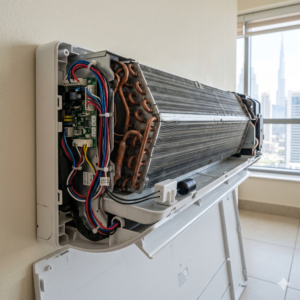
Indoor Unit Vibration
Indoor unit vibration is usually noticeable through:
- Rattling sound from wall-mounted units
- Ceiling vibration in ducted systems
- Uneven airflow or noise changes
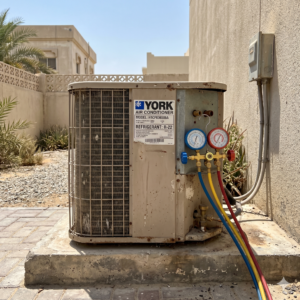
Outdoor Unit Vibration
This is one of the most common sources. Signs include:
- Strong humming or shaking from balcony or rooftop
- Vibration transmitted through walls
- Noise increasing during compressor startup
High-Rise and Chilled Water Systems
In apartments and towers, vibration may come from:
- FCU (Fan Coil Unit) installations
- Chilled water pipes
- Valve or pump systems
These systems behave differently from standard split or central AC units and require specialized understanding.
Outdoor Unit Vibration Causes
The outdoor unit contains the compressor and condenser fan, making it the most vibration-prone part of the system.
Failed Rubber Isolator Pads
Rubber pads are designed to absorb vibration. In UAE heat, these materials degrade faster.
When isolators fail:
- Metal-to-metal contact occurs
- Vibration transfers directly to walls or floors
- Noise levels increase significantly
Broken Internal Compressor Springs
The compressor is mounted on internal springs to stabilize movement. Over time, these springs can weaken or break.
This leads to:
- Heavy internal shaking
- Loud startup vibration
- Increased stress on refrigerant lines
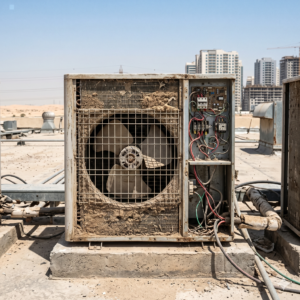
Imbalanced Condenser Fan
Dust buildup or blade damage can create imbalance in the fan.
Effects include:
- Rotational wobble
- High-frequency vibration
- Reduced cooling efficiency
This issue is common in dusty environments like Dubai.
Indoor Unit Vibration Causes
Indoor units are expected to operate quietly. Any vibration here usually indicates internal imbalance.
Dust-Imbalanced Blower Wheel
The blower wheel distributes air evenly. When dust accumulates unevenly, it causes imbalance.
- Uneven rotation
- Airflow disruption
- Noticeable shaking in ducted systems
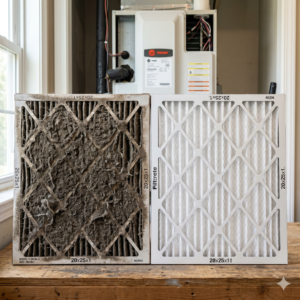
This is one reason why AC deep cleaning is often required, not just filter cleaning.
Worn Motor Bearings
Over time, bearings wear out due to friction and heat.
Symptoms:
- Grinding noise
- Increasing vibration over time
- Reduced motor efficiency
Loose Mounting or Installation Issues
If the indoor unit is not properly secured, even normal operation can create vibration.
- Loose screws or brackets
- Improper wall anchoring
- Weak ceiling suspension
High-Rise AC Vibration Issues (Chilled Water Systems)
In UAE high-rise buildings, AC systems often use chilled water systems instead of standard split units.
FCU Suspension Problems
Fan Coil Units (FCUs) are typically suspended from ceilings. If the suspension is loose or worn:
- Vibration transfers into ceiling structure
- Noise spreads across rooms
Actuator Valve Vibration
Valves controlling chilled water flow can vibrate if malfunctioning.
- Ticking or buzzing sounds
- Intermittent vibration patterns
Water Hammer Effect
Water hammer occurs when water flow suddenly changes direction or stops.
- Loud knocking sounds
- Pipe vibration
- Pressure spikes
This is more common in older or poorly maintained systems.
Climate Factors That Worsen AC Vibration in UAE
The UAE environment plays a major role in accelerating AC issues.
Extreme Heat
High temperatures increase material expansion and stress on components.
- Rubber parts degrade faster
- Metal components expand and loosen
Dust Accumulation
Dust buildup is one of the leading causes of imbalance in both indoor and outdoor units.
Continuous Usage
AC systems in UAE often run for long hours daily.
- Faster wear of moving parts
- Higher risk of imbalance over time
Risks of Ignoring AC Vibration Problems
Ignoring vibration can lead to serious damage.
- Metal fatigue in internal components
- Cracks in mounting brackets
- Refrigerant line damage or leakage
- Compressor failure
What starts as a small vibration can escalate into a major repair.
Cost Implications of Early Repair vs Major Failure
| Condition | Estimated Cost (AED) | Impact |
|---|---|---|
| Minor vibration fix | 150 – 400 | Quick adjustment or cleaning |
| Component replacement | 400 – 1,200 | Fan, motor, or isolator repair |
| Major repair | 1,500 – 4,000+ | Compressor or structural damage |
Note: Prices are slightly below average UAE market estimates and may vary depending on system condition and accessibility.
Fixing vibration early is significantly more cost-effective than dealing with major system failure.
When You Need Immediate Professional Service
Some vibration issues require urgent attention.
- Strong shaking during startup
- Loud knocking or banging noise
- Visible movement of outdoor unit
- Sudden increase in vibration intensity
These are signs of serious internal issues.
When You Can Monitor Before Acting
In some cases, mild vibration may not require immediate repair.
- Slight noise increase
- Minor airflow fluctuation
- Light vibration without structural impact
However, these should still be monitored closely.
How to Prevent AC Vibration Problems
- Schedule regular maintenance
- Keep filters and internal components clean
- Check mounting stability
- Address unusual noise early
Preventive care reduces the risk of major issues.
If you are experiencing an AC vibration problem, it is important not to ignore it. Even small vibrations can indicate deeper mechanical imbalance, which may lead to component damage, refrigerant leaks, or system failure over time. In UAE conditions, where AC systems operate continuously, these issues can escalate faster than expected. Addressing vibration early helps maintain system stability, reduce energy consumption, and avoid costly repairs. If you are unsure about the severity of your situation, you can use the WhatsApp or Call button on the top right to connect with the Bio On Air team and understand the most appropriate next step based on your system condition.
Conclusion
An ac vibration problem is not just a noise issue—it is a sign of imbalance, wear, or structural weakness within the system. By identifying the source early and addressing the cause, you can prevent serious damage, reduce repair costs, and maintain a stable and efficient AC system.