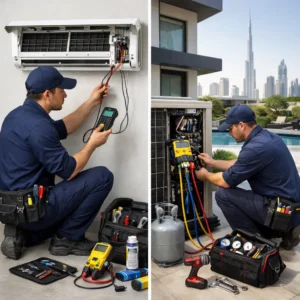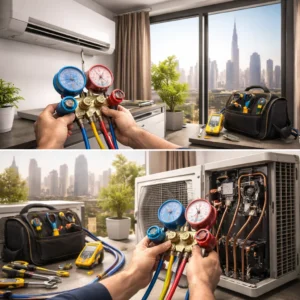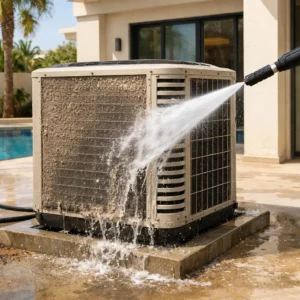





When ac temperature control not working, the problem often feels confusing and frustrating. You change the temperature setting, but the room stays too warm, too cold, or completely ignores your input. In the UAE, where AC is essential for daily comfort, sleep, and productivity, this issue quickly becomes more than a minor inconvenience. The real pain point is not only that the temperature feels wrong, but that you do not know whether the problem is simple, serious, or getting worse every time the AC keeps running without proper control.
Table of Contents
Toggle#1 Check Thermostat Settings and Operating Mode
The first thing many people overlook when ac temperature control not working is the thermostat setting itself. It sounds obvious, but incorrect modes or settings are one of the most common causes of temperature control problems.
Here are a few things to check carefully:
- Make sure the AC is set to cool mode, not fan or dry mode.
- Confirm the temperature is set lower than the current room temperature.
- Check whether the fan speed is set too low, which can delay cooling response.
In some cases, the AC is actually responding correctly, but the chosen mode limits how the system behaves. For example, dry mode prioritizes humidity control rather than temperature precision, which can make it feel like the temperature setting is ignored.
If the thermostat settings look correct but the room still does not respond, it is a sign that the issue goes beyond basic user settings.
#2 Inspect the Thermostat Sensor Location
Temperature control depends heavily on where the thermostat sensor reads the room temperature. When ac temperature control not working, the sensor may be getting inaccurate readings.
Common sensor-related issues include:
- The sensor is exposed to direct sunlight.
- It is placed near heat-generating devices.
- Airflow does not reach the sensor properly.
If the sensor thinks the room is already cool, it will reduce cooling even if other parts of the room are still warm. This creates uneven comfort and makes temperature adjustments feel useless.
Sensor placement issues are often overlooked during installation or develop over time as room layouts change.
#3 Clean or Replace a Dirty Air Filter
A dirty air filter is a silent contributor when ac temperature control not working. Filters clogged with dust restrict airflow, making it difficult for the system to deliver cooled air evenly.
When airflow is restricted:
- The room temperature changes slowly or unevenly.
- The AC runs longer without reaching the set temperature.
- The system may overwork and lose efficiency.
This often leads users to keep lowering the thermostat, assuming the temperature setting is wrong, when the real issue is airflow limitation.
Regular filter cleaning or replacement is one of the simplest yet most effective steps to restore proper temperature response.
#4 Check for Blocked or Unbalanced Airflow
If some rooms feel colder while others remain warm, airflow distribution may be the problem. When ac temperature control not working, uneven airflow can make it seem like the thermostat is inaccurate.
Common airflow problems include:
- Closed or partially blocked vents.
- Furniture obstructing air outlets.
- Dirty or restricted duct pathways.
In ducted systems, dust buildup inside ducts can significantly reduce airflow to certain areas. In such cases, professional AC duct cleaning may be required to restore balanced air distribution.
Balanced airflow ensures that the temperature you set is felt consistently across the space, not just near the indoor unit.
#5 Inspect the Indoor Coil for Dirt or Ice Buildup
The indoor evaporator coil plays a key role in temperature control. When it becomes dirty or iced over, heat exchange is disrupted.
This leads to symptoms such as:
- Weak cooling despite low temperature settings.
- Cold air near the unit but warm air further away.
- Temperature fluctuations during operation.
Ice buildup is often caused by restricted airflow or low refrigerant levels. Dirt buildup reduces the coil’s ability to absorb heat, making temperature control unreliable.
Coil issues usually require professional cleaning or inspection as part of a proper AC repair process.
#6 Check Refrigerant Level and Possible Leaks
Refrigerant is essential for heat transfer. When refrigerant levels drop, the AC may still run but cannot control temperature properly.
Signs that refrigerant may be involved when ac temperature control not working include:
- Cooling improves briefly, then fades.
- The AC runs continuously without reaching the set temperature.
- Some parts of the system feel unusually cold or warm.
Refrigerant does not get used up under normal conditions. Low levels usually indicate a leak.
Proper AC gas refill and leak repair focuses on identifying and fixing the leak, not just adding gas temporarily.
#7 Evaluate Electrical and Control Board Issues
Modern AC systems rely on control boards and sensors to interpret temperature commands. When these components malfunction, temperature changes may not register correctly.
Electrical-related signs include:
- Temperature changes on the remote but not in performance.
- Delayed or inconsistent response to commands.
- Random changes in cooling behavior.
These issues are often invisible to the user and require trained diagnosis. Improper handling can worsen the problem or damage additional components.
This is where professional repair expertise is critical, as control board issues are not suitable for DIY attempts.
#8 Review Installation Quality and System Sizing
Sometimes, the reason ac temperature control not working has nothing to do with faults. It may be related to how the system was installed or sized.
Examples include:
- An AC unit that is too small for the space.
- Poor placement of indoor or outdoor units.
- Incorrect duct layout causing uneven cooling.
In these cases, the thermostat works correctly, but the system physically cannot achieve the desired temperature.
Understanding proper AC installation and replacement standards helps identify when adjustment or upgrade is the more practical solution.
#9 Address Lack of Maintenance and System Wear
Over time, wear and tear combined with lack of maintenance can reduce the AC’s ability to regulate temperature accurately.
Without regular care:
- Components lose efficiency.
- Small issues compound into larger problems.
- Temperature control becomes inconsistent.
Preventive care such as regular inspections and cleaning helps maintain accurate temperature response. Structured programs like AC maintenance and AMC services are designed to catch issues early and keep the system stable.
Other Important Things to Understand About Temperature Control Problems
DIY Fixes vs Professional Diagnosis
Some basic checks—like adjusting settings or cleaning filters—are safe DIY steps. However, deeper attempts often create new problems.
DIY risks include:
- Misinterpreting symptoms.
- Damaging sensitive sensors.
- Creating refrigerant or electrical hazards.
Many cases where ac temperature control not working start small but become expensive because DIY attempts delay proper repair.
How Cost Relates to the Actual Problem
Cost depends on what is actually wrong. Minor issues like sensor calibration or filter-related airflow problems are usually affordable, while control board repairs or refrigerant leak fixes are more involved.
What matters most is transparency. A responsible technician explains what needs to be done before starting work.
For updated cost references across AC services, you can visit our pricing page.
How to Prevent Temperature Control Issues in the Future
Prevention reduces stress and cost in the long run.
- Clean filters regularly.
- Do not ignore early airflow or noise changes.
- Schedule periodic inspections before peak summer.
- Avoid running the AC continuously without maintenance.
Small preventive actions help maintain stable and accurate temperature control.
When Temperature Control Problems Should Be Handled Properly
When ac temperature control not working is ignored, it often leads to uncomfortable indoor conditions, higher electricity bills, and progressive system damage. Bio On Air helps address these problems through careful inspection, safe repair methods, and clear explanations, so you understand both the cause and the solution. Acting early is a preventive decision that often saves time, cost, and disruption. You can use the WhatsApp or Call button at the top right of this page to discuss your AC condition with our team.
Conclusion
Temperature control problems are rarely random. They are usually the result of airflow restrictions, sensor issues, refrigerant imbalance, electrical faults, or installation limitations. Understanding these causes helps you respond calmly instead of guessing.
When ac temperature control not working, the best approach is to start with simple checks, then move to professional diagnosis if the problem persists. A reliable repair process focuses on identifying the real cause, not just adjusting settings or applying temporary fixes. In the UAE’s climate, maintaining accurate AC temperature control is essential for comfort, health, and energy efficiency. Addressing issues early and choosing proper repair support helps keep your system stable and your indoor environment consistently comfortable.