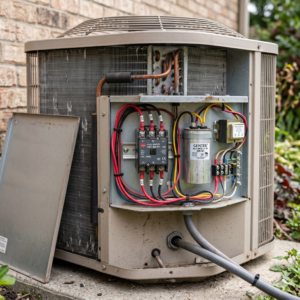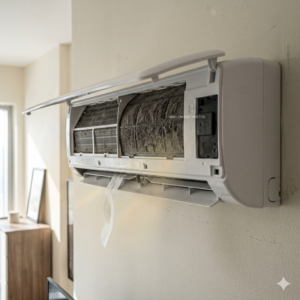





The term ac service valve is often searched when users notice refrigerant leaks, poor cooling, or unusual AC behavior. However, many people do not realize that this term applies to both automotive and residential systems. In this guide, we will clarify the differences, explain common HVAC valve issues, and help you understand what really needs repair.
Table of Contents
ToggleAC Service Valve Meaning and Why It Matters
An AC service valve is a small but critical component in an air conditioning system. It is used to access the refrigerant line for maintenance, pressure checks, and gas refilling. Without it, technicians cannot properly diagnose or service your AC system.
Although it looks simple, a faulty service valve can lead to refrigerant leaks, reduced cooling efficiency, and long-term damage to your AC unit.
Automotive vs Residential AC Service Valve
One of the most common sources of confusion is that “AC service valve” applies to both car AC systems and home HVAC systems. However, they are very different.
| Category | Automotive AC | Residential AC |
|---|---|---|
| System Type | Closed car system | Split or central HVAC system |
| Valve Location | Engine bay | Outdoor condenser unit |
| Usage | Quick recharge | Full system diagnostics |
| Complexity | Simple | More complex and regulated |
This article focuses on residential AC service valves used in homes and buildings in the UAE.
Where AC Service Valves Are Located in HVAC Systems
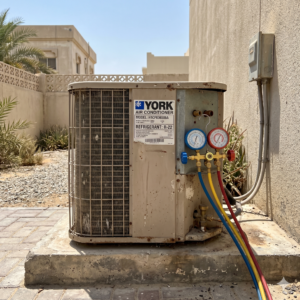
In residential systems, service valves are located on the outdoor unit (condenser). They are typically found on the refrigerant lines:
- Suction line (larger pipe)
- Liquid line (smaller pipe)
Each valve allows technicians to measure pressure, add refrigerant, or diagnose issues.
Common AC Service Valve Problems
1. Schrader Valve Core Leakage
The Schrader valve core is a small internal component similar to a tire valve. Over time, it can wear out or loosen, causing refrigerant to leak.
2. Valve Stem O-Ring Damage
O-rings create a seal inside the valve. In hot climates like the UAE, these rubber components can degrade due to heat and pressure.
3. Missing or Loose Brass Caps
The brass cap on a service valve is not just a cover—it acts as a secondary seal. If it is missing or loose, slow refrigerant leakage can occur.
4. Improper Valve Handling
Incorrect use during servicing can damage threads or internal seals, leading to leaks.
Visual Signs of AC Service Valve Leaks
You do not always need tools to identify a potential issue. Some visible signs include:
- Oil residue around valve fittings
- Dust sticking to oily surfaces
- Hissing sound near the valve
- Reduced cooling performance
Refrigerant carries oil, so leaks often leave oily marks around connection points.
Why Service Valve Leaks Are Common in UAE
Environmental conditions in the UAE increase the risk of valve-related issues.
Extreme Heat
High temperatures cause expansion and contraction in metal components, weakening seals over time.
Dust and Sand Exposure
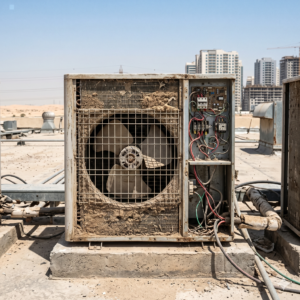
Fine sand particles can enter valve threads or caps, affecting sealing performance.
Continuous AC Usage
AC systems in the UAE run for long hours, increasing pressure cycles and wear on components.
Repair vs Full Condenser Replacement
One of the most important things to understand is that a faulty service valve does not automatically mean you need to replace the entire AC unit.
| Issue | Correct Action |
|---|---|
| Loose Schrader valve | Replace valve core |
| Damaged O-ring | Replace seal |
| Missing cap | Install new cap |
| Severely damaged valve body | Partial repair or replacement |
Only in rare cases does a valve issue require full condenser replacement.
How Professional Technicians Fix Valve Leaks
A trained technician follows a structured approach when dealing with valve leaks.
- Leak detection using pressure or gas testing
- Removal and replacement of faulty valve core
- Replacement of damaged O-rings
- Re-tightening and sealing of valve caps
- System vacuum and refrigerant recharge if needed
This is why proper AC gas refill procedures are often connected to valve repairs.
Risks of Misdiagnosis
Some contractors may misdiagnose valve issues as major system failures.
Common misdiagnosis scenarios:
- Suggesting full AC replacement for minor leaks
- Overcharging refrigerant instead of fixing leaks
- Ignoring valve caps and seals
This can lead to unnecessary costs and recurring problems.
Overcharging Refrigerant: A Hidden Risk
Adding refrigerant without fixing leaks is a temporary solution.
Risks include:
- Higher system pressure
- Compressor damage
- Reduced efficiency
- Shorter AC lifespan
Proper repair should always come before refilling.
Preventing AC Service Valve Problems
You can reduce valve issues with simple steps:
- Schedule regular AC maintenance
- Ensure valve caps are always secured
- Avoid unnecessary handling of service ports
- Keep outdoor unit clean from dust and debris
When to Call a Professional
You should contact a technician if you notice:
- Oil stains around AC pipes
- Weak cooling performance
- Frequent need for gas refill
- Unusual sounds near outdoor unit
These are signs that require proper inspection.
Cost of Repairing AC Service Valve Issues
Service valve repairs are usually affordable compared to major AC repairs.
- Valve core replacement: AED 100 – 300
- O-ring replacement: AED 150 – 400
- Minor valve repair: AED 200 – 600
- Gas refill (if needed): AED 200 – 800
Note: These prices are estimated below market averages and may vary depending on system condition and technician assessment.
Why Proper Diagnosis Saves Money
Accurate diagnosis ensures that you only pay for what is necessary.
Fixing a small valve issue early can prevent:
- Compressor failure
- Full system replacement
- Repeated service costs
Understanding the Bigger Picture
The AC service valve may be a small component, but it plays a critical role in system performance. Ignoring small leaks can lead to larger system failures over time.
If you are noticing signs of a possible valve issue, it is important not to delay. Small leaks can gradually reduce cooling performance, increase energy consumption, and lead to more serious damage if left untreated. With proper inspection and targeted repair, these issues can often be resolved without major replacement. If you need clarity about your AC condition, you can use the WhatsApp or Call button on the top right to connect with the Bio On Air team and understand the most suitable next step.
Conclusion
The ac service valve is a small but essential part of your AC system. Understanding how it works, recognizing early signs of problems, and ensuring proper repair can help you avoid costly damage while maintaining efficient and reliable cooling.