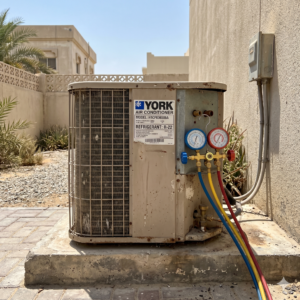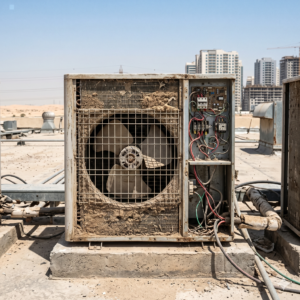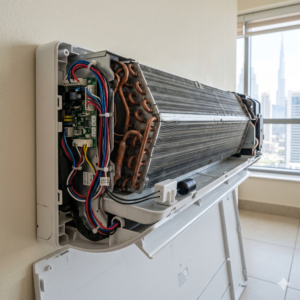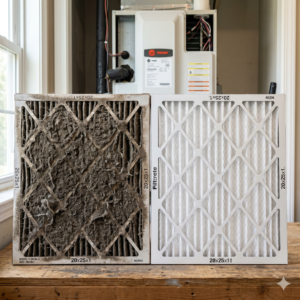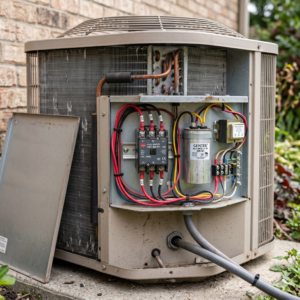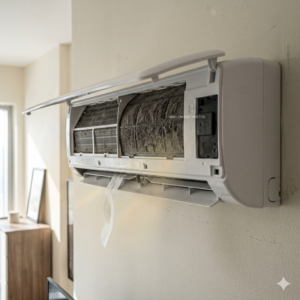





AC sanitation in the UAE is not just about cleaning your air conditioner—it is about eliminating hidden bacteria, mold, and contaminants that affect both your health and your AC performance. In a climate defined by heat, humidity, and dust, proper sanitization is essential for maintaining safe and efficient indoor air.
Table of Contents
ToggleWhat AC Sanitation Really Means
Many people confuse AC cleaning with AC sanitation. While they sound similar, they are fundamentally different in purpose and outcome.
AC cleaning focuses on removing visible dirt such as dust, debris, and buildup from filters, coils, and external components. This improves airflow and system efficiency.
AC sanitation, on the other hand, goes deeper. It involves applying antimicrobial treatments to eliminate bacteria, mold spores, and harmful microorganisms inside the system.
| Aspect | AC Cleaning | AC Sanitation |
|---|---|---|
| Main Goal | Remove dirt and dust | Eliminate bacteria and mold |
| Depth | Surface-level | Internal system treatment |
| Impact | Improves airflow | Improves air quality and hygiene |
This distinction is important because many AC problems in the UAE are not caused by dirt alone, but by microbial growth inside the system.
Why AC Systems in UAE Need Sanitization
The UAE environment creates ideal conditions for contamination inside AC systems. Three main factors contribute to this:
1. High Humidity
When warm air passes through the AC, moisture condenses on internal components like coils and drain pans. This creates a damp environment—perfect for mold and bacteria growth.
2. Constant AC Usage
In Dubai and other Emirates, AC systems run almost continuously. This means contaminants are constantly circulated through the indoor air.
3. Airborne Dust and Sand
Dust particles enter the system and accumulate over time. When combined with moisture, they form a breeding ground for microbial growth.
This combination makes sanitization not optional, but necessary for maintaining healthy indoor conditions.
Common Signs Your AC Needs Sanitization
Many people ignore early warning signs, assuming they are minor issues. However, these signs often indicate deeper contamination.
- Musty or unpleasant smell when AC turns on
- Dust returning quickly after cleaning
- Visible mold near vents or ducts
- Weak or uneven airflow
- Persistent humidity indoors
These symptoms usually mean the problem is inside the system, not just on the surface.
Health Effects of Contaminated AC Systems
One of the biggest risks of poor AC hygiene is its impact on health. Contaminated systems can circulate harmful particles throughout your indoor environment.
Common Health Symptoms
- Allergies and sneezing
- Sore throat and dry cough
- Eye irritation
- Headaches
- Skin irritation
Sick Building Syndrome
In more severe cases, poor indoor air quality can lead to what is known as “Sick Building Syndrome.” This condition occurs when occupants experience ongoing health issues due to contaminated indoor air.
Symptoms often improve when leaving the building, which indicates that the source is environmental rather than medical.
Professional AC Sanitization Process Explained
Proper AC sanitation involves multiple steps designed to treat the entire system—not just one component.
1. System Inspection
The process begins with a detailed inspection to identify contamination levels, moisture buildup, and airflow issues.
2. Coil Cleaning and Antimicrobial Treatment
The evaporator coil is one of the most critical areas. It is cleaned and treated with antimicrobial solutions to remove bacteria and mold.
3. Drain Pan Disinfection
The drain pan collects moisture from the system. If not cleaned, it becomes a major source of bacterial growth.
4. Duct Sanitization (Fogging)
Specialized fogging equipment is used to distribute disinfectant throughout the duct system. This ensures all internal surfaces are treated.
This step is often part of a complete AC deep cleaning process that targets both hygiene and performance.
5. Vent and Diffuser Cleaning
All air outlets are cleaned to remove visible dust and contaminants.
6. Final Testing
After treatment, airflow and system performance are checked to ensure proper operation.
Types of Chemicals Used in AC Sanitization
Modern AC sanitation uses eco-friendly, hospital-grade chemicals designed to be both effective and safe.
Key Characteristics
- Anti-bacterial and anti-fungal properties
- Non-toxic after application
- Safe for children and pets
- Low odor or odor-neutral
These chemicals are designed to eliminate harmful microorganisms without affecting indoor safety.
Are AC Sanitization Chemicals Safe
When applied correctly by professionals, these treatments are safe for indoor environments.
Safety depends on:
- Proper dilution and application
- Use of certified products
- Adequate ventilation during treatment
After application, the system is typically safe to use within a short period.
How Often Should You Sanitize AC in UAE
Due to environmental conditions, AC sanitization should be performed regularly.
| Property Type | Recommended Frequency |
|---|---|
| Apartment | Every 6–12 months |
| Villa | Every 6–12 months |
| Commercial Space | Every 3–6 months |
High humidity and continuous usage make frequent sanitization necessary.
Performance Benefits of AC Sanitization
Sanitization is not only about health—it also improves system performance.
- Better airflow due to clean internal surfaces
- Improved cooling efficiency
- Reduced energy consumption
- Less strain on AC components
This means your AC works better while using less electricity.
AC Sanitization vs Regular Maintenance
Maintenance and sanitization serve different purposes.
- Maintenance ensures the system runs properly
- Sanitization ensures the air is clean and safe
Both are necessary for a complete AC care strategy.
Cost of AC Sanitization in UAE
The cost of AC sanitization depends on system size and treatment scope.
| Service Type | Estimated Cost (AED) |
|---|---|
| Basic Sanitization (1 unit) | 250 – 500 |
| Full System Sanitization | 500 – 1,500+ |
| Villa Sanitization Package | 1,500 – 4,000+ |
Note: Prices are slightly below market averages and may vary depending on contamination level, system size, and accessibility.
Why AC Sanitation Is a Preventive Investment
Ignoring sanitation can lead to:
- Poor indoor air quality
- Health-related issues
- Higher energy bills
- More frequent AC breakdowns
Addressing these issues early is always more cost-effective than dealing with major repairs later.
If you are noticing musty smells, allergy symptoms, or reduced cooling performance, it is important to address the issue early. Contaminated AC systems can silently affect air quality, increase energy consumption, and lead to long-term system damage. With the right approach, these problems can be resolved safely and effectively. If you need clarity about your AC condition or the level of sanitization required, you can use the WhatsApp or Call button on the top right to connect with the Bio On Air team and understand the most suitable next step.
Conclusion
AC sanitation in the UAE is essential for maintaining clean air, protecting health, and ensuring efficient system performance. By understanding the difference between cleaning and sanitization, the process involved, and the benefits it provides, you can make informed decisions that improve both comfort and long-term AC reliability.