




Searching for ac install usually means you are about to make a long-term decision, not just fix a short-term problem. Whether you are replacing an old unit, installing AC in a new property, or upgrading for better efficiency, installation quality will directly affect cooling performance, energy bills, indoor air quality, and even manufacturer warranty validity. Many people feel unsure at this stage—should you try DIY to save money, or is professional installation really necessary? This guide breaks down the reality of AC installation in a clear, practical way, so you can make informed choices and avoid costly mistakes.
Table of Contents
ToggleDIY AC Install vs Professional Installation: A Reality Check
DIY AC installation is often discussed online as a way to save money, but the reality is more complex. Installing an AC system is not like installing a household appliance. It involves refrigerant handling, electrical work, airflow design, and safety compliance.
Here are the key realities most DIY guides do not explain clearly:
Legal Access to Refrigerant
Refrigerant is not a freely handled substance. In many regions, including the UAE, refrigerant handling requires licensed professionals. Improper handling can cause safety hazards, environmental harm, and system damage. DIY installers often cannot legally purchase, charge, or recover refrigerant correctly.
Required Certifications and Training
Professional AC installers are trained to handle electrical connections, pressure testing, evacuation, and commissioning. Without proper certification, mistakes such as incorrect wiring or poor vacuuming can shorten system life dramatically.
Specialized Tool Barriers
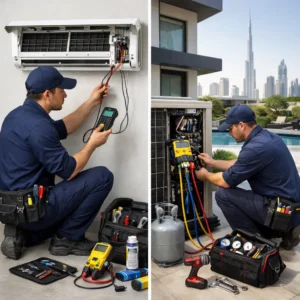
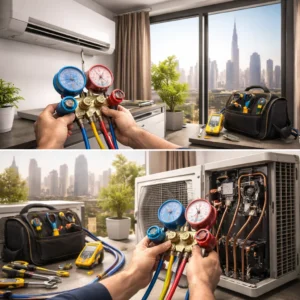
Proper AC installation requires tools that most homeowners do not own, such as vacuum pumps, manifold gauges, leak detectors, and torque wrenches. Skipping or improvising these tools leads to moisture in the system, refrigerant leaks, and inefficient cooling.
Manufacturer Warranty Risks
Most AC manufacturers require installation by certified professionals to keep warranties valid. DIY installation often voids warranty coverage, meaning future repairs or part replacements may come entirely out of pocket.
In practice, DIY installation may appear cheaper at first, but the risks often outweigh the savings. Professional installation is not just about convenience—it protects system performance, safety, and long-term costs.
Choosing the Right AC System: More Than Just Cooling Power
One of the biggest mistakes during AC install is choosing a system based only on price or brand. The right system must match your space, usage pattern, and efficiency goals.
Proper Sizing Logic: Why Bigger Is Not Better
An oversized AC cools too quickly and shuts off frequently, causing uneven temperature, higher humidity, and unnecessary wear. An undersized unit runs continuously, increasing energy use and strain.
Proper sizing considers:
- Room or property size
- Ceiling height
- Insulation quality
- Window exposure and sunlight
- Number of occupants and heat-generating equipment
A professional installer calculates these factors instead of guessing based on square meters alone.
Efficiency Ratings and Energy Use
Efficiency ratings directly affect electricity consumption. Higher efficiency systems may cost more upfront, but they often reduce monthly energy bills and perform better under heavy usage.
When planning an AC install, it is important to understand how efficiency impacts:
- Long-term operating cost
- Cooling consistency during peak summer
- Environmental footprint
An installer should explain efficiency differences clearly, not just recommend the most expensive option.
Central AC vs Ductless Options
Different system types suit different properties:
- Central AC: suitable for larger homes or buildings with existing ductwork, offering uniform cooling.
- Ductless systems: ideal for retrofits, individual room control, or properties without ducts.
Choosing between these options affects installation complexity, maintenance needs, and long-term flexibility. Reviewing professional AC installation and replacement guidance can help clarify which system fits your situation.
Common AC Install Red Flags You Should Never Ignore
Poor installation is one of the main reasons new AC systems underperform. Knowing the warning signs helps you avoid future problems.
Improper Evacuation and Moisture Removal
Before refrigerant is charged, the system must be evacuated to remove air and moisture. Skipping or rushing this step leads to corrosion, poor cooling, and compressor failure.
Bad Equipment Placement
Incorrect placement of indoor or outdoor units can reduce airflow, increase noise, and lower efficiency. Outdoor units need proper clearance for heat release, while indoor units must allow even air distribution.
Compatibility Issues With Existing Infrastructure
Reusing old piping, wiring, or drainage without inspection can cause leaks, electrical faults, or water damage. A good installer checks compatibility instead of assuming existing components are acceptable.
Understanding AC Install Cost: What Really Drives Pricing
Cost is a major concern when planning an AC install, but focusing only on the final number can be misleading. Pricing is influenced by several factors.
Key cost drivers include:
- Type and capacity of AC system
- Installation complexity and labor expertise
- Permits and compliance requirements
- Materials such as piping, wiring, insulation, and mounts
Instead of comparing prices blindly, it is better to understand what is included. A transparent installer will explain what drives the price and what level of workmanship you are paying for.
For up-to-date cost guidance and service scope, you can refer to our pricing page, which explains how pricing is structured. Actual costs may vary depending on system choice and site conditions, and the final price should always be confirmed before work begins.
What to Expect During a Professional AC Install: Step-by-Step
Knowing the installation process helps reduce anxiety and allows you to spot potential issues early.
Step 1 Site Assessment and Preparation
The installer evaluates the space, confirms system placement, checks electrical capacity, and prepares mounting locations.
Step 2 Equipment Positioning
Indoor and outdoor units are positioned according to airflow and safety requirements. Proper mounting reduces vibration and noise.
Step 3 Piping, Wiring, and Drainage Setup
Refrigerant lines, electrical connections, and drain pipes are installed or upgraded. Proper insulation and routing prevent leaks and condensation.
Step 4 System Evacuation and Charging
The system is evacuated to remove air and moisture, then charged with refrigerant according to specifications.
Step 5 Commissioning and Performance Testing
The installer tests cooling performance, airflow, pressure levels, and safety controls to ensure the system operates correctly.
Pre-Install Checklist: Key Questions to Ask Your Installer
Asking the right questions before installation reduces risk and improves outcomes.
- How was the system size calculated for my space?
- What efficiency options are available and how do they affect energy use?
- Will existing piping, wiring, and drainage be inspected or replaced?
- How is evacuation and leak testing performed?
- What documentation is provided for warranty and future service?
Clear answers indicate professionalism and transparency.
Why Professional AC Install Protects Long-Term Reliability
AC installation is not just about getting cold air on day one. It sets the foundation for years of operation. Poor installation increases the likelihood of frequent repairs, higher energy bills, and early component failure.
Professional installation focuses on:
- Correct system sizing and placement
- Safe refrigerant and electrical handling
- Compatibility with your property
- Long-term efficiency and air quality
This approach reduces unexpected costs and stress over time.
When AC Install Should Be Handled by Professionals
AC installation mistakes rarely show immediately. Problems such as inefficient cooling, moisture buildup, or system strain often appear weeks or months later. Delaying proper installation can lead to higher electricity consumption, repeated repairs, and even permanent damage.
Bio On Air handles AC install with a focus on correct sizing, safe procedures, and clear communication. Acting carefully at the installation stage helps prevent future problems rather than reacting to them later. If you want to discuss system options or understand what a proper installation involves, you can use the WhatsApp or Call button at the top right of this page to speak with our team.
Conclusion
An ac install decision affects comfort, cost, and system reliability for years. DIY installation often underestimates legal, technical, and warranty risks, while professional installation addresses these realities with proper tools and expertise.
By choosing the right system, understanding efficiency and sizing, recognizing installation red flags, and asking the right questions upfront, you reduce uncertainty and protect your investment. In a climate where AC is essential, professional installation is not an extra—it is a foundation for stable cooling, healthier indoor air, and predictable long-term costs.