




Hearing an ac dripping noise can be confusing and worrying, especially in UAE homes where AC systems run almost all year. That sound is not always just “water dripping”—it can indicate airflow problems, drainage blockage, or internal system stress. In this guide, we will break down what each type of dripping noise means, what causes it, and how to respond correctly.
Table of Contents
ToggleUnderstanding AC Dripping Noise What You Are Actually Hearing
When people say “dripping noise,” they usually imagine water falling drop by drop. But in AC systems, several different sounds can be mistaken as dripping.
Each sound type often points to a different mechanical condition inside the system. Understanding the difference is the first step to solving the problem correctly.
Common types of AC dripping-related sounds:
- Soft water dripping (like a tap leak)
- Gurgling or bubbling sound
- Ticking or light tapping noise
- Continuous trickling inside walls or ceiling
- Sudden dripping followed by silence
Each of these sounds comes from different internal processes, not all of them are harmless.
What Each AC Dripping Noise Means Mechanically
1. Soft Dripping Sound (Regular Water Drops)
This is the most common type. It usually indicates normal condensation—but only if the drainage system is working properly.
If the sound becomes louder or irregular, it may mean water is not draining correctly and is collecting somewhere it should not.
2. Gurgling or Bubbling Sound
This often points to a partially blocked condensate drain line. Air gets trapped inside the water flow, creating a bubbling effect.
In UAE conditions, this is very common due to dust mixing with moisture, forming sludge inside the pipe.
3. Ticking or Light Knocking Sound
This can be water droplets hitting internal components or ducts. It may also indicate slight pipe movement due to improper installation or slope.
4. Continuous Trickling Inside Walls or Ceiling
This is more serious. It often means water is leaking from the drainage system into surrounding structures.
At this stage, the issue is no longer just AC-related—it becomes a property damage risk.
5. Sudden Drip Then Silence
This may indicate intermittent freezing and melting inside the system, especially related to evaporator coil issues.
Main Causes of AC Dripping Noise
Clogged Condensate Drain Line
This is the most common cause. The drain line carries condensation water away from the AC unit.
In UAE environments, dust particles combine with moisture to create thick sludge that blocks the pipe.
When blocked, water cannot flow properly and starts accumulating, leading to dripping sounds.
Frozen Evaporator Coil
If airflow is restricted or refrigerant levels are incorrect, the evaporator coil can freeze.
When the ice melts, it produces excess water that overwhelms the drainage system, creating dripping noise.
Refrigerant Issues
Low refrigerant can cause pressure imbalance, leading to coil freezing and water overflow.
This is not just a noise issue—it affects cooling performance and system health.
Improper Drain Pipe Slope
Drain pipes must be installed with proper slope to allow gravity flow.
If the slope is incorrect, water can stagnate and create intermittent dripping or gurgling sounds.
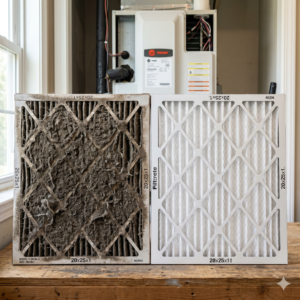
Dirty Air Filters and Airflow Restriction
Blocked airflow leads to condensation imbalance. More moisture forms than the system can handle, resulting in excess water.
UAE-Specific Reasons Why AC Dripping Noise Is Common
AC systems in the UAE operate under unique environmental stress.
High Humidity + Desert Dust
Humidity creates condensation, while fine dust particles enter the system. Together, they form sludge inside drain lines.
Continuous AC Usage
Unlike other countries, AC systems in UAE often run almost 24/7. This increases water production and system strain.
Sealed Indoor Environments
Most apartments and villas are tightly sealed, reducing airflow and increasing internal moisture buildup.
Temperature Difference
Cold indoor air meeting hot outdoor air creates heavy condensation inside ducts and coils.
Location-Based Diagnosis Based on AC Type
Ducted AC Systems (Ceiling Units)
Dripping noise usually comes from above the ceiling. This can indicate:
- Clogged drain line inside ceiling void
- Water pooling in drain tray
- Leak spreading into gypsum ceiling
This type requires urgent attention because damage is hidden.
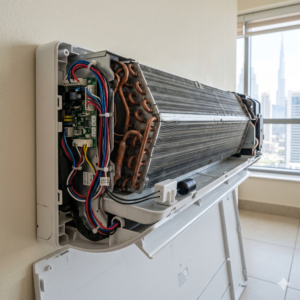
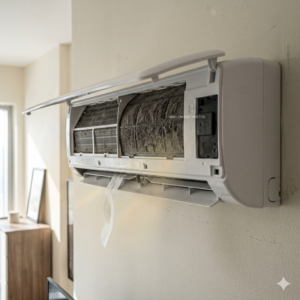
Wall-Mounted Split Units
Noise often comes from inside the indoor unit.
- Dripping → blocked drain pipe
- Gurgling → partial blockage
- Leak visible → overflow condition
Chilled Water Systems
In larger buildings, dripping noise may come from fan coil units.
This often indicates:
- Drain pan overflow
- Improper water flow
- Condensation mismanagement
Immediate Actions to Prevent Damage
If you hear dripping noise, do not ignore it. Small issues can quickly turn into ceiling damage or mold problems.
Step-by-step immediate response:
- Turn off the AC system if leakage is visible
- Check for water stains or ceiling dampness
- Inspect visible drain pipe (if accessible)
- Clean air filters to improve airflow
- Place a container if water is dripping externally
These steps do not fix the problem, but they help prevent further damage.
What a Proper Drain Cleaning Fix Should Include
A correct professional fix is not just blowing air into the pipe. It must address the root cause.
A complete fix should include:
- Full drain line flushing and cleaning
- Removal of sludge buildup
- Inspection of drain tray condition
- Checking pipe slope and alignment
- Ensuring proper water flow
- Testing system after cleaning
In many cases, deeper cleaning such as AC deep cleaning may be required to remove internal buildup affecting drainage.
Why Dripping Noise Often Comes Back After “Quick Fix”
Many people experience the same issue again after a few weeks. This usually happens because:
- Only partial cleaning was done
- Sludge inside pipes was not fully removed
- Root cause (airflow or refrigerant issue) was ignored
- Drain slope was not corrected
Without addressing the root cause, the problem will return.
When You Should Call a Professional Immediately
- Water leaking from ceiling or walls
- Strong musty smell with dripping noise
- AC not cooling properly along with noise
- Repeated issue after previous cleaning
These are signs that the problem is beyond basic maintenance.
Long-Term Prevention Tips
- Clean air filters regularly (every 2–4 weeks)
- Schedule periodic AC maintenance
- Ensure proper drainage flow
- Avoid running AC with blocked airflow
Preventive care reduces both noise and long-term damage risk.
If you are hearing AC dripping noise, it is important to understand that the issue may not be just water—it can be a sign of internal blockage, airflow imbalance, or system stress. When ignored, it can lead to ceiling damage, mold growth, reduced air quality, and higher energy consumption. Addressing the problem early helps avoid more expensive repairs and long-term damage. If you are unsure about the source of the noise or want to confirm the condition of your system, you can use the WhatsApp or Call button on the top right to connect with the Bio On Air team and understand the most suitable next step.
Conclusion
AC dripping noise is not just an annoyance—it is an early warning sign of internal system issues. By understanding the type of sound, identifying the cause, and taking the right action early, you can prevent damage, maintain efficiency, and ensure a healthier indoor environment.