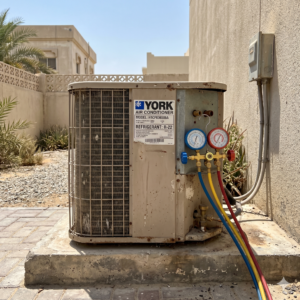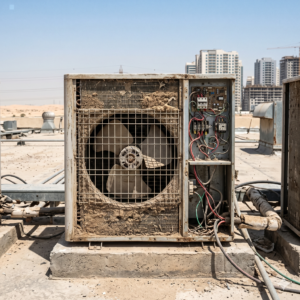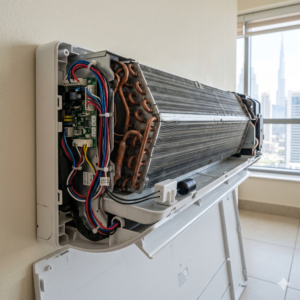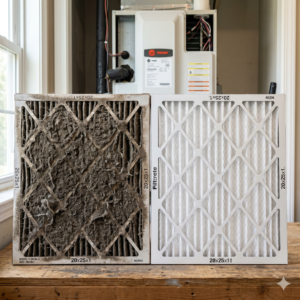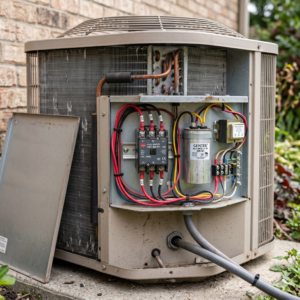





The contactor in ac unit is a small component with a big role. It controls when your AC turns on and off by connecting low-voltage signals from the thermostat to high-voltage power for the compressor. In the UAE, where AC systems run almost continuously, contactor failure is one of the most common and misunderstood issues.
Table of Contents
ToggleWhat Is a Contactor in AC Unit and What Does It Do
To understand the contactor, think of it as a gatekeeper. Your thermostat sends a low-voltage signal (usually 24V), and the contactor responds by allowing high-voltage electricity (220V–415V depending on system type) to flow to the compressor and fan motor.
In simple terms:
- Thermostat = gives command
- Contactor = executes the command
- Compressor = performs the cooling
Without a working contactor, your AC cannot properly start or stop.
How the Contactor Connects Low Voltage to High Voltage
The contactor acts as a bridge between two different electrical systems:
- Low voltage side (control): from thermostat
- High voltage side (power): to compressor and fan
When the thermostat signals cooling:
- The contactor coil is energized
- The contacts close (like a switch turning ON)
- High-voltage power flows to the compressor
When cooling stops:
- The coil deactivates
- The contacts open
- Power to compressor is cut off
This switching happens many times a day, especially in UAE conditions where AC runs almost continuously.
Common Signs of a Faulty Contactor in AC Unit
Contactor problems often show clear symptoms. Understanding them helps you avoid misdiagnosis.
1. AC Not Turning On
If the contactor coil is burned or not receiving voltage, it cannot close the circuit. This prevents the compressor from starting.
2. AC Not Turning Off
This is one of the most dangerous signs. If the contacts become welded together, the AC continues running even when the thermostat is off.
3. Clicking Sound Without Startup
You may hear a clicking sound, but the compressor does not start. This often indicates weak or damaged contacts.
4. Humming Noise Without Cooling
If the contactor coil is partially energized, it may produce a humming sound but fail to properly connect power.
5. Burn Marks or Visible Damage
Burned or blackened contacts are a clear sign of electrical wear or overheating.
Welded Contacts vs Burned Coil Explained
| Issue | What Happens | Result |
|---|---|---|
| Welded Contacts | Contacts stick together permanently | AC never turns off |
| Burned Coil | Electromagnetic coil fails | AC does not start |
Both problems require replacement, not repair.
UAE-Specific Causes of Contactor Failure
The UAE environment creates unique risks for AC contactors.
1. Desert Ants
Ants are attracted to electrical components and often enter contactors. Their presence can cause short circuits or block proper contact movement.
2. Geckos
Small reptiles can accidentally enter outdoor AC units, causing electrical shorting when they touch live components.
3. Fine Sand and Dust
Dust accumulation can interfere with contact movement, leading to poor electrical connection and overheating.
4. Extreme Heat
High temperatures increase electrical resistance and accelerate wear on contact surfaces.
These factors make contactor failure more frequent in UAE compared to other regions.
Residential vs Industrial Contactor Differences
Residential Split AC Contactors
- Single-phase systems
- Compact design
- Lower voltage load
- Used in apartments and villas
Industrial Contactors (Chillers / AHUs)
- Three-phase systems
- Heavy-duty construction
- Higher voltage and current capacity
- Used in commercial and industrial buildings
Industrial contactors are more complex and significantly more expensive.
Dangerous Signs You Should Not Ignore
Some symptoms indicate urgent risk:
- AC runs continuously without stopping
- Electrical burning smell
- Loud humming without startup
- Breaker frequently trips
These signs may lead to compressor damage or electrical hazards if ignored.
Basic Contactor Replacement Process
Replacing a contactor is a technical process and should be handled by professionals.
Typical steps include:
- Disconnect power supply
- Open AC electrical panel
- Remove damaged contactor
- Install new contactor with proper wiring
- Test system operation
While the process may look simple, incorrect installation can damage the compressor or create safety risks.
Cost of Contactor in AC Unit in UAE
Understanding realistic pricing helps you avoid overpaying.
Part Cost
- Standard residential contactor: AED 80 – 200
- Heavy-duty contactor: AED 200 – 600+
Labor Cost
- Basic replacement: AED 150 – 350
- Complex systems: AED 300 – 700
Total Estimated Cost
- Residential AC: AED 200 – 500
- Commercial systems: AED 500 – 1,200+
Note: These prices are slightly below typical UAE market rates and may vary depending on system type, accessibility, and urgency.
How to Avoid Overcharging
To avoid paying more than necessary:
- Ask for part and labor breakdown
- Confirm the exact issue before replacement
- Check if additional components are affected
Contactor replacement is common, but should not be overpriced.
Relationship Between Contactor Failure and Other AC Issues
Contactor problems are often connected to other system issues.
- Dirty coils increase load and stress contactor
- Low refrigerant causes frequent cycling
- Electrical instability damages coil
In many cases, proper AC repair diagnosis is required to identify the root cause.
Preventing Contactor Failure
Simple maintenance can extend contactor life:
- Regular AC servicing
- Cleaning outdoor unit
- Checking electrical connections
- Protecting unit from pests
Preventive care reduces the risk of sudden breakdowns.
Why Early Detection Matters
Ignoring contactor issues can lead to:
- Compressor failure (very expensive)
- Electrical hazards
- Higher electricity consumption
Early replacement is much cheaper than major repairs.
If you notice unusual AC behavior such as constant running, clicking sounds, or failure to start, it is important not to ignore it. Electrical components like the contactor play a critical role in system operation, and small faults can quickly lead to larger damage, reduced efficiency, or safety risks. Addressing these issues early helps maintain stable performance and prevents unnecessary costs. If you need clarity about your AC condition, you can use the WhatsApp or Call button on the top right to connect with the Bio On Air team and understand the most suitable next step based on your system.
Conclusion
The contactor in ac unit is a critical component that controls power flow to your system. Understanding its function, symptoms of failure, and realistic repair costs helps you make informed decisions, avoid overcharging, and maintain a safe and efficient AC system in UAE conditions.