




Understanding the ac unit and condenser is essential if you want your AC system to work efficiently in the UAE. In extreme heat, both the indoor unit and outdoor condenser must work together perfectly to remove heat from your space. This guide explains how they function, common UAE issues, and what happens when one fails.
Table of Contents
ToggleHow AC Unit and Condenser Work Together
An air conditioning system is not a single device—it is a coordinated system made of two main parts: the indoor unit (evaporator) and the outdoor condenser. These two components are connected through refrigerant lines and electrical communication.
The basic process works like this:
- The indoor unit absorbs heat from the room air
- The refrigerant carries that heat to the outdoor condenser
- The condenser releases the heat outside
- The cooled refrigerant cycles back inside
This continuous heat transfer cycle is what keeps your indoor space cool. If either the indoor unit or condenser fails, the entire system performance drops or stops.
Role of the Indoor AC Unit
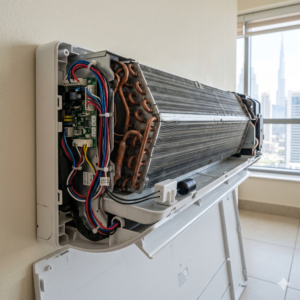
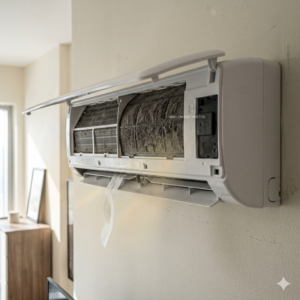
The indoor unit is responsible for cooling the air inside your room. It contains the evaporator coil, blower fan, and air filters.
Its main functions include:
- Absorbing heat from indoor air
- Circulating cooled air back into the room
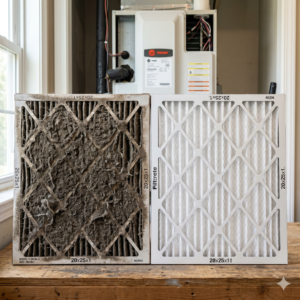
- Filtering dust and airborne particles
- Controlling airflow distribution
In UAE homes, indoor units often run for long hours, which makes filter cleanliness and airflow critical for performance.
Role of the Outdoor Condenser
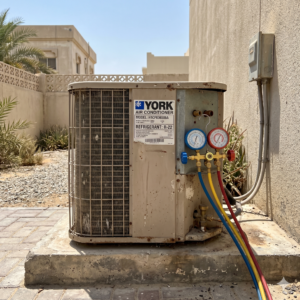
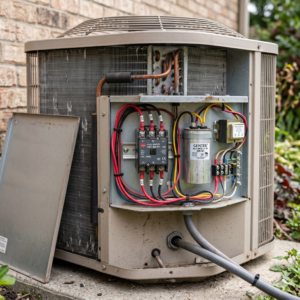
The outdoor condenser is responsible for releasing the heat collected from inside the building. It contains the compressor, condenser coil, and fan.
Its main functions:
- Compressing refrigerant gas
- Releasing heat into outdoor air
- Maintaining pressure in the system
In UAE conditions, the condenser faces extreme stress due to high outdoor temperatures, often above 40°C.
Why UAE Conditions Are Challenging for AC Systems
Extreme Heat and Performance Limits
In many regions, AC systems are designed for moderate climates. In the UAE, however, systems must operate under extreme heat for extended periods.
This leads to:
- Reduced cooling efficiency
- Increased compressor load
- Higher risk of component failure
T3 Tropical Rating Requirement
In the UAE, AC systems should ideally have a T3 rating. This rating indicates that the system is designed to perform efficiently in high ambient temperatures.
Without T3 rating:
- Cooling performance drops significantly
- Compressor works harder than designed
- System lifespan decreases
Sand and Dust Impact
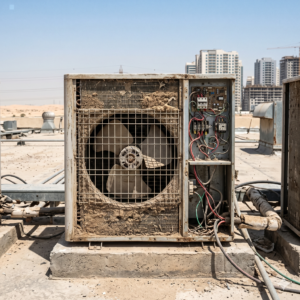
Outdoor condensers in the UAE are constantly exposed to sand and dust. These particles can:
- Block airflow through condenser coils
- Reduce heat dissipation efficiency
- Cause overheating
Salt Air Corrosion
In coastal areas like Dubai and Sharjah, salt in the air can corrode condenser components.
This can lead to:
- Coil damage
- Reduced heat transfer efficiency
- Shortened system lifespan
Key Differences Between Indoor Unit and Condenser
| Feature | Indoor Unit | Outdoor Condenser |
|---|---|---|
| Location | Inside the room | Outside the building |
| Main Function | Absorb heat | Release heat |
| Key Components | Evaporator, fan, filter | Compressor, coil, fan |
| Exposure | Controlled environment | Extreme weather |
Common Symptoms When One Unit Fails
Indoor Unit Works but No Cooling
If the indoor unit is running but the air is not cold, the issue is often with the condenser.
Possible causes:
- Compressor failure
- Low refrigerant
- Blocked condenser coils
Condenser Running but Indoor Unit Not Blowing Air
This usually indicates an indoor issue such as:
- Blower motor failure
- Electrical issue
- Control board malfunction
System Turning On and Off Frequently
This could be caused by overheating, electrical faults, or communication issues between units.
Capacitor and Contactor Issues in High Temperature
In UAE conditions, electrical components like capacitors and contactors are under constant stress.
Common issues:
- Capacitors weakening due to heat
- Contactors burning out from continuous operation
Symptoms include:
- AC not starting
- Clicking sounds
- Intermittent cooling
These are among the most common repair cases handled under AC repair services.
Can You Replace Only the Condenser
Many homeowners ask if they can replace just the condenser without changing the indoor unit.
The answer depends on several factors:
Refrigerant Compatibility
Older systems may use R22, while newer systems use R410A or R32. Mixing components can cause performance issues.
Efficiency Matching
Different models have different efficiency ratings. Mismatched units may reduce overall system efficiency.
System Design Compatibility
Not all indoor units are compatible with newer condensers.
In many cases, replacing both units together ensures better performance and avoids long-term issues.
Communication Problems Between Units
The indoor unit and condenser communicate through electrical signals.
Common communication issues include:
- Loose wiring connections
- Faulty control boards
- Signal interference
When communication fails, the system may not operate correctly even if both units are functional.
Installation Considerations in UAE Villas
Distance Between Units
There is a recommended maximum distance between indoor and outdoor units. Exceeding this can reduce efficiency.
Oil Trap Requirement
In multi-story villas, oil traps are required in vertical piping to ensure proper compressor lubrication.
Proper Pipe Sizing
Incorrect pipe size can affect refrigerant flow and system performance.
Drainage System Design
Poor drainage can lead to water leakage and indoor damage.
Maintenance Needs for Both Units
Both indoor and outdoor units require regular maintenance.
- Indoor: filter cleaning, airflow checks
- Outdoor: coil cleaning, debris removal
Without maintenance, performance drops and energy consumption increases.
Signs Your AC System Needs Attention
- Reduced cooling performance
- Unusual noise
- High electricity bills
- Frequent breakdowns
These signs often indicate deeper issues involving both units.
Why Balanced System Performance Matters
The indoor unit and condenser must work in balance. If one is underperforming, the other is forced to compensate.
This leads to:
- Increased wear and tear
- Higher energy usage
- Shorter system lifespan
If you are experiencing issues where your AC is not cooling properly or showing signs of imbalance between indoor and outdoor units, it is important to address the problem early. Ignoring these signs can lead to reduced air quality, higher electricity consumption, and potential system failure. With the right diagnosis, these issues can be resolved before they become major problems. If you need guidance on your AC system condition, you can use the WhatsApp or Call button on the top right to connect with the Bio On Air team and understand the most suitable next step.
Conclusion
The ac unit and condenser work together as a complete system to maintain cooling in UAE conditions. Understanding how they function, common failure points, and installation considerations helps you maintain performance, reduce breakdowns, and ensure long-term comfort.