




If you are searching for how to clean air purifier filter, the most important thing to understand first is this: not all filters can be cleaned. In fact, washing the wrong filter—especially HEPA or carbon—can permanently damage it. This guide explains exactly what you can clean, what you must never wash, and how to maintain your air purifier safely in UAE conditions.
Table of Contents
ToggleUnderstand Your Filter Type Before Cleaning
Before doing anything, you need to identify what type of filter your air purifier uses. This step is critical because cleaning the wrong filter incorrectly can destroy its performance.
| Filter Type | Washable | Cleaning Method |
|---|---|---|
| Pre-filter (mesh or foam) | Yes | Wash or vacuum |
| True HEPA filter | No | Light vacuum only (very careful) |
| Activated carbon filter | No | Replace only |
| Washable HEPA (rare models) | Yes (check manual) | Rinse only if explicitly allowed |
Important: Most air purifiers in the UAE use non-washable HEPA and carbon filters. Washing them will damage the internal structure and reduce filtration efficiency permanently.
Why HEPA and Carbon Filters Must Not Be Washed
True HEPA filters are made of very fine fibers designed to trap microscopic particles like dust, allergens, and bacteria. When exposed to water, these fibers can collapse or stick together, reducing airflow and filtration ability.
Activated carbon filters work by absorbing odors and gases. Once wet, the carbon loses its adsorption capacity and cannot be restored.
That means:
- Washing HEPA = loss of filtration efficiency
- Washing carbon = permanent odor retention
This is one of the most common mistakes people make when trying to maintain their air purifier.
How to Clean Pre-Filters Safely
The pre-filter is the first layer of protection in your air purifier. It captures large particles like dust, hair, and debris.
Cleaning it regularly helps extend the life of your HEPA filter.
Step-by-Step Pre-Filter Cleaning
- Turn off and unplug the air purifier
- Remove the front panel or cover
- Take out the pre-filter
- Shake off loose dust outside
- Wash with water (if washable type)
- Use mild soap if needed
- Rinse thoroughly
- Let it dry completely before reinstalling
Important: Never reinstall a damp filter. Moisture trapped inside can lead to mold growth—especially in humid AC environments like UAE homes.
How to Clean HEPA Filters Without Damage
HEPA filters are not designed to be washed, but light maintenance is still possible.
Safe Cleaning Method
- Use a vacuum cleaner with low suction
- Do not press or touch the filter surface
- Clean only visible dust on the surface
- Do not use water or chemicals
This method helps remove surface dust without damaging internal fibers.
However, this is not a full cleaning—it only extends usability slightly.
How to Handle Activated Carbon Filters
Activated carbon filters cannot be cleaned. Once saturated, they must be replaced.
Some users try to expose them to sunlight or air them out. While this may reduce smell temporarily, it does not restore full functionality.
If your purifier still smells after cleaning other parts, the carbon filter is likely exhausted.
Step-by-Step Full Cleaning Process
Here is a complete safe cleaning workflow:
- Turn off and unplug the device
- Open the purifier and remove all filters
- Clean the pre-filter (wash or vacuum)
- Lightly vacuum HEPA filter surface
- Check carbon filter condition (replace if needed)
- Wipe internal housing with dry cloth
- Ensure all parts are completely dry
- Reassemble carefully
This process keeps your purifier functioning without damaging sensitive components.
How Often Should You Clean Filters in UAE
UAE conditions require more frequent maintenance due to dust and construction activity.
| Filter Type | Cleaning Frequency |
|---|---|
| Pre-filter | Every 2–4 weeks |
| HEPA filter | Light vacuum every 1–2 months |
| Carbon filter | Replace every 3–6 months |
If you live near construction zones or busy roads, you may need to clean more often.
How to Reset Filter Indicator Light
Most modern air purifiers have a filter replacement indicator. After cleaning or replacing filters, you may need to reset it manually.
Common Reset Methods
- Press and hold the reset button for 3–5 seconds
- Hold power button until light turns off
- Use mobile app (for smart models)
Each brand is slightly different, so always check your user manual.
Signs Your Filter Needs Replacement (Not Cleaning)
Cleaning is not always enough. Some signs indicate that replacement is necessary:
- Persistent bad odor
- Reduced airflow even after cleaning
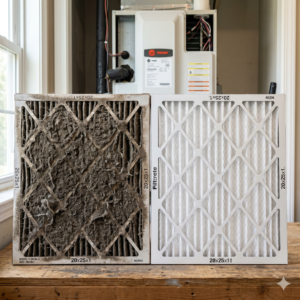
- Visible discoloration or clogging
- Allergy symptoms returning
At this stage, cleaning will not restore performance.
Common Mistakes to Avoid
- Washing HEPA filters
- Reinstalling damp filters
- Using harsh chemicals
- Ignoring filter replacement schedule
These mistakes can reduce efficiency and even damage the unit.
Why Proper Filter Maintenance Matters
An air purifier is only as effective as its filter condition. Poor maintenance can lead to:
- Reduced air quality
- Higher energy consumption
- Shortened device lifespan
- Circulation of trapped pollutants
In UAE environments where dust and indoor air circulation are constant, proper maintenance becomes even more important.
Connection Between AC Systems and Air Quality
Many people rely on air purifiers to improve indoor air quality, but the AC system also plays a major role.
If ducts are dirty, they can reintroduce dust and contaminants into the air—even if your purifier is clean.
This is why indoor air quality should be approached as a complete system, not just a single device.
When Cleaning Alone Is Not Enough
If you notice that your air purifier gets dirty very quickly, it may indicate a larger air quality issue.
- Heavy dust from ducts
- Poor airflow circulation
- Hidden contamination in AC system
In such cases, cleaning the purifier alone will not solve the problem.
If you are maintaining your air purifier regularly but still notice dust buildup, odor, or reduced air quality, it may be a sign that the issue is coming from your AC system rather than the purifier itself. In UAE environments, dust and humidity can accumulate inside ducts and circulate continuously. Addressing this early can prevent further strain on your purifier and reduce long-term maintenance costs. If you need clarity about your indoor air quality situation, you can use the WhatsApp or Call button on the top right to connect with the Bio On Air team and understand the most suitable next step.
Conclusion
Knowing how to clean air purifier filter correctly helps you maintain air quality without damaging your device. By understanding which filters can be cleaned and which must be replaced, you can extend performance, reduce costs, and ensure a healthier indoor environment.