




An indoor air quality check in UAE homes is no longer optional—it’s becoming essential. If you notice constant fatigue, sinus irritation, or a musty smell indoors, the issue may not be visible but present in the air you breathe. This guide explains symptoms, causes, testing methods, and practical solutions.
Table of Contents
ToggleWhy Indoor Air Quality Becomes a Hidden Problem in UAE Homes
Unlike many countries where homes naturally ventilate, properties in the UAE are designed to stay sealed. This is necessary to keep cooling efficient, but it creates a side effect: indoor air becomes trapped.
Most apartments and villas operate with:
- Closed windows for long periods
- Continuous air conditioning
- Minimal fresh air exchange
While this keeps temperatures comfortable, it also allows pollutants to accumulate. Over time, these particles circulate repeatedly through the AC system instead of being removed.
This is why indoor air quality problems in the UAE often build up silently.
Common Health Symptoms Linked to Poor Indoor Air
One of the biggest challenges with indoor air quality is that the symptoms are often misunderstood. Many people assume they are related to weather, stress, or seasonal illness.
However, poor indoor air can cause:
- Chronic dry cough
- Frequent sinus congestion
- Eye irritation and dryness
- Headaches and fatigue
- Worsening asthma or allergies
A key sign is pattern-based symptoms. If you feel better when leaving your home and worse when returning, indoor air quality is likely a contributing factor.
Musty Smell Is Not Just a Smell
Many UAE residents notice a “musty” or “damp” smell when the AC starts. This is often ignored or masked with air fresheners.
However, this smell usually indicates:
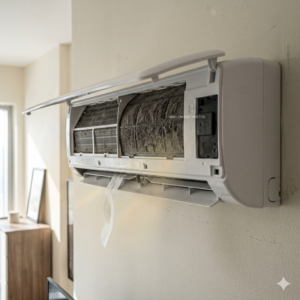
- Mold growth inside ducts or coils
- Moisture trapped in the system
- Bacterial buildup in hidden areas
This is not just an odor issue—it is a sign that contaminants are being circulated in your living space.
What Happens Inside a Sealed AC Environment
To understand indoor air quality in the UAE, you need to understand airflow behavior.
In a typical apartment:
- Air is cooled and recirculated continuously
- Dust and particles enter through small gaps or during door openings
- Moisture forms due to temperature differences
Without proper cleaning or filtration, this creates a cycle where pollutants build up over time.
What a Professional Indoor Air Quality Check Tests
A proper indoor air quality check is not just a basic reading—it is a structured analysis of multiple pollutants.
1. PM2.5 and Desert Dust
Fine particulate matter (PM2.5) is one of the most common pollutants in the UAE. It comes from:
- Outdoor desert dust
- Construction activity
- Indoor dust accumulation
These particles are small enough to enter the lungs and affect respiratory health.
2. VOCs (Volatile Organic Compounds)
VOCs are gases released from:
- Furniture and wood finishes
- Cleaning chemicals
- Paint and adhesives
In sealed environments, VOCs can build up and cause headaches, dizziness, and irritation.
3. CO2 Levels
Carbon dioxide levels increase in closed environments with limited ventilation.
High CO2 levels can lead to:
- Fatigue
- Poor concentration
- Feeling of “stale air”
4. Mold Spores
Mold spores are often found in AC systems, especially in humid conditions.
They can originate from:
- AC ducts
- Drain pans
- Hidden damp areas
These spores are a major trigger for allergies and respiratory issues.
Basic Sensor Check vs Laboratory Air Testing
Not all indoor air quality checks are equal. Understanding the difference is important.
| Type | Scope | Accuracy |
|---|---|---|
| Basic Sensor Check | Real-time readings (PM, CO2) | General indication |
| Laboratory Testing | Detailed pollutant analysis | High accuracy with report |
Basic checks are useful for quick assessment, while lab testing provides deeper insight into hidden contaminants.
Indoor Air Quality by Property Type in UAE
New Villas
Newly built properties often have higher VOC levels due to fresh materials and finishes.
High-Rise Apartments
These units may experience:
- Higher CO2 levels due to limited ventilation
- Dust infiltration from external air
Older Properties
Older systems are more likely to have:
- Dust accumulation in ducts
- Mold growth from long-term moisture
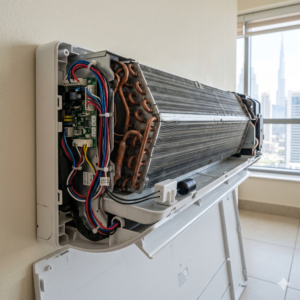
Why AC Systems Are Central to Air Quality
Your AC system is not just cooling the air—it is controlling what you breathe.
If the system is not properly maintained, it can circulate:
- Dust particles
- Bacteria and mold spores
- Odors and contaminants
This is why solutions often involve cleaning and optimizing the AC system itself.
Solutions After an Indoor Air Quality Check
1. AC Duct Cleaning
Removes internal dust and contaminants from airflow pathways.
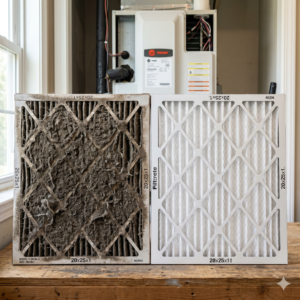
2. Filter Upgrades
Higher-quality filters can capture smaller particles and improve air cleanliness.
3. AC Deep Cleaning
Targets internal components like coils and drain systems.
4. Humidity Control
Managing indoor moisture helps prevent mold growth.
5. Ventilation Improvement
Introducing controlled fresh air reduces pollutant buildup.
When Should You Do an Indoor Air Quality Check
- After moving into a new home
- If you notice persistent health symptoms
- When there is a musty smell
- After renovation or construction
Long-Term Impact of Ignoring Indoor Air Quality
Ignoring indoor air quality issues can lead to:
- Chronic respiratory problems
- Increased AC energy consumption
- Faster system wear and breakdown
These effects build gradually, making them harder to identify early.
Understanding the Value of IAQ Checks
An indoor air quality check is not just a measurement—it is a diagnostic tool for your living environment.
It helps you:
- Identify hidden pollutants
- Understand health risks
- Take targeted action
If you are experiencing symptoms or noticing changes in your indoor environment, it is important not to ignore them. Poor air quality can quietly affect your health, comfort, and AC performance over time. Issues like dust buildup, mold spores, and trapped pollutants often require more than surface-level solutions. With the right assessment and approach, these problems can be identified and addressed effectively. If you need clarity about your indoor air condition, you can use the WhatsApp or Call button on the top right to connect with the Bio On Air team and understand the most suitable next step.
Conclusion
An indoor air quality check in the UAE helps uncover hidden problems caused by sealed environments, continuous AC usage, and pollutant buildup. By understanding symptoms, testing methods, and solutions, you can improve both your indoor air and overall well-being.