




A fresh air handling unit is a critical HVAC component designed to supply 100% outdoor air into buildings, especially in environments like the UAE where indoor air quality and ventilation control are essential. In this guide, we explain how FAHU differs from AHU, how it handles extreme climate conditions, and why it matters for performance, health, and long-term efficiency.
Table of Contents
ToggleWhat Is a Fresh Air Handling Unit
A fresh air handling unit (FAHU) is a specialized HVAC system designed to condition and deliver 100% outdoor air into a building. Unlike standard systems that recirculate indoor air, FAHU focuses entirely on introducing fresh, filtered, and conditioned air from outside.
This is especially important in tightly sealed UAE buildings, where air circulation is limited and indoor pollutants can accumulate over time.
FAHU systems typically perform:
- Outdoor air intake
- Filtration of dust and contaminants
- Cooling and dehumidification
- Air distribution into indoor spaces
AHU vs FAHU Key Technical Differences
Understanding the difference between AHU and FAHU is essential in HVAC system design.
| Feature | AHU (Air Handling Unit) | FAHU (Fresh Air Handling Unit) |
|---|---|---|
| Air Source | Mixed (return + fresh air) | 100% outdoor air |
| Primary Function | Condition recirculated air | Supply fresh ventilation air |
| Air Quality Impact | Moderate | High |
| Energy Load | Lower | Higher (requires full conditioning) |
While AHU systems improve comfort, FAHU systems directly improve indoor air quality by constantly introducing fresh air.
Why FAHU Is Critical in UAE Climate Conditions
The UAE presents one of the most challenging environments for HVAC systems. Outdoor air can exceed 45°C with high humidity, especially in coastal cities like Dubai.
This creates several engineering challenges:
- Extreme heat load from outdoor air
- High moisture content requiring dehumidification
- Dust-heavy environment affecting filtration systems
Conditioning 100% outdoor air is far more demanding than recirculating indoor air. This is why FAHU systems must be designed with high efficiency and durability.
Engineering Challenge of Cooling 100% Outdoor Air
Unlike standard HVAC systems, FAHU must handle raw outdoor air without mixing it with indoor air.
This means the system must:
- Reduce air temperature significantly (from ~45°C to ~22°C)
- Remove high humidity levels
- Maintain stable airflow
This process requires powerful cooling coils, proper airflow control, and precise system balancing.
If not designed properly, this can result in:
- Excessive energy consumption
- Poor humidity control
- System inefficiency
Energy Recovery Strategies in FAHU Systems
To reduce cooling load and energy costs (especially DEWA bills), modern FAHU systems use energy recovery technologies.
Enthalpy Wheels
Enthalpy wheels transfer both heat and moisture between outgoing and incoming air streams. This reduces the energy required to cool fresh air.
- Pre-cools incoming air
- Reduces humidity load
- Improves overall system efficiency
Heat Pipes
Heat pipes transfer heat between air streams without mixing them.
- Lower energy consumption
- Improve coil efficiency
- Enhance cooling performance
These systems are essential for reducing operational costs in large UAE buildings.
Construction Specifications for FAHU in UAE
FAHU units in the UAE must meet strict construction standards due to harsh environmental conditions.
TB1 Thermal Break Casing
Thermal break casing prevents heat transfer between external and internal surfaces.
- Improves insulation performance
- Reduces condensation risk
- Enhances energy efficiency
Multi-Stage Filtration System
Due to desert dust, FAHU systems require layered filtration:
- Pre-filter (coarse dust removal)
- Fine filter (PM10 / PM2.5 particles)
- Optional HEPA filter (healthcare environments)
EC Plug Fans
Electronically commutated (EC) fans provide:
- Energy-efficient airflow control
- Reduced noise levels
- Variable speed operation
Compliance with UAE and International Standards
FAHU systems must meet both international and local standards.
Eurovent Certification
Ensures performance testing and efficiency validation.
UAE Green Building Regulations
- Al Sa’fat (Dubai)
- Estidama (Abu Dhabi)
These frameworks require efficient energy use, proper ventilation, and sustainable system design.
Integration with Building Management Systems (BMS)
Modern FAHU systems are integrated with BMS for better control and monitoring.
This allows:
- Real-time performance monitoring
- Temperature and humidity control
- Energy optimization
- Predictive maintenance alerts
In commercial towers, this integration is essential for managing multiple HVAC systems efficiently.
FAHU Requirements by Industry
Healthcare Facilities
- Strict air quality standards
- HEPA filtration
- Controlled airflow and pressure
Hospitality Sector
- Guest comfort and air freshness
- Odor control
- Quiet operation
Commercial Buildings
- Energy efficiency focus
- High airflow demand
- BMS integration
ROI and Performance Considerations
Although FAHU systems have higher initial costs, they provide long-term value.
- Lower energy consumption with recovery systems
- Improved indoor air quality
- Reduced maintenance costs
- Enhanced occupant comfort
In UAE conditions, where AC runs almost continuously, efficiency gains translate into significant cost savings over time.
Common Mistakes in FAHU Design and Operation
- Undersized cooling capacity
- Poor filtration selection
- Lack of energy recovery systems
- Improper airflow balancing
These mistakes lead to higher operational costs and reduced performance.
Why Proper Maintenance Is Critical
FAHU systems require regular maintenance to function properly.
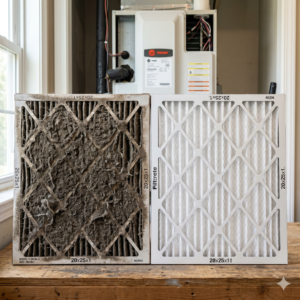
- Filter replacement
- Coil cleaning
- Fan inspection
- Airflow calibration
Without maintenance, system efficiency drops quickly.
Because FAHU systems operate continuously and handle outdoor air directly, any issue such as clogged filters, poor airflow, or internal contamination can significantly impact indoor air quality, energy efficiency, and overall system performance. If these issues are ignored, they may lead to increased energy consumption, poor ventilation, and long-term system damage. Addressing them early helps maintain stable airflow and healthy indoor environments. If you need clarity on system condition or maintenance requirements, you can use the WhatsApp or Call button on the top right to connect with the Bio On Air team and discuss the most suitable approach for your setup.
Conclusion
A fresh air handling unit plays a vital role in maintaining indoor air quality and system efficiency in the UAE. With proper design, energy recovery, and maintenance, FAHU systems can deliver reliable performance while reducing energy costs and improving overall building comfort.