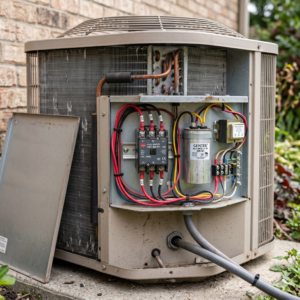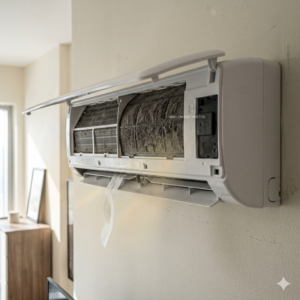





Knowing how to remove ac outdoor unit safely is critical, especially in the UAE where systems operate under high pressure and extreme conditions. This is not a simple unplug-and-remove task. It involves refrigerant handling, electrical isolation, and structural safety. In this guide, we explain the correct process, risks, and when professional help is required.
Table of Contents
ToggleWhy Removing an AC Outdoor Unit Is Not a Simple DIY Task
At first glance, removing an outdoor AC unit may seem straightforward. You might think it only involves disconnecting pipes, cutting power, and unbolting the unit. However, in reality, the process involves pressurized refrigerant, electrical systems, and structural considerations that can become dangerous if handled incorrectly.
In UAE conditions, AC systems often run continuously, meaning:
- Refrigerant pressure is high inside the system
- Electrical load may be significant, especially in villas or commercial buildings
- Outdoor units are often mounted on walls or high balconies
Because of these factors, improper removal can lead to injury, environmental damage, or costly system failure.
Critical Safety Warning About Refrigerant Pressure
The most important thing to understand is that AC systems contain refrigerant under pressure. This refrigerant is not just “gas”—it is a controlled substance that changes state under pressure and temperature.
If pipes are opened without proper procedure:
- Refrigerant can release violently
- It can cause frost burns on skin
- It can damage eyes if exposed
- It contributes to environmental harm
Never assume that simply turning off the AC removes internal pressure. The refrigerant remains trapped inside the system until properly handled.
The Professional Pump-Down Method Explained
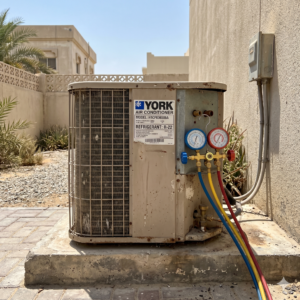
The correct way to safely remove an AC outdoor unit is through a process called “pump-down.” This method ensures that all refrigerant is stored inside the outdoor unit before disconnecting pipes.
What Pump-Down Does
Pump-down moves refrigerant from the indoor unit and pipes into the outdoor condenser, where it can be safely contained.
Step-by-Step Pump-Down Process
- Turn on the AC in cooling mode
- Close the liquid line valve using a hex key
- Allow the system to run for 1–2 minutes
- Close the suction line valve to trap refrigerant
- Turn off the AC immediately after both valves are closed
This process must be done carefully and with proper timing. If done incorrectly, it can damage the compressor or cause pressure imbalance.
Electrical Isolation Before Removal
Before any physical disconnection, electrical power must be completely isolated.
Steps for Safe Electrical Shutdown
- Turn off the AC from the thermostat
- Switch off the isolator near the outdoor unit
- Turn off the circuit breaker from the distribution board
In UAE properties, especially villas or commercial spaces, some AC systems may use three-phase power. This increases the risk if not handled properly.
Always confirm zero electrical current before touching any wiring.
UAE-Specific Requirements and Permissions
In many UAE buildings, removing an AC unit is not just a technical task—it may require approval.
Common requirements include:
- Maintenance NOC (No Objection Certificate)
- Move-out permits from property management
- Approval for external unit removal
Ignoring these requirements can result in penalties or delays, especially in apartments and managed communities.
Disconnecting Copper Pipes Safely
After pump-down and power isolation, the copper pipes can be disconnected.
Important precautions:
- Use proper tools to loosen flare nuts
- Avoid bending or damaging pipes
- Do not cut pipes unless necessary
Improper handling can damage the system and make reinstallation difficult or impossible.
Protecting Open Valve Ports
Once pipes are removed, the exposed ports must be sealed immediately.
This is especially important in the UAE due to:
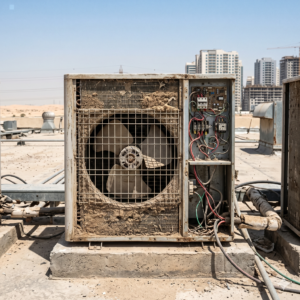
- Fine desert dust
- High humidity in coastal areas
If contaminants enter the system, it can cause:
- Compressor damage
- Blockage in expansion valves
- Reduced cooling performance
Always use caps or sealing tape to protect open ports.
Removing Mounting Bolts and Unit Handling
Outdoor units are usually secured using bolts or brackets.
Steps include:
- Unscrew mounting bolts carefully
- Support the unit during removal
- Avoid sudden movement or dropping
These units are heavy and can cause injury if not handled properly.
Balcony and Wall-Mounted Unit Risks
Many outdoor units in the UAE are installed on balconies or external walls.
This creates additional risks:
- Working at height
- Limited access space
- Risk of falling objects
Proper safety equipment and support are required in these situations.
Common Mistakes During DIY Removal
- Opening pipes without pump-down
- Skipping electrical isolation
- Dropping the unit during removal
- Leaving ports exposed
These mistakes can lead to serious damage and safety hazards.
When You Should NOT Remove the Unit Yourself
DIY removal should be avoided if:
- You do not have HVAC experience
- The unit is wall-mounted or high-level
- The system uses large or complex ducting
- You are unsure about electrical setup
In these cases, professional handling is the safer option.
Why Professional HVAC Technicians Are Recommended
Professional technicians follow proper procedures to ensure safety and system integrity.
They are trained to:
- Handle refrigerant safely
- Perform pump-down correctly
- Disconnect electrical systems properly
- Prevent contamination and damage
If you are unsure about the process, understanding how AC installation and replacement is handled can help you see why removal is not a simple task.
What Happens If Removal Is Done Incorrectly
Improper removal can result in:
- Loss of refrigerant
- Compressor failure
- System contamination
- Injury or accidents
These issues often cost significantly more than professional service.
Preparing the Unit for Storage or Relocation
If you plan to reuse the unit:
- Seal all ports properly
- Keep the unit upright during transport
- Avoid exposure to dust and moisture
This helps maintain system integrity for future installation.
Long-Term Considerations After Removal
Removing the outdoor unit is only one part of the process. Reinstallation requires proper handling of refrigerant, vacuuming, and system testing.
This is why removal and installation are often handled together as a single professional service.
If you are planning to remove or relocate your AC outdoor unit, it is important to approach the process carefully. Improper handling of refrigerant, electrical systems, or mounting structures can lead to safety risks, system damage, and higher costs later. In UAE conditions, where AC systems operate under heavy load, even small mistakes can have long-term impact. If you need guidance based on your setup, you can use the WhatsApp or Call button on the top right to connect with the Bio On Air team and understand the safest and most suitable approach.
Conclusion
Understanding how to remove ac outdoor unit safely requires more than basic tools—it involves proper refrigerant handling, electrical safety, and structural awareness. By following the correct process and knowing when to seek professional help, you can avoid risks and protect your AC system for future use.