




Cleaning ac indoor unit is one of the most important steps to maintain cooling performance and indoor air quality in UAE homes. With constant AC usage, high humidity, and desert dust, indoor units can quickly accumulate dirt, mold, and bacteria. In this guide, we explain safe DIY cleaning, when to call professionals, and how proper cleaning protects both your health and your AC system.
Table of Contents
ToggleWhy Cleaning AC Indoor Unit Is Critical in UAE Conditions
In the UAE, air conditioning is not occasional—it runs almost all year. This continuous operation creates a unique environment inside the indoor unit.
Here is what typically happens:
- Dust from outside air enters the system and settles on filters and coils
- Humidity from indoor activities (showers, cooking) creates moisture
- Cold surfaces inside the AC cause condensation
When dust and moisture combine, they create the perfect environment for mold and bacteria growth. This is why cleaning your AC indoor unit is not just about performance—it directly affects the air you breathe.
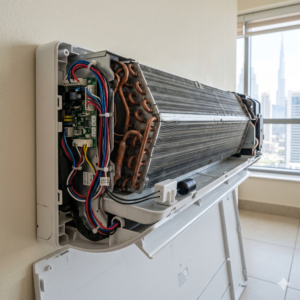
Main Components Inside an AC Indoor Unit
To understand cleaning properly, you need to know what exists inside the unit.
Evaporator Coil
This is the main cooling component. Refrigerant inside the coil absorbs heat from the air. Over time, dust sticks to the coil surface, reducing heat transfer efficiency.
Blower Fan (Cross Flow Fan)
The blower pushes cooled air into your room. It has multiple curved blades that easily trap dust and moisture. This is one of the most common areas for mold buildup.
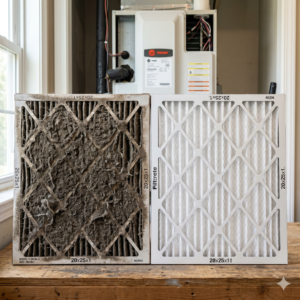
Air Filters
Filters are the first line of defense. They trap dust before it reaches internal components. However, if not cleaned regularly, they become clogged and reduce airflow.
Drain Pan and Condensate Line
When warm air meets cold coils, water forms. This water collects in the drain pan and flows out through the condensate line. If blocked, it can cause water leakage and mold growth.
DIY Cleaning AC Indoor Unit Filter Step-by-Step
Some parts of the AC indoor unit can be cleaned safely without professional help. The most important one is the air filter.
Step 1: Turn Off the AC
Always switch off the unit before opening it. This prevents electrical risks and protects internal components.
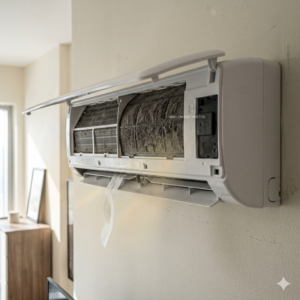
Step 2: Open the Front Panel
Most wall-mounted AC units have a front cover that can be lifted easily.
Step 3: Remove the Filters
Slide the filters out carefully. They are usually lightweight mesh panels.
Step 4: Wash with Water
Use clean running water to remove dust. Avoid using strong chemicals.
Step 5: Dry Completely
Let the filters dry naturally before reinstalling. Never insert wet filters back into the unit.
This simple cleaning should be done every 2–4 weeks in UAE conditions.
Signs You Need More Than DIY Cleaning
Filter cleaning alone is not enough in many cases. Here are warning signs that indicate deeper issues:
- Weak airflow even after cleaning filters
- Musty or unpleasant smell when AC turns on
- Black spots or visible mold inside vents
- Water dripping from indoor unit
- AC running longer but cooling less
These signs usually indicate contamination inside the coil, blower, or drain system.
Professional Cleaning Using Wash Bag Method
When deeper cleaning is required, professionals use a specialized technique known as the wash bag method.
This involves:
- Installing a waterproof cleaning bag around the indoor unit
- Using controlled pressure water to clean internal components
- Collecting dirty water safely without damaging walls or floors
This method allows thorough cleaning of coils and blower fans without creating a mess inside your home.
A proper AC deep cleaning process uses this approach to safely remove internal dirt and contaminants.
What Happens Inside a Dirty Indoor Unit
When cleaning is neglected, several problems develop internally.
Coil Blockage
Dust accumulates on the evaporator coil, reducing its ability to absorb heat.
Blower Contamination
The blower fan becomes coated with sticky dust, reducing airflow efficiency.
Mold Growth
Moist conditions encourage mold growth, especially on blower blades and drain areas.
Drain Line Blockage
Algae and dirt block water flow, causing leaks.
These issues cannot be solved with surface cleaning.
Health Risks of Dirty AC Indoor Units
A contaminated indoor unit does not just affect cooling—it affects your health.
- Allergy symptoms (sneezing, itchy eyes)
- Respiratory irritation
- Musty odors in living space
- Spread of bacteria and mold spores
Children, elderly individuals, and people with asthma are more sensitive to these conditions.
Impact on Cooling Efficiency and Electricity Bills
A dirty AC system works harder to achieve the same cooling effect.
| Condition | Impact |
|---|---|
| Clean System | Efficient cooling, lower energy use |
| Dirty System | Reduced airflow, higher electricity bills |
When airflow is restricted, the AC runs longer, increasing energy consumption.
Cleaning Differences by AC Type
Wall-Mounted Split Units
Most common in apartments. Easy to access but require careful cleaning of blower and coil.
Ducted Systems
Indoor unit is hidden. Cleaning involves both the unit and duct network.
FCU or Chiller Units
Used in larger buildings. Require professional handling due to system complexity.
Routine Maintenance vs Deep Cleaning
| Maintenance Type | Frequency | Scope |
|---|---|---|
| Filter Cleaning | Every 2–4 weeks | Basic dust removal |
| General Maintenance | Every 3–6 months | System check |
| Deep Cleaning | Every 6–12 months | Internal cleaning |
Routine maintenance prevents buildup, while deep cleaning removes accumulated contamination.
Common Mistakes When Cleaning AC Indoor Unit
- Using strong chemicals on filters
- Cleaning without turning off power
- Ignoring internal components
- Assuming filter cleaning is enough
These mistakes can damage the unit or leave underlying issues unresolved.
How UAE Climate Accelerates AC Dirt Buildup
The UAE environment creates ideal conditions for AC contamination.
- High dust levels from desert surroundings
- Humidity from coastal air
- Continuous AC operation
This combination leads to faster accumulation compared to other regions.
When to Call Professionals
You should consider professional cleaning when:
- Smell persists after filter cleaning
- Cooling performance drops significantly
- Water leakage occurs
- System has not been deep cleaned for over a year
Long-Term Benefits of Proper Indoor Unit Cleaning
- Improved air quality
- Better cooling efficiency
- Lower electricity bills
- Reduced risk of breakdown
If you are currently noticing reduced airflow, unusual smell, or signs of dirt buildup, it is important to address the issue early. Contamination inside the indoor unit can affect air quality, increase energy usage, and strain your AC system over time. With proper cleaning, these issues can be resolved safely and effectively. If you need guidance on your AC condition, you can use the WhatsApp or Call button on the top right to connect with the Bio On Air team and understand the most suitable next step.
Conclusion
Cleaning ac indoor unit is essential for maintaining both air quality and system performance in UAE homes. While basic filter cleaning can be done regularly, deeper issues require professional attention. Understanding the difference helps you keep your AC efficient, safe, and long-lasting.