




Knowing the right ac setting during rain in the UAE is essential because rain here brings a unique problem: temperature drops slightly, but humidity rises sharply. If you use normal cooling settings, your room can feel cold yet damp, uncomfortable, and even unhealthy.
Table of Contents
ToggleBest Immediate AC Setting During Rain in UAE
If it starts raining in Dubai or anywhere in the UAE, you should adjust your AC immediately. The goal is not aggressive cooling, but moisture control.
- Mode: Dry Mode (💧 symbol)
- Temperature: 24°C – 26°C
- Fan Speed: Low or Auto
This combination helps remove excess moisture from the air without overcooling your room.
During UAE rain, the problem is not heat—it is humidity. That is why your AC should act more like a dehumidifier than a cooler.
Why Humidity Control Matters More Than Cooling
In most climates, AC systems are used to reduce temperature. However, during rain in the UAE, humidity can reach 70–90%, especially in sealed apartments and villas.
High humidity creates multiple problems:
- Sticky and uncomfortable indoor air
- Condensation on walls and windows
- Musty or sour smells
- Increased risk of mold growth
If you continue using normal cooling mode at low temperatures (like 18–20°C), the AC will overcool the room without properly removing moisture. This leads to a “cold but wet” feeling.
Dry mode solves this by focusing on moisture extraction rather than temperature drop.
Dry Mode vs Cool Mode Explained Simply
| Feature | Dry Mode | Cool Mode |
|---|---|---|
| Main Purpose | Remove humidity | Reduce temperature |
| Fan Speed | Low and controlled | Higher airflow |
| Energy Use | Lower | Higher |
| Best Use | Rain / humid conditions | Hot dry conditions |
In dry mode, the AC cycles the compressor differently, allowing moisture to condense and drain out without aggressively cooling the air.
In cool mode, the system prioritizes temperature, which can lead to inefficient moisture removal during rainy weather.
What Happens If You Use Wrong AC Settings During Rain
Using the wrong settings can cause several issues:
- Overcooling without dehumidifying
- Condensation on walls and ceilings
- Increased mold risk inside ducts
- Higher DEWA electricity bills due to inefficient cycles
This is why proper AC settings are not just about comfort—they directly affect air quality and system efficiency.
Recommended Temperature Strategy During Rain
Many people think lowering temperature faster removes humidity. This is incorrect.
Best practice:
- Set temperature between 24°C and 26°C
- Avoid going below 23°C during rain
- Let dry mode stabilize humidity first
Lower temperatures can cause excessive condensation, which makes your room feel damp even if it is cold.
Fan Speed Settings During Rain
Fan speed plays an important role in humidity control.
- Low speed: Better moisture removal
- Auto mode: Balanced performance
- High speed: Reduces dehumidification efficiency
Slower airflow allows the evaporator coil to extract more moisture from the air.
Common AC Smells During Rain and Their Causes
Many people notice unpleasant smells when using AC during rainy weather.
- Musty smell: Mold or bacteria inside ducts
- Sour smell: Moisture buildup on coils
- Damp odor: Poor drainage or clogged system
These smells are strong indicators that your AC system is holding moisture internally.
In such cases, a proper AC deep cleaning process may be required to remove hidden contamination.
When Coil Cleaning Becomes Necessary
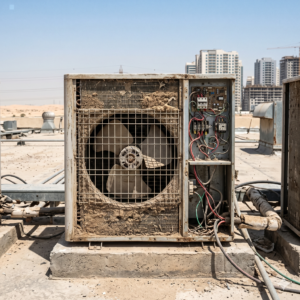
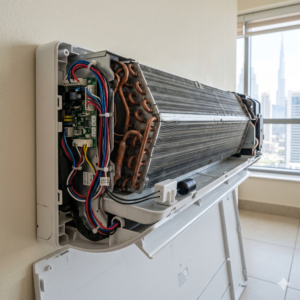
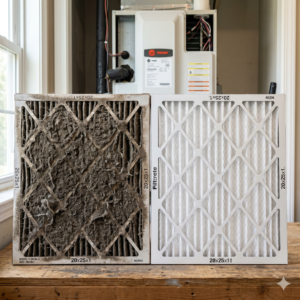
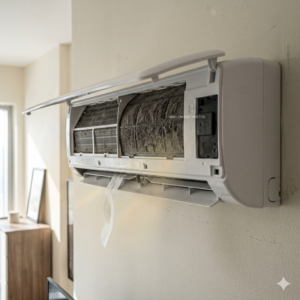
The evaporator coil plays a major role in dehumidification. When it becomes dirty, moisture removal efficiency drops.
Signs you need coil cleaning:
- Weak cooling and high humidity
- Water leakage or dripping
- Persistent bad smell
- AC running longer than usual
Dirty coils trap moisture and create a perfect environment for mold growth.
Storm-Related Safety Precautions
Rain in the UAE may also come with storms, which can affect AC systems.
1. Power Surges
Lightning and unstable electricity can damage AC components.
- Use surge protectors if possible
- Avoid frequent on/off switching
2. Outdoor Unit Flooding
If your outdoor unit is placed on the ground or low areas, water accumulation can cause damage.
- Ensure proper drainage
- Avoid standing water around the unit
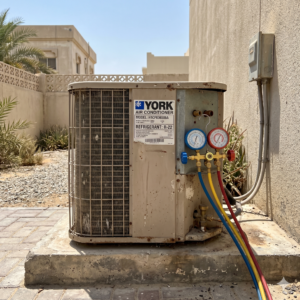
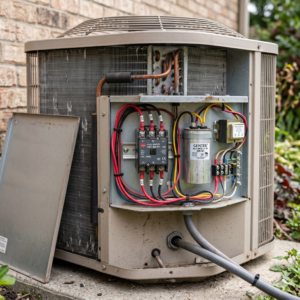
3. Balcony-Mounted Compressors
Many UAE apartments have outdoor units installed on balconies.
- Check for water pooling
- Keep area ventilated
- Avoid covering the unit tightly
Proper airflow is still necessary even during rain.
Mistakes to Avoid During Rainy Weather
- Opening windows during high humidity
- Setting AC to very low temperature
- Using high fan speed
- Ignoring unusual smells
- Turning off AC completely
Opening windows is especially problematic, as it allows humid air to enter and overload your AC system.
How Proper Settings Help Prevent Mold Growth
Mold thrives in warm, damp environments—exactly what can happen inside an AC system during rainy weather.
Proper AC settings help:
- Reduce moisture buildup
- Maintain stable indoor humidity
- Prevent condensation inside ducts
This significantly lowers the risk of mold developing inside your system.
Impact on DEWA Electricity Bills
Incorrect AC usage during rain can increase energy consumption.
Common causes of high bills:
- Overcooling with low temperature settings
- Longer compressor cycles due to humidity
- Inefficient airflow
Dry mode helps reduce energy usage by optimizing how the system runs during humid conditions.
When Your AC Needs Professional Attention
If your AC continues to show signs of moisture problems, it may require professional inspection.
- Persistent bad smell
- Water leakage
- Weak airflow
- High indoor humidity despite proper settings
These issues often indicate deeper problems within the system.
If your AC struggles to control humidity during rain or you notice persistent smells, moisture buildup, or reduced performance, it is important to address the issue early. High humidity can affect indoor air quality, increase mold risk, and strain your AC system over time. With the right approach, these problems can be identified and resolved properly. If you need clarity about your AC condition or how to optimize it during rainy weather, you can use the WhatsApp or Call button on the top right to connect with the Bio On Air team and understand the most suitable next step.
Conclusion
The right ac setting during rain in the UAE focuses on controlling humidity rather than lowering temperature. By using dry mode, maintaining proper temperature, and avoiding common mistakes, you can improve comfort, reduce energy usage, and protect your AC system from long-term damage.