




Understanding ac system types in the UAE is essential because cooling is not just a comfort feature—it is a core part of how buildings function. From high-rise apartments to private villas, different AC systems operate under extreme heat, humidity, and sealed indoor environments. This guide explains each system type, how it works, and what it means for your comfort, cost, and maintenance.
Table of Contents
ToggleWhy AC System Types Matter in the UAE
In many countries, air conditioning is optional or seasonal. In the UAE, it is continuous and critical. Most properties are sealed to maintain cooling efficiency, meaning the AC system also influences air quality, humidity, and even building pressure.
Choosing or understanding the right system affects:
- Your electricity or cooling bill
- Indoor air quality and ventilation
- Maintenance responsibilities
- Long-term system reliability
This is why AC system types in the UAE are not interchangeable—they are designed around building architecture and climate conditions.
District Cooling Systems in High-Rise Apartments
District cooling is one of the most common AC system types in Dubai’s high-rise buildings. Instead of each apartment having its own compressor, chilled water is supplied from a centralized cooling plant.
How It Works
Large centralized plants cool water and distribute it through insulated pipes to multiple buildings. Inside each apartment, a fan coil unit uses this chilled water to cool the air.
Billing Structure
District cooling is billed separately from electricity providers like DEWA. Residents usually pay:
- Consumption charges (based on usage)
- Capacity charges (fixed fee based on unit size)
Major providers include companies like :contentReference[oaicite:0]{index=0} and :contentReference[oaicite:1]{index=1}.
Maintenance Responsibility
- Cooling plant: managed by provider
- Internal unit (fan coil): tenant or property owner
Common Issues in UAE Conditions
- Condensation around vents due to humidity
- Mold buildup if ducts are not cleaned
- Limited control over cooling source
Ducted Split Systems for Villas
Ducted split systems are the standard for villas and townhouses in the UAE. These systems combine centralized cooling with individual property control.
How It Works
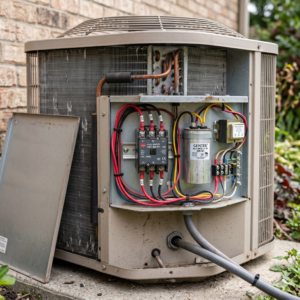
A compressor unit is installed outside, while indoor air handling units distribute cooled air through ducts across different rooms.
Why It’s Popular in UAE Villas
- Hidden installation (no visible indoor units)
- Consistent cooling across large spaces
- Compatible with sealed building design
Maintenance Responsibility
The entire system is the responsibility of the property owner. This includes:
- Filter cleaning
- Duct cleaning
- Coil and blower maintenance
Common Problems
- Dust buildup inside ducts
- Condensation causing ceiling stains
- Mold growth in poorly maintained systems
Regular servicing and proper AC maintenance planning is essential for this system type.
VRF and VRV Systems for Premium Properties
VRF (Variable Refrigerant Flow) or VRV (Variable Refrigerant Volume, a term by :contentReference[oaicite:2]{index=2}) systems are considered premium AC solutions in the UAE.
How It Works
Instead of delivering air through ducts, VRF systems distribute refrigerant directly to multiple indoor units. Each unit can be controlled independently.
Key Advantages
- Precise temperature control per room
- Higher energy efficiency
- Reduced duct-related losses
Energy Efficiency in UAE Heat
VRF systems adjust output based on demand, making them more efficient during partial load conditions, which is common in large homes.
Maintenance Considerations
- Requires skilled technicians
- Higher repair complexity
- Advanced diagnostics needed
Wall-Mounted Split Units for Smaller Spaces
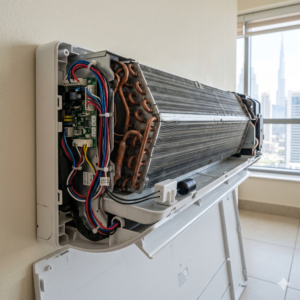
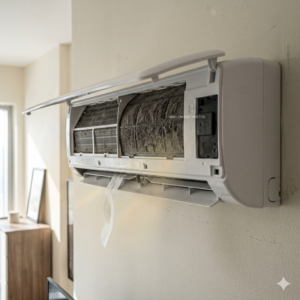
Wall-mounted split AC units are commonly used in apartments, offices, and retrofit situations.
How It Works
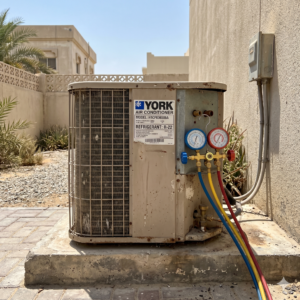
Each room has its own indoor unit connected to an outdoor compressor.
Where It’s Used
- Older apartments without duct systems
- Small offices
- Room-specific cooling needs
Advantages
- Lower installation cost
- Independent control per room
- Easy maintenance access
Limitations
- Less aesthetic (visible units)
- Limited coverage for large spaces
Rooftop Package Units for Commercial Properties
Rooftop package units (RTUs) are widely used in commercial buildings such as malls, warehouses, and large offices.
How It Works
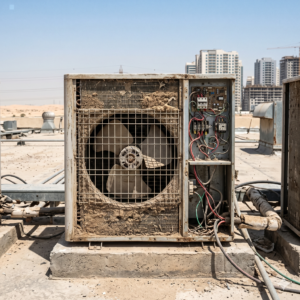
All components—compressor, condenser, and evaporator—are combined into one unit installed on the roof.
Why It’s Used in UAE Commercial Spaces
- Saves indoor space
- Handles large cooling loads
- Simplifies system design
Maintenance Responsibility
Handled by facility management teams or service contractors.
Common Issues
- Exposure to extreme heat
- Dust accumulation
- Reduced efficiency if not maintained
Fresh Air Handling Units and Indoor Air Quality
In UAE villas and sealed apartments, fresh air handling units (FAHU) play a critical role.
Why Fresh Air Matters
Since windows are often closed, indoor air can become stale or polluted without proper ventilation.
How FAHU Works
Fresh air is drawn from outside, filtered, and conditioned before being introduced into the indoor environment.
Benefits
- Improves indoor air quality
- Maintains pressure balance
- Reduces humidity levels
Common Issues
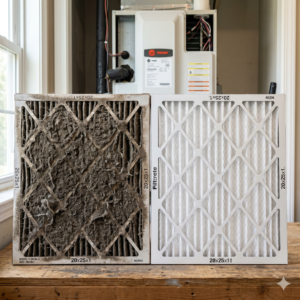
- Dirty filters reducing airflow
- Poor maintenance leading to contamination
Common AC Issues Across UAE System Types
Regardless of system type, certain issues are common due to UAE conditions:
- Condensation from temperature differences
- Dust buildup affecting airflow
- Mold growth in ducts and coils
- High energy consumption from continuous use
These problems are often linked to maintenance rather than system design.
Energy Efficiency Considerations in Extreme Heat
In UAE summers, AC systems operate under heavy load for long hours.
Energy efficiency depends on:
- System type (VRF vs ducted vs split)
- Insulation quality
- Maintenance condition
- Airflow efficiency
Even a high-end system can become inefficient if not maintained properly.
Choosing the Right AC System for Your Property
The best AC system depends on your property type:
| Property | Recommended System |
|---|---|
| High-rise apartment | District cooling or ducted system |
| Villa | Ducted split or VRF |
| Small unit | Wall-mounted split |
| Commercial building | Rooftop package unit or VRF |
Maintenance Responsibility by System Type
| System | Responsibility |
|---|---|
| District Cooling | Provider + tenant |
| Ducted Split | Property owner |
| VRF/VRV | Owner with specialist support |
| Split Units | Owner or tenant |
| Rooftop Units | Facility management |
Why Understanding Your AC System Matters
Knowing your AC system type helps you make better decisions about maintenance, repairs, and upgrades. It also helps you avoid unnecessary costs and improve indoor comfort.
If you are unsure about your AC system or noticing performance issues, it is important to address them early. Problems like poor airflow, hidden dust buildup, or humidity imbalance can affect both comfort and health over time. These issues can also reduce system efficiency and increase energy costs if left unchecked. If you need guidance on your system condition or want to understand the best maintenance approach, you can use the WhatsApp or Call button on the top right to connect with the Bio On Air team and discuss your situation directly.
Conclusion
AC system types in the UAE are designed around climate, architecture, and usage patterns. From district cooling to ducted and VRF systems, each has its own benefits, costs, and maintenance needs. Understanding these differences helps you maintain better air quality, reduce costs, and ensure long-term system performance.