




Mold in AC system is a hidden problem many UAE residents face without realizing it. A slight musty smell, weak airflow, or black residue near vents can indicate deeper contamination inside your HVAC system. In this guide, we explain early warning signs, root causes in UAE conditions, health risks, and how to properly handle mold inside AC systems.
Table of Contents
ToggleEarly Warning Signs of Mold in AC System
Mold inside an AC system rarely starts as a visible problem. It usually begins deep inside coils, ducts, or drain areas where moisture accumulates. By the time you see it, the issue has often already spread.
The most common early signs include:
- Musty or “dirty sock” smell when the AC turns on
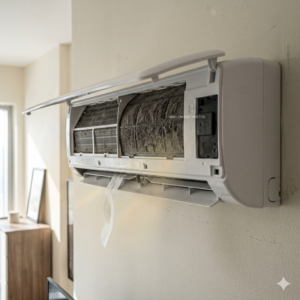
- Black or dark residue around vents or diffusers
- Unusual humidity indoors despite AC running
- Dust buildup that returns quickly after cleaning
- Worsening allergy symptoms indoors
The “dirty sock smell” is one of the most reliable indicators. It often comes from microbial growth on the evaporator coil or inside the duct system.
Why Mold Grows Easily in UAE AC Systems
Many people assume mold should not be a problem in a desert climate. However, indoor environments in the UAE behave very differently from outdoor conditions.
1. High Humidity Meets Cold Air
In cities like Dubai and Sharjah, outdoor humidity can be very high, especially during summer. When humid air enters a cooled indoor space, condensation forms on cold surfaces such as coils, ducts, and vents.
This moisture becomes the primary trigger for mold growth.
2. Continuous AC Usage
AC systems in the UAE run almost constantly. This creates a cycle where moisture forms repeatedly, especially if airflow is restricted or drainage is not perfect.
3. Sand and Dust Infiltration
Fine desert dust enters homes even when windows are closed. Over time, this dust accumulates inside ducts and coils.
When dust combines with moisture, it creates an ideal organic surface for mold to grow.
4. Sealed Indoor Environments
Most properties are tightly sealed to maintain cooling efficiency. While this is good for energy saving, it reduces ventilation.
This means humidity, moisture, and airborne particles remain trapped inside, increasing mold risk.
Where Mold Typically Hides in AC Systems
Mold does not grow randomly—it develops in specific areas where moisture and airflow conditions allow it.
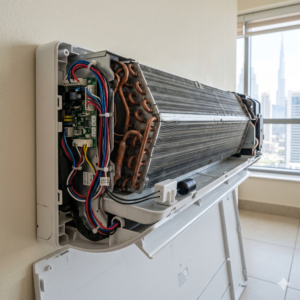
Evaporator Coils
These are constantly cold and exposed to moisture. If not cleaned properly, they become a primary mold growth zone.
Drain Pans and Drain Lines
Standing water in drain pans is one of the most common causes of mold. Blocked drainage systems make this worse.
Ductwork
Ducts accumulate dust over time. When moisture enters, mold can spread along the entire airflow pathway.
Air Vents and Diffusers
Visible black residue near vents often indicates deeper contamination inside the duct system.
Insulation Inside Ducts
Some ducts have internal insulation, which can trap moisture and support mold growth if compromised.
Health Risks of Mold in AC System
Mold inside an AC system is not just a maintenance issue—it directly affects indoor air quality.
When the AC runs, mold spores can spread through the air you breathe.
Common health effects include:
- Allergic reactions (sneezing, runny nose, itchy eyes)
- Respiratory irritation or coughing
- Asthma symptoms worsening
- Skin irritation in sensitive individuals
In more serious cases, prolonged exposure may lead to chronic respiratory discomfort, especially for children, elderly individuals, and those with weakened immune systems.
Common Scam Cleaning Practices to Avoid
Many companies offer “cheap mold cleaning,” but not all methods are effective.
Be cautious of these practices:
- Spraying chemicals into vents without inspection
- Cleaning only visible areas while ignoring internal ducts
- No containment or protection during cleaning
- No documentation or proof of work
These methods often give temporary improvement but do not eliminate mold at the source.
Proper Mold Remediation Standards for AC Systems
Effective mold removal requires a structured and controlled process.
Proper remediation should include:
- Inspection and contamination assessment
- HEPA filtration and containment to prevent spore spread
- Physical cleaning of contaminated surfaces
- Use of approved biocides for safe disinfection
- Removal of severely affected materials if needed
This level of work is often part of advanced cleaning procedures, similar to what is done in AC deep cleaning when contamination is significant.
When Duct Replacement Is Necessary
In some cases, cleaning alone is not enough.
Duct replacement may be required if:
- Mold has deeply penetrated insulation
- Duct materials are damaged or degraded
- Contamination is widespread and cannot be fully removed
This is more common in older systems or properties with long-term neglect.
Cost of Mold Removal in AC System (Dubai Estimate)
The cost depends on severity and system size. Below is a realistic estimate based on UAE conditions:
| Service Type | Estimated Cost (AED) |
|---|---|
| Basic AC Cleaning | 200 – 400 |
| AC Deep Cleaning | 400 – 800 per unit |
| Duct Cleaning with Sanitization | 800 – 2,500+ |
| Advanced Mold Remediation | 2,000 – 6,000+ |
Note: Prices are slightly below typical market range and may vary depending on contamination level, accessibility, and system complexity.
Long-Term Prevention of Mold in AC Systems
Control Indoor Humidity
Keep indoor humidity below 60% to reduce moisture buildup.
Use UV-C Lights
UV-C lights installed near coils can help reduce microbial growth.
Maintain Proper Thermostat Settings
Avoid extreme temperature differences that cause condensation.
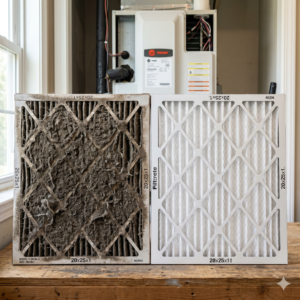
Regular Filter Cleaning
Clean or replace filters every 1–2 months depending on usage.
Schedule Routine Maintenance
Regular inspections help detect early issues before they become serious.
Many homeowners rely on structured AC maintenance programs to keep systems clean and stable year-round.
Why Mold Keeps Coming Back
Even after cleaning, mold may return if the root cause is not addressed.
Common reasons include:
- Unresolved humidity problems
- Poor airflow inside ducts
- Blocked or slow drainage
- Incomplete cleaning
True resolution requires both cleaning and prevention.
When to Take Action Immediately
You should act quickly if you notice:
- Strong persistent musty smell
- Visible black growth near vents
- Health symptoms worsening indoors
- Water leakage inside AC system
These signs indicate active contamination that should not be ignored.
If you are noticing signs of mold in your AC system, addressing it early is critical. Mold can quietly reduce indoor air quality, trigger respiratory issues, and spread throughout your living space every time the AC runs. At the same time, ignoring the problem can lead to deeper system contamination, higher repair costs, and reduced efficiency. With the right approach, mold issues can be identified and handled properly before they escalate. If you need clarity about your situation, you can use the WhatsApp or Call button on the top right to connect with the Bio On Air team and understand the most appropriate next step for your system.
Conclusion
Mold in AC system is a serious but manageable issue when detected early. By understanding the warning signs, causes, and proper cleaning methods, you can protect your indoor air quality, maintain AC performance, and prevent long-term damage.