




If you’re hearing an ac whining noise, the first step is to understand what type of system you’re dealing with. In the UAE, this sound can come from either a home AC or a car AC, and the cause can range from harmless airflow issues to serious mechanical failure. This guide helps you identify the source, understand the risks, and act correctly.
Table of Contents
ToggleFirst Step: Is It Car AC or Home AC
This is the most important distinction—and many people get it wrong.
Car AC Whining Noise
If the whining sound changes when you accelerate, it is almost always related to the car’s engine system. Common causes include:
- Failing compressor clutch bearing
- Worn serpentine belt under high heat
- Electrical load noise linked to RPM
This article focuses mainly on home AC systems, where the causes and risks are completely different.
Home AC Whining Noise
Home AC systems (split, ducted, or central units) do not use belts like cars. If your home AC is whining, it is usually caused by:
- Airflow restriction
- Fan motor issues
- Compressor pressure imbalance
Understanding this difference helps avoid misdiagnosis and unnecessary repairs.
Two Main Types of AC Whining Noise
Not all whining sounds are the same. Identifying the type of sound gives a strong clue about the root cause.
1. Airflow Whistle (High-Pitched Air Sound)
This sound is usually sharp, like air escaping through a narrow gap. It often gets louder when airflow increases.
Common characteristics:
- Starts immediately when AC turns on
- Changes with fan speed
- Feels like “air pressure noise”
2. Mechanical Whine (Metal or Motor Sound)
This sound is deeper and more continuous. It often comes from internal components.
Common characteristics:
- Steady or increasing pitch
- May continue after AC shuts off briefly
- Often indicates internal wear or stress
Airflow-Related Causes of AC Whining Noise
Airflow problems are the most common reason for whining noise in UAE homes due to dust-heavy environments.
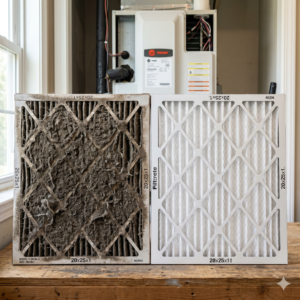
Dirty or Clogged Air Filters
When filters are blocked, air struggles to pass through, creating pressure imbalance and a whistling sound.
Symptoms:
- Weak airflow
- Higher noise at vents
- Reduced cooling efficiency
Blocked or Restricted Ducts
Dust buildup inside ducts narrows the airflow path, increasing air velocity and causing noise.
This is especially common in properties without regular cleaning. In such cases, inspecting internal airflow through proper AC duct cleaning becomes important.
Closed or Misaligned Vents
Closing too many vents increases pressure in the system, forcing air through smaller openings and creating a whistle effect.
Air Leaks in Duct System
Small gaps or loose duct connections allow air to escape under pressure, producing a high-pitched noise.
Mechanical Causes of AC Whining Noise
Mechanical issues are more serious and often require professional attention.
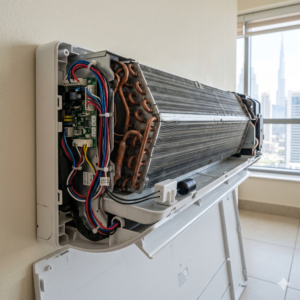
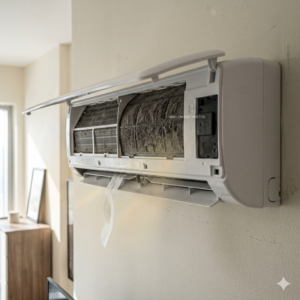
Blower Motor Bearing Failure
The blower motor circulates air through your system. If its bearings wear out, it produces a whining or grinding sound.
Signs:
- Noise increases over time
- Vibration in indoor unit
- Reduced airflow
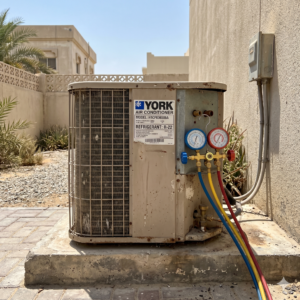
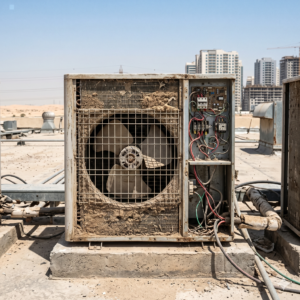
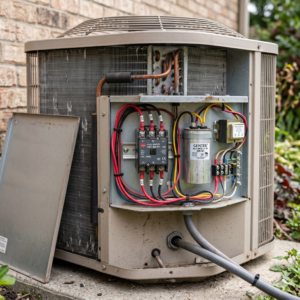
Condenser Fan Problems
The outdoor unit fan can produce whining noise if:
- Fan blades are unbalanced
- Motor bearings are worn
- Dust buildup causes resistance
Compressor Overpressure
In extreme UAE heat, the compressor works harder. If refrigerant levels or airflow are not balanced, pressure builds up, leading to a whining sound.
This is one of the most critical issues because compressor failure is expensive.
UAE-Specific Causes: Why This Happens More Often
AC whining noise is more common in the UAE due to environmental stress.
- Dust accumulation in filters and ducts
- Continuous AC usage for long hours
- Extreme outdoor temperatures
- Humidity affecting airflow and pressure
These factors accelerate wear and increase the likelihood of noise-related issues.
Risks of Ignoring AC Whining Noise
Ignoring the sound may lead to serious consequences.
- Motor burnout due to strain
- Compressor failure from pressure imbalance
- Higher electricity consumption
- Reduced system lifespan
What starts as a small noise can turn into a major repair if left unchecked.
Safe DIY Checks You Can Perform
Before calling a technician, there are a few safe checks you can do.
Check and Clean Air Filters
Remove filters and inspect for dust buildup. Clean or replace if needed.
Inspect Vents
Ensure vents are open and not blocked by furniture.
Listen to Sound Location
Try to identify if the noise comes from:
- Indoor unit
- Outdoor unit
- Duct or vents
This helps narrow down the cause.
Check Airflow Strength
If airflow is weak, it may indicate blockage or motor issues.
Warning Signs: When to Turn Off Your AC Immediately
Some situations require immediate action.
- Loud or rapidly increasing noise
- Burning smell
- AC shutting down unexpectedly
- Very weak airflow with loud sound
In these cases, turn off the AC to prevent further damage.
Common HVAC Misdiagnosis and Upsell Practices
Not all diagnoses are accurate. Some common issues include:
- Replacing parts without identifying root cause
- Suggesting full system replacement unnecessarily
- Ignoring airflow issues and focusing only on components
A proper diagnosis should always explain why the problem occurred—not just what needs to be replaced.
How to Differentiate Minor vs Serious Issues
| Type | Likely Cause | Severity |
|---|---|---|
| Soft whistle | Airflow restriction | Low |
| High-pitched constant sound | Air leak or pressure issue | Moderate |
| Deep mechanical whine | Motor or compressor issue | High |
This quick comparison helps you decide how urgent the situation is.
Prevention Tips for UAE Conditions
- Clean filters every 2–4 weeks
- Schedule duct cleaning periodically
- Ensure vents remain open
- Avoid overworking AC at extreme temperatures
Preventive care reduces both noise and system stress.
Why Early Action Matters
Most AC whining noise problems start small. Addressing them early prevents major damage.
Waiting too long can result in:
- Higher repair costs
- Complete system failure
- Poor indoor air quality
If you are hearing a persistent AC whining noise, it is important not to ignore it. What may seem like a minor airflow issue can gradually develop into serious internal damage, affecting both system performance and indoor air quality. In UAE conditions, where AC systems run under constant stress, early action can prevent costly repairs and long-term damage. If you are unsure about the cause, you can use the WhatsApp or Call button on the top right to connect with the Bio On Air team and understand the safest and most effective next step based on your situation.
Conclusion
An ac whining noise is not something to ignore. Whether it is caused by airflow restriction or mechanical failure, identifying the source early helps prevent bigger problems. By understanding the type of sound and acting quickly, you can protect your AC system, improve efficiency, and maintain a comfortable indoor environment.