




If your ac no noise situation happens suddenly, it usually means more than just a minor issue. In the UAE, complete AC silence often points to power failure, safety lockouts, or outdoor unit shutdowns. This guide explains the exact types of silence, root causes, and step-by-step checks before calling a technician.
Table of Contents
ToggleUnderstanding What “AC No Noise” Really Means
When people say their AC has no noise, it can actually refer to several completely different situations. Identifying which one you are experiencing is the most important first step.
There are three main types of total AC silence:
1. Total Blackout AC Condition
This is the most obvious case. The AC appears completely dead.
- Thermostat screen is blank
- No response when pressing buttons
- No sound at all from indoor or outdoor unit
This usually indicates a power supply issue, not a mechanical AC failure.
Common Causes
- Tripped circuit breaker
- Power outage or electrical interruption
- Faulty wiring or loose connection
- Blown internal fuse
In this situation, your AC is not “broken” yet—it simply has no power.
2. Thermostat On but AC Completely Silent (Ghost Mode)
This is a more confusing situation. The thermostat shows that the system is running, but nothing happens.
- Display shows “Cooling”
- No airflow
- No sound from indoor or outdoor unit
This condition is often caused by system protection mechanisms or communication failure.
Common Causes
- Safety lockout triggered
- Control board failure
- Communication error between indoor and outdoor units
- Low voltage or signal issue
This is very common in UAE systems, especially during extreme weather.
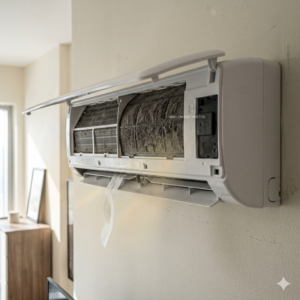
3. Indoor Unit Running but Outdoor Unit Silent
In this case, the indoor AC seems to work, but there is no cooling.
- Fan is blowing air
- Air is warm or weak
- No noise from outdoor condenser
This is usually a condenser-side failure.
Common Causes
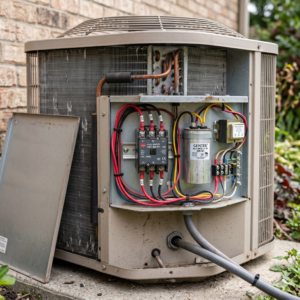
- Contactor failure
- Outdoor unit power issue
- Pressure switch lockout
- Compressor protection shutdown
This situation requires careful inspection because the issue is often electrical or safety-related.
Why AC Systems Become Completely Silent in UAE
In the UAE, AC systems are exposed to unique conditions that increase the likelihood of total shutdown.
- Extreme heat causing system overload
- High humidity affecting drainage systems
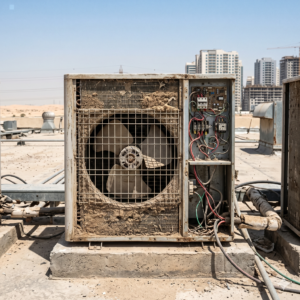
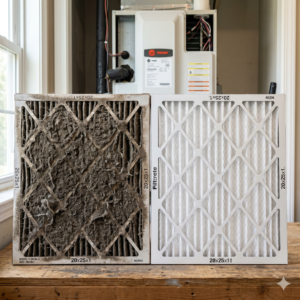
- Dust buildup blocking airflow
- Continuous operation without rest
These conditions often trigger protective shutdown mechanisms to prevent damage.
Safety Lockouts That Cause AC Silence
Condensate Float Switch Activation
This is one of the most common causes in humid environments.
When the drain line is clogged, water builds up inside the system. A float switch detects this and shuts down the AC to prevent water damage.
Signs include:
- AC suddenly stops
- No noise at all
- Water leakage or damp smell
This is a protective feature, not a fault.
Pressure Switch Lockout
If refrigerant pressure becomes unsafe, the system automatically shuts down.
- High pressure due to dirty coils
- Low pressure due to refrigerant leak
This prevents compressor damage.
Overheat Protection
In extreme UAE temperatures, the compressor may overheat and shut down completely.
This results in total silence until the system cools down.
Outdoor Unit Electrical Failures
Contactor Failure
The contactor is responsible for supplying power to the compressor and fan.
If it fails:
- Outdoor unit remains silent
- Indoor unit may still run
Isolator Switch Issue
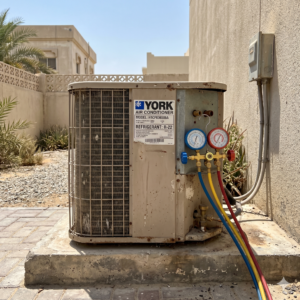
Many buildings have external isolator switches near the outdoor unit.
If turned off or damaged:
- No power reaches the condenser
- System appears partially dead
Capacitor Failure
The capacitor helps start the compressor and fan motor.
If faulty:
- Unit may try to start but fails
- Eventually becomes silent
Step-by-Step Electrical Checks You Can Do
1. Check Main Distribution Board (DB)
Look for any tripped breakers.
- Reset if tripped
- If it trips again, stop immediately
2. Check Thermostat Power
If the screen is blank:
- Battery may be dead
- Power supply may be cut
3. Check AC Isolator Switch
Ensure the outdoor unit switch is ON.
4. Inspect Drain Line Condition
If water is backed up, the float switch may have shut down the system.
5. Look for Power Surge Effects
After electrical fluctuations:
- System may not restart automatically
- Internal board may need reset
These checks help identify basic issues before calling a technician.
High-Rise Building and UAE-Specific Factors
Building Management System (BMS) Lockouts
In towers, AC systems may be controlled by central building systems.
If locked:
- AC will not respond even if thermostat is on
District Cooling Restrictions
Some buildings use district cooling instead of individual condensers.
Issues may occur if:
- Cooling supply is limited
- System is temporarily shut off
Shared Electrical Infrastructure
Power interruptions in high-rise buildings can affect multiple units at once.
Before Calling a Technician Checklist
- Check breaker in DB panel
- Confirm thermostat is powered
- Ensure isolator switch is ON
- Inspect for water leakage or clogged drain
- Listen for outdoor unit activity
- Check if neighbors have similar issues (building-related)
This checklist helps avoid unnecessary service calls for simple issues.
When the Problem Requires Professional Repair
If the system remains silent after basic checks, the issue is likely internal.
Common cases requiring expert handling:
- Electrical component failure
- Control board malfunction
- Refrigerant pressure issues
- Compressor-related shutdown
At this stage, proper diagnosis is essential. Temporary fixes may lead to more serious damage.
In cases where your AC shows no noise at all, it is important not to ignore the situation or repeatedly reset the system without understanding the cause. Silent shutdowns are often linked to safety protections, electrical issues, or hidden system stress that can worsen over time. If left unchecked, this can lead to reduced air quality, increased energy consumption, or permanent component damage. With the right inspection approach, these issues can be identified early and handled safely. If you need clarity about your AC condition, you can use the WhatsApp or Call button on the top right to connect with the Bio On Air team and understand the most suitable next step based on your system behavior.
Conclusion
An ac no noise situation is not always a simple failure—it is often a protective shutdown or electrical issue. By identifying the type of silence and performing basic checks, you can better understand the problem and avoid unnecessary damage while ensuring your AC system returns to safe operation.