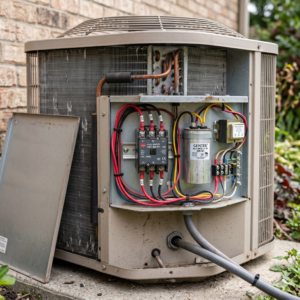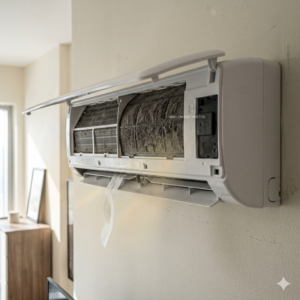





Understanding ac noise level db is important if your AC feels louder than expected, especially in bedrooms or quiet living spaces. In the UAE, where AC runs almost all year, even small noise differences can affect comfort. This guide explains real decibel ranges, what is normal, what is too loud, and how to fix common noise problems.
Table of Contents
ToggleTypical AC Noise Level dB for Indoor and Outdoor Units
AC noise is measured in decibels (dB). The higher the number, the louder the sound. However, dB is not linear—an increase of 10 dB feels roughly twice as loud to the human ear.
Below are typical AC noise levels in real-world UAE settings:
| AC Component | Typical Noise Level (dB) | Perception |
|---|---|---|
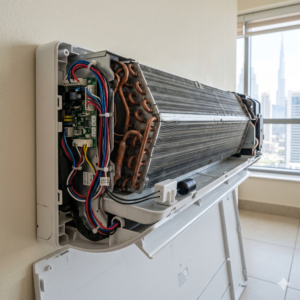
| Indoor Unit (Split AC) | 20 – 40 dB | Very quiet to soft background noise |
| Indoor Unit (Ducted AC) | 25 – 45 dB | Low airflow hum |
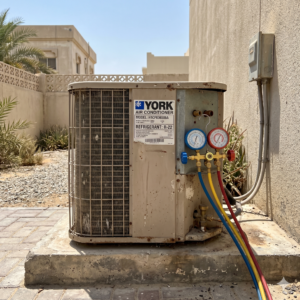
| Outdoor Unit (Split AC) | 45 – 65 dB | Noticeable but acceptable outdoors |
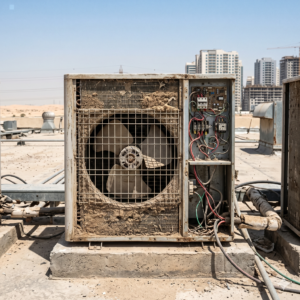
| Outdoor Unit (Large Systems) | 60 – 75 dB | Loud if close proximity |
For comparison:
- 20 dB = whisper
- 40 dB = quiet room
- 60 dB = normal conversation
- 70 dB+ = loud / disturbing
Ideal AC Noise Levels for Bedrooms and Living Areas
Noise tolerance depends on the space. What is acceptable in a living room may feel disturbing in a bedroom.
| Area | Recommended dB Range | Comfort Level |
|---|---|---|
| Bedroom (night use) | 20 – 30 dB | Very quiet, sleep-friendly |
| Living Room | 30 – 40 dB | Comfortable for daily use |
| Office Space | 30 – 45 dB | Acceptable background noise |
If your AC noise exceeds these levels indoors, it may indicate an issue.
What AC Noise Level Is Considered Normal vs Too Loud
Normal AC Noise
- Soft airflow sound
- Low humming from compressor
- Gentle fan rotation noise
Abnormal AC Noise
- Buzzing or electrical sounds
- Rattling or vibration
- Loud humming or grinding
- Sudden changes in noise level
Normal AC sound should be consistent and low. If the noise changes or becomes sharp, it usually indicates a problem.
How UAE Building Materials Amplify AC Noise
In the UAE, building design plays a big role in how AC noise is perceived.
Concrete Walls
Concrete reflects sound waves, making noise feel stronger and more direct.
Marble and Tile Flooring
Hard surfaces bounce sound instead of absorbing it, increasing echo and perceived loudness.
Enclosed Balconies
Outdoor AC units placed in enclosed spaces can trap sound, amplifying noise significantly.
This means an AC that seems “normal” outdoors can feel much louder indoors due to reflection.
Noise Differences Between AC System Types
| System Type | Noise Level | Characteristics |
|---|---|---|
| Wall Split AC | Low to moderate | Direct airflow, minimal duct noise |
| Ducted AC | Moderate | Airflow noise through ducts |
| VRF System | Low to moderate | Efficient but depends on installation |
| Chiller + FCU | Moderate to high | Fan coil noise + water flow |
Ducted systems may feel noisier due to airflow resistance, while split ACs are usually quieter indoors.
Common Causes of Abnormal AC Noise
1. Failing Fan Bearings
Worn-out bearings create grinding or screeching sounds.
2. Compressor Issues
Loud humming or buzzing often comes from compressor strain or failure.
3. Airflow Restrictions
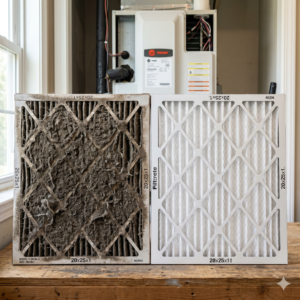
Dirty filters or blocked ducts force the system to work harder, increasing noise.
4. Loose Panels or Mounting
Loose screws or casing parts can cause rattling and vibration.
5. Refrigerant Problems
Low or unbalanced refrigerant can create unusual hissing or bubbling sounds.
These issues usually require proper AC repair diagnosis to identify the exact cause.
Local Considerations: Noise Complaints in UAE Buildings
In many UAE residential communities, excessive AC noise can lead to complaints from neighbors or building management.
Common situations include:
- Outdoor unit noise disturbing nearby apartments
- Vibration transmitted through walls or floors
- Noise echoing in enclosed balconies
Some buildings and communities enforce noise limits, especially at night.
Practical Ways to Reduce AC Noise
1. Install Anti-Vibration Pads
These reduce vibration transfer between the unit and mounting surface.
2. Tighten Mounts and Screws
Loose components are one of the simplest causes of noise.
3. Clean Filters and Improve Airflow
Blocked airflow increases system strain and noise levels.
4. Adjust Fan Speed Settings
Lower fan speed can significantly reduce indoor noise.
5. Upgrade to Inverter AC Systems
Inverter systems operate more smoothly and produce less noise compared to older models.
When AC Noise Means Immediate Attention
- Sudden loud noise increase
- Grinding or metal sounds
- Strong vibration felt through walls
- Noise combined with weak cooling
These are signs that should not be ignored, as they may indicate serious internal damage.
Long-Term Impact of Ignoring AC Noise
Many people ignore AC noise thinking it is normal. However, noise often signals underlying issues.
- Reduced system efficiency
- Higher electricity consumption
- Increased wear and tear
- Potential system failure
Addressing noise early helps prevent costly repairs later.
How to Evaluate Your AC Noise Level at Home
You can use a smartphone dB meter app for a basic estimate.
- Measure near the indoor unit
- Compare with normal ranges (20–40 dB)
- Check consistency over time
This gives you a simple way to identify abnormal noise.
Noise vs Comfort Balance in UAE Living
In the UAE, AC runs almost continuously. Even small noise differences can affect sleep quality, focus, and overall comfort.
That is why maintaining low noise levels is not just about comfort—it is part of maintaining a healthy indoor environment.
If your AC noise level feels higher than normal or has changed over time, it is important not to ignore it. Noise often indicates internal strain, airflow problems, or component wear that can reduce efficiency and lead to more serious damage. Addressing these issues early helps maintain both comfort and system performance. If you need clarity about what your AC noise means, you can use the WhatsApp or Call button on the top right to connect with the Bio On Air team and understand the most suitable next step.
Conclusion
Understanding ac noise level dB helps you identify what is normal and what requires attention. With proper diagnosis and simple adjustments, most noise issues can be resolved early, improving comfort, efficiency, and long-term AC performance.