




If you are hearing ac buzzing in your home or apartment in the UAE, it is not something to ignore. A buzzing sound is often an early warning sign that something inside your AC system is under stress—electrical, mechanical, or airflow-related. In this guide, we will help you identify the type of buzzing, locate the source, understand UAE-specific causes, and know when it is safe to check yourself or when to call a professional.
Table of Contents
ToggleUnderstanding AC Buzzing Sound Types
Not all buzzing sounds are the same. The type of sound often tells you what is happening inside the system. Learning to recognize these differences can help you act early and avoid bigger damage.
Electrical Hum from a Failing Capacitor
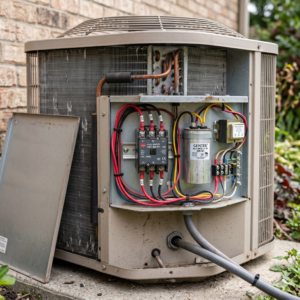
A low, continuous humming or buzzing sound is often linked to a failing capacitor. The capacitor helps start and run the compressor and fan motors. When it weakens, the system struggles to start properly.
Common signs include:
- AC tries to start but delays
- Buzzing sound continues without full operation
- Cooling becomes weak or inconsistent
This is one of the most common causes of AC buzzing in UAE homes.
Chattering Sound from a Faulty Contactor
If the buzzing sounds like rapid clicking or chattering, the issue may be the contactor. This component controls electrical flow to the compressor and fan.
- Sound comes from outdoor unit
- AC turns on and off rapidly
- System feels unstable
This can lead to electrical arcing if not addressed early.
Deep Vibration from a Seized Compressor
A louder, deeper buzzing or vibrating sound often points to compressor issues. The compressor is the core of your AC system, and when it struggles, the entire system is affected.
- Strong vibration felt near outdoor unit
- Cooling drops significantly
- AC may shut down suddenly
This is a serious issue that requires immediate professional inspection.
Rattling Buzz from Worn Isolation Mounts
If the buzzing is combined with rattling, it may be due to worn rubber mounts or loose components. Over time, vibration causes parts to loosen.
- Sound changes when AC starts or stops
- Noise increases with higher cooling load
- Often heard in older units
This type of issue is usually less severe but should still be fixed to prevent further damage.
Where Is the Buzzing Coming From
Identifying the location of the sound is just as important as identifying the type.
Outdoor Condenser Unit
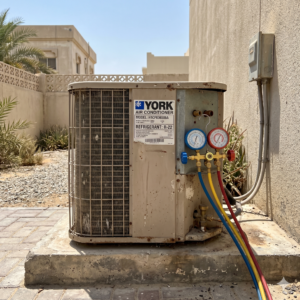
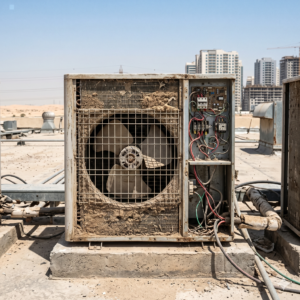
Most buzzing sounds originate from the outdoor unit. This is where the compressor, fan, and electrical components are located.
Common causes:
- Capacitor failure
- Contactor issues
- Compressor strain
Indoor Split Unit
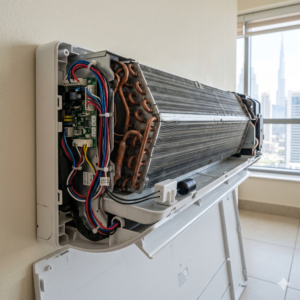
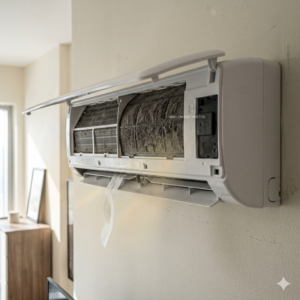
If the buzzing comes from the indoor unit, it may involve airflow or fan-related issues.
- Dust buildup affecting fan movement
- Loose internal parts
- Electrical components inside unit
Ceiling Fan Coil Units (FCU) in High-Rise Buildings
In many UAE apartments, AC systems use ceiling-mounted fan coil units. Buzzing from these units can be harder to detect.
- Vibration transferred through ceiling panels
- Airflow restriction inside ducts
- Hidden electrical issues
This type of system requires careful inspection due to limited accessibility.
Why AC Buzzing Happens More in UAE
The UAE environment puts unique stress on AC systems. These conditions increase the likelihood of buzzing issues.
Extreme Heat
High outdoor temperatures force AC systems to work continuously. This increases wear on electrical components and compressors.
Dust and Sand Buildup
Fine dust particles enter the system and accumulate over time. This affects:
- Airflow efficiency
- Fan balance
- Electrical contacts
Continuous Usage
Unlike other regions, AC systems in the UAE often run for long hours daily. This accelerates component wear.
Proper AC maintenance planning is essential to manage these conditions.
Is AC Buzzing Dangerous
Yes, in some cases, AC buzzing can be dangerous. Especially when it is linked to electrical issues.
Electrical Shock Risk
AC systems operate at high voltage. Faulty components like capacitors and contactors can create unsafe conditions.
Fire Hazard from Electrical Arcing
Loose or damaged electrical connections can cause sparking. This can lead to fire risks if ignored.
Capacitor Charge Danger
Even when the AC is turned off, capacitors can hold electrical charge. Touching them without proper handling can be dangerous.
This is why DIY repair on electrical components is not recommended.
Safe DIY Checks vs Professional Repair
What You Can Check Safely
- Turn off AC and listen for source location
- Check for visible loose panels
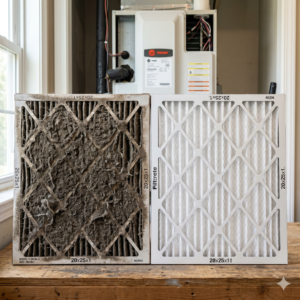
- Clean air filters if dirty
What You Should NOT Do
- Open electrical panels
- Touch capacitor or wiring
- Attempt compressor repair
If the issue involves electrical buzzing, it is safer to consult professionals.
Common Causes and Estimated Repair Costs in UAE
Repair costs vary depending on the severity of the issue. Below is a realistic cost overview.
| Issue | Estimated Cost (AED) | Severity |
|---|---|---|
| Loose parts / vibration fix | 150 – 300 | Low |
| Capacitor replacement | 250 – 500 | Medium |
| Contactor replacement | 300 – 700 | Medium |
| Fan motor repair | 500 – 1,200 | Medium |
| Compressor replacement | 2,000 – 5,000+ | High |
Note: These prices are slightly below typical UAE market rates and may vary depending on brand, system type, and condition.
When to Call a Professional Immediately
- Buzzing is loud and continuous
- AC fails to start properly
- Burning smell is present
- System shuts down unexpectedly
These signs indicate serious issues that require immediate attention.
Preventing AC Buzzing in UAE Homes
Most buzzing issues can be prevented with regular maintenance.
- Clean filters regularly
- Schedule periodic inspections
- Address small issues early
- Ensure proper airflow
Preventive care reduces both repair cost and system stress.
Long-Term Impact If Ignored
Ignoring AC buzzing can lead to:
- Major component failure
- Higher electricity bills
- Poor indoor air quality
- Expensive repairs
What starts as a small buzzing sound can quickly become a costly breakdown.
If your AC is making buzzing sounds, it is important to address the issue early rather than waiting for it to worsen. Electrical strain, airflow problems, or internal damage can reduce cooling efficiency, increase energy consumption, and even create safety risks. With proper inspection, these issues can be identified and resolved before they escalate. If you are unsure about the condition of your system, you can use the WhatsApp or Call button on the top right to connect with the Bio On Air team and understand the most suitable next step based on your situation.
Conclusion
AC buzzing in UAE homes is often a warning sign of deeper issues. By identifying the type of sound, locating the source, and understanding the risks, you can take the right action early. Proper handling ensures safety, efficiency, and long-term performance of your AC system.