




AC rattling is one of the most common and confusing AC problems in the UAE. The sound can range from a light plastic vibration to a heavy metal clanking noise. Knowing the difference is critical, because some noises are harmless while others signal serious damage that requires you to turn the unit off immediately.
Table of Contents
ToggleImmediate Threat Level Diagnosis First
Before anything else, you need to understand whether your AC rattling is safe or dangerous. This is the most important step, especially in UAE conditions where AC systems run almost continuously.
Use this quick diagnostic:
| Sound Type | Risk Level | Action |
|---|---|---|
| Light plastic vibration | Low | Safe to run temporarily |
| Soft buzzing + minor rattle | Medium | Monitor and inspect |
| Loud metal knocking | High | Turn OFF immediately |
| Heavy clanking or grinding | Critical | Stop AC to prevent damage |
If the sound feels deep, heavy, or metallic, do not ignore it. Running the AC in this condition can damage the compressor or internal components.
Light Rattling vs Heavy Rattling Explained
Light Rattling (Plastic or Surface Vibration)
This type of sound is usually harmless and often caused by loose external components.
- Loose front panel
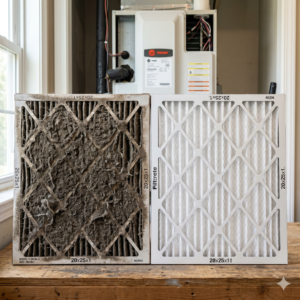
- Misaligned air filter
- Loose screws or clips
- Minor airflow vibration
This sound is annoying but not dangerous. You can continue running the AC temporarily while planning a fix.
Heavy Rattling (Metal-on-Metal Sound)
This is where things become serious. Heavy rattling usually means internal mechanical issues.
- Fan blade hitting internal parts
- Compressor internal failure
- Loose motor mounts
- Broken internal supports
This type of sound can lead to permanent AC damage if ignored.
Location-Based Diagnosis of AC Rattling
1. Ceiling FCU Units (Common in UAE Apartments)
Ceiling-mounted fan coil units often produce rattling sounds due to internal airflow and humidity conditions.
Common causes:
- Blower wheel imbalance due to moisture sludge
- Loose duct connections
- Vibration from ceiling mounting brackets
Humidity in UAE properties can create sticky dust buildup inside the blower, causing imbalance.
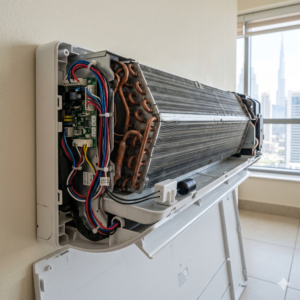
2. Wall-Mounted Split Indoor Units
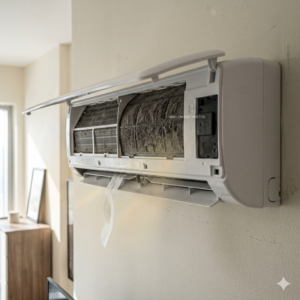
Indoor units are prone to lighter rattling issues.
- Loose front cover
- Misaligned filters after cleaning
- Damaged louver motor
- Plastic expansion from temperature changes
Post-cleaning misalignment is very common in UAE homes.
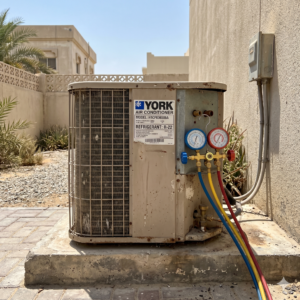
3. Outdoor Condenser Units
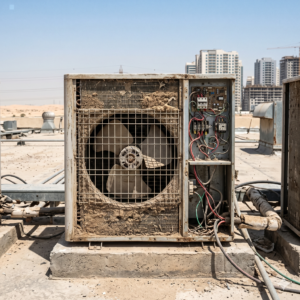
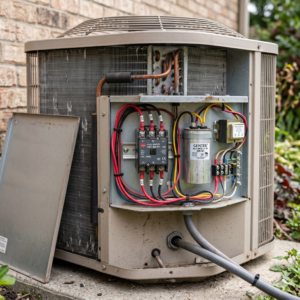
Outdoor units are where serious rattling usually occurs.
- Fan blade hitting casing
- Debris from sandstorms inside unit
- Loose compressor mounts
- Degraded vibration pads
Outdoor units face extreme heat and dust, which accelerates wear and tear.
Common Causes of AC Rattling in UAE Conditions
Humidity Sludge in Blower Wheel
Dust in UAE homes mixes with humidity and forms sticky residue inside the blower wheel. This creates imbalance and vibration.
Loose Ductwork
Duct connections can loosen over time, especially with continuous AC usage.
Misaligned Filters
After cleaning, filters are sometimes installed incorrectly, causing airflow vibration.
Damaged Louver Motors
The motor controlling air direction may fail, creating clicking or rattling sounds.
Degraded Vibration Pads
Outdoor units sit on rubber pads that absorb vibration. UAE heat can degrade these pads, leading to direct vibration transfer.
Sand and Debris Inside Condenser
Sandstorms can push debris into outdoor units, causing fan obstruction and noise.
Loose Fan Motor Mounts
If the motor is not securely fixed, it creates strong rattling during operation.
AC Rattling After Cleaning What It Means
Many users notice rattling right after AC cleaning.
Common reasons:
- Panel not reinstalled properly
- Loose screws after service
- Filter misalignment
- Disconnected internal parts
This is usually not a system failure, but rather an installation issue.
DIY Triage Steps You Can Try Safely
Before calling a technician, you can check a few safe items:
- Ensure front panel is fully closed
- Remove and reinstall air filters properly
- Tighten visible screws
- Check for visible debris near outdoor unit
These steps are safe and can resolve minor rattling issues.
When You Must Stop the AC Immediately
- Loud metallic knocking sound
- Grinding noise from outdoor unit
- AC shaking visibly
- Burning smell or electrical noise
These signs indicate serious risk. Continuing to run the AC can cause permanent damage.
Professional Repair What Should Actually Happen
Proper repair is not just tightening a screw. A real inspection includes:
- Full mechanical inspection
- Motor alignment check
- Blower wheel balancing
- Compressor condition analysis
- Electrical system inspection
A proper AC repair process focuses on identifying the root cause, not just eliminating the noise.
How to Avoid Being Scammed
Be cautious if a technician:
- Gives a price without inspection
- Suggests replacing major parts immediately
- Does not explain the issue clearly
A professional should always show you the problem before fixing it.
Realistic Repair Cost Expectations in UAE
| Issue | Estimated Cost (AED) |
|---|---|
| Loose panel / minor fix | 100 – 250 |
| Blower cleaning and balancing | 300 – 800 |
| Fan motor repair | 500 – 1,200 |
| Compressor issue | 1,500 – 4,000+ |
Note: Prices are slightly below typical market rates and may vary depending on system condition and accessibility.
Why Ignoring AC Rattling Is Risky
- Increased wear on internal parts
- Reduced cooling efficiency
- Higher electricity bills
- Risk of complete system failure
Small issues can quickly become expensive repairs.
Long-Term Prevention Tips
- Schedule regular maintenance
- Clean filters every 1–2 months
- Inspect outdoor unit after sandstorms
- Address unusual sounds early
Prevention is always more cost-effective than repair.
Final Practical Insight
AC rattling is not just a noise—it is a signal. The key is understanding whether it is harmless vibration or a sign of internal damage.
If you are hearing rattling sounds, especially unusual or worsening ones, it is important not to ignore them. What may seem like a small issue can develop into airflow problems, mechanical damage, or even compressor failure over time. These problems not only affect cooling performance but can also impact indoor air quality and increase energy consumption. Addressing the issue early helps avoid larger repairs and ensures your system continues to operate safely. If you are unsure about the condition of your AC, you can use the WhatsApp or Call button on the top right to connect with the Bio On Air team and better understand the most appropriate next step for your situation.
Conclusion
AC rattling can range from harmless vibration to serious mechanical failure. By identifying the type of sound, understanding its cause, and taking the right action early, you can prevent costly damage and maintain a safe, efficient AC system in UAE conditions.