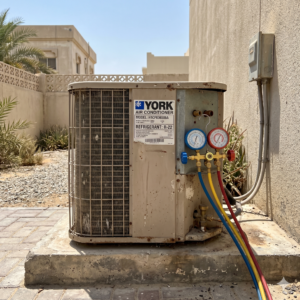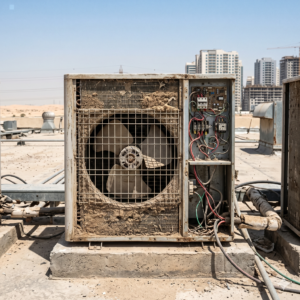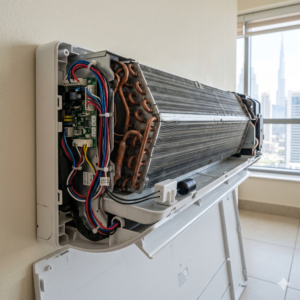





Regular HVAC maintenance is not just a routine service in the UAE—it is a financial strategy to control energy costs, protect expensive components, and maintain indoor air quality in extreme conditions. In this guide, we explain the real logic behind maintenance, system-specific protocols, and how proper scheduling prevents costly breakdowns.
Table of Contents
ToggleWhy Regular HVAC Maintenance Matters in the UAE
In the UAE, HVAC systems operate under one of the most demanding climates in the world. Temperatures can exceed 45°C, and AC systems often run for 10–20 hours per day, especially in villas, offices, and commercial spaces.
Unlike moderate climates, where HVAC systems are used seasonally, UAE systems face:
- Continuous high load operation
- Heavy dust accumulation
- Humidity-driven condensation
- Thermal stress on electrical and mechanical components
This combination means that without regular HVAC maintenance, systems do not degrade slowly—they fail quickly and often without warning.
The Financial Logic Behind HVAC Maintenance Contracts (AMC)
Many property owners hesitate to invest in Annual Maintenance Contracts (AMC), assuming it is an optional cost. In reality, AMC is a cost-control strategy.
Energy Efficiency Impact
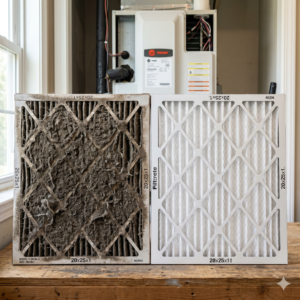
When HVAC systems are not maintained, airflow becomes restricted due to dust buildup on filters, coils, and ducts. This forces the system to work harder to achieve the same cooling effect.
Even a 15–20% reduction in efficiency can lead to:
- Significantly higher electricity bills
- Longer compressor run times
- Reduced cooling performance
Over a full UAE summer (4–6 months), the additional electricity cost can exceed the cost of maintenance itself.
Compressor Protection
The compressor is the most expensive component in an HVAC system. Without maintenance, issues such as low refrigerant, dirty coils, or airflow restriction can cause overheating.
Compressor failure often results in:
- High repair or replacement cost
- Extended downtime
- System-wide performance issues
Regular HVAC maintenance ensures the compressor operates within safe conditions.
Extending System Lifespan
HVAC systems are designed to last 10–15 years. However, without maintenance, this lifespan can drop to 5–8 years.
Maintenance helps:
- Reduce wear and tear
- Prevent corrosion and buildup
- Maintain stable operating conditions
This extends asset life and delays costly replacements.
AMC Cost vs Emergency Breakdown Cost
Understanding the cost comparison is critical.
| Scenario | Estimated Cost (AED) | Impact |
|---|---|---|
| Annual Maintenance Contract | 800 – 2,500 (residential) | Preventive, predictable cost |
| Minor Emergency Repair | 300 – 800 | Short-term fix |
| Major Breakdown (Compressor) | 2,000 – 6,000+ | High cost + downtime |
| System Replacement | 8,000 – 20,000+ | Full asset loss |
Note: These prices are slightly below typical UAE market averages and may vary depending on system type and severity.
This comparison clearly shows that AMC is not an expense—it is a way to avoid unpredictable and larger costs.
Climate-Specific Maintenance Scheduling in UAE
Pre-Summer (February – April)
This is the most important maintenance window. Systems should be fully prepared before peak demand.
- Full system inspection
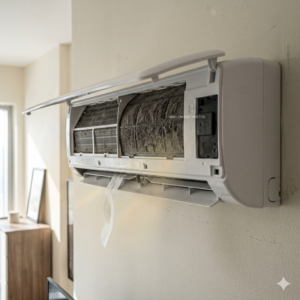
- Coil and filter cleaning
- Refrigerant level check
- Electrical system testing
Peak Summer (May – September)
During this period, systems operate under maximum load.
- Filter cleaning every 2–4 weeks
- Airflow monitoring
- Quick response to performance changes
Post-Summer (October – December)
This period is used for recovery and deep maintenance.
- Deep cleaning
- Duct inspection
- Component wear assessment
Proper scheduling reduces stress on the system throughout the year.
System-Specific Maintenance Protocols
VRF / VRV Systems
Variable Refrigerant Flow (VRF/VRV) systems are commonly used in commercial and high-end residential properties.
Maintenance includes:
- Refrigerant balance checks
- Electronic control diagnostics
- Indoor unit performance testing
These systems require specialized knowledge and should always be handled by experienced technicians.
Chilled Water Systems and FCUs
Used in large buildings and commercial properties.
- Chilled water flow rate monitoring
- Fan Coil Unit (FCU) cleaning
- Valve and pump inspection
Improper maintenance can lead to uneven cooling and energy waste.
FAHU and Ducted Systems
Fresh Air Handling Units (FAHU) and ducted systems are critical for ventilation and air quality.
- Air filter replacement
- Duct inspection and cleaning
- Air balancing
For full system care, proper HVAC maintenance planning should include all connected components.
Mechanical Room Checklist for HVAC Maintenance
Electrical Integrity
- Check wiring connections
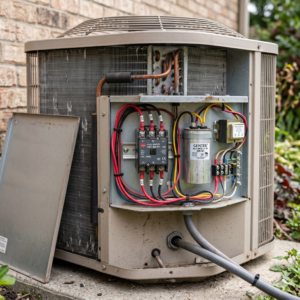
- Inspect contactors and relays
- Measure voltage and current balance
Vibration Control
- Inspect mounting systems
- Check for abnormal noise
- Ensure proper alignment
Condensate Management
- Clear drainage lines
- Check for water blockage
- Prevent mold growth
Airflow Diagnostics
- Measure airflow rate
- Check duct pressure
- Identify airflow restrictions
This checklist ensures that the system operates efficiently and safely.
Connection Between HVAC Maintenance and Indoor Air Quality
HVAC systems are not just cooling systems—they are air distribution systems.
Without maintenance, they can circulate:
- Dust particles
- Bacteria and mold
- Allergens
Regular HVAC maintenance helps maintain clean airflow and reduces health risks.
Compliance with UAE Standards
Many residential and commercial properties in the UAE must comply with indoor air quality and HVAC standards.
Proper maintenance supports compliance by ensuring:
- Clean air circulation
- Safe system operation
- Energy efficiency targets
This is especially important for offices, clinics, and hospitality spaces.
Common Mistakes in HVAC Maintenance
- Skipping scheduled maintenance
- Only reacting to breakdowns
- Ignoring airflow issues
- Choosing unqualified service providers
These mistakes often lead to higher long-term costs.
Long-Term Value of Regular HVAC Maintenance
Regular HVAC maintenance provides:
- Lower electricity bills
- Reduced repair costs
- Longer system lifespan
- Better indoor comfort
It transforms HVAC from a reactive expense into a controlled system.
If your HVAC system is operating continuously in UAE conditions, delaying maintenance can lead to hidden efficiency loss, poor air quality, and increased risk of major breakdowns. Small issues like airflow restriction or electrical imbalance can quickly escalate into expensive failures. With the right maintenance approach, these risks can be minimized early. If you need clarity about your system condition or want to understand the most suitable maintenance plan, you can use the WhatsApp or Call button on the top right to connect with the Bio On Air team and discuss your situation directly.
Conclusion
Regular HVAC maintenance in the UAE is not optional—it is essential for cost control, system protection, and indoor air quality. By investing in structured maintenance, you can avoid major failures, reduce energy costs, and ensure long-term performance in extreme climate conditions.