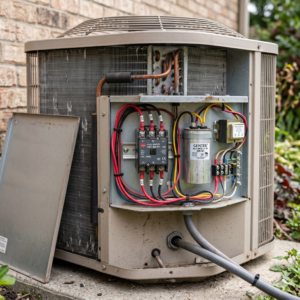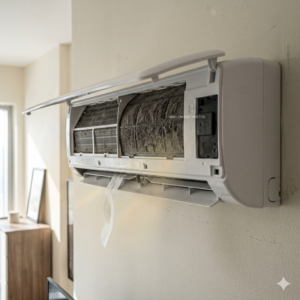





AC sterilization is a specialized process designed to eliminate bacteria, mold, and microbial contamination inside your air conditioning system. In the UAE, where heat, humidity, and constant AC usage create ideal conditions for microbial growth, understanding sterilization is essential for maintaining healthy indoor air.
Table of Contents
ToggleWhat AC Sterilization Really Means
Many people assume that AC sterilization is the same as standard AC cleaning. In reality, they are completely different processes with different goals.
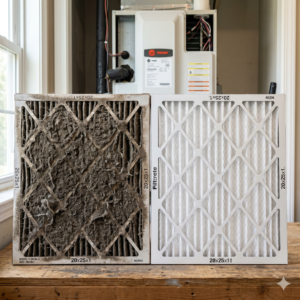
AC cleaning focuses on removing visible dirt such as dust, debris, and buildup from filters, coils, and surfaces. It improves airflow and system efficiency.
AC sterilization, on the other hand, targets invisible biological contamination such as:
- Bacteria
- Mold spores
- Fungi
- Biofilm layers
This means sterilization is not just about cleanliness—it is about hygiene and health protection.
Why AC Systems in UAE Are Prone to Contamination
UAE homes operate in a unique indoor environment. While the outside climate is hot and dry, indoor spaces are constantly cooled and sealed, which creates a hidden moisture cycle.
Here is what typically happens:
- Warm humid air enters the AC system
- Cold evaporator coils create condensation
- Dust particles stick to moist surfaces
- Microorganisms begin to grow on damp surfaces
Over time, this combination of moisture and dust forms an ideal environment for microbial growth inside the AC system.
Types of Contamination Found Inside AC Systems
Mold Growth
Mold thrives in dark, moist environments. AC coils, drain pans, and ducts provide the perfect conditions. Once mold forms, spores can spread through the air every time the AC runs.
Bacterial Colonies
Bacteria develop on damp surfaces and can multiply rapidly. Some bacteria are responsible for unpleasant odors and may contribute to respiratory irritation.
Biofilm Formation
Biofilm is a thin, sticky layer of microorganisms that attaches to surfaces. It protects bacteria and mold, making them harder to remove with basic cleaning.
Dirty Sock Syndrome
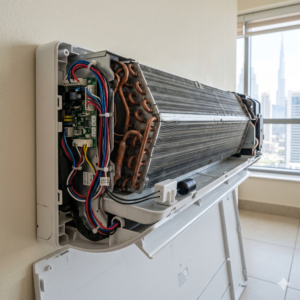
This is a common issue in AC systems where a musty, sour smell appears when the unit starts. It is caused by bacteria and mold growing on the evaporator coil.
Why Standard AC Cleaning Is Not Enough
Standard cleaning removes visible dirt, but it does not eliminate microbial contamination completely.
For example:
- Dust may be removed, but bacteria remain embedded in biofilm
- Surface cleaning may not reach internal duct contamination
- Odors may return because microorganisms are still present
This is why sterilization is required after proper cleaning to fully address the problem.
Why Deep Cleaning Must Come Before Sterilization
Sterilization cannot work effectively on a dirty system. If dust and debris remain, they act as a barrier that prevents disinfectants from reaching microorganisms.
A complete process always starts with deep cleaning. This ensures:
- Physical removal of dirt and buildup
- Exposure of contaminated surfaces
- Better penetration of sterilization agents
This is why professional AC deep cleaning is considered a necessary first step before any sterilization process.
Professional AC Sterilization Methods
ULV Fogging with Approved Biocides
Ultra Low Volume (ULV) fogging is one of the most effective sterilization methods used in AC systems.
How it works:
- A fine mist of disinfectant is released into the system
- The mist reaches deep into ducts and coils
- Biocides eliminate bacteria, mold, and fungi
Approved biocides are used to ensure safety for indoor environments.
UV-C Light Installation
UV-C technology provides continuous sterilization inside the AC system.
- Installed near evaporator coils
- Disrupts DNA of microorganisms
- Prevents regrowth over time
This is often used as a long-term solution after initial sterilization.
Step-by-Step Professional AC Sterilization Process
1. System Inspection
The process begins with a full inspection to assess contamination levels, airflow issues, and system condition.
2. Mechanical Deep Cleaning
All visible dirt, dust, and debris are removed from filters, coils, and ducts.
3. Negative Air Pressure Setup
Professional equipment creates negative pressure inside the duct system to contain contaminants and prevent spreading during cleaning.
4. Internal Extraction
Dust and debris are extracted using high-powered vacuum systems.
5. Biocide Application
Approved disinfectants are applied to eliminate microorganisms.
6. ULV Fogging
The entire system is treated with fine mist to ensure full coverage.
7. Final Testing and Documentation
Airflow and cleanliness are checked, and before-and-after evidence is provided.
Real Benefits of AC Sterilization
Odor Elimination
Removing bacteria and mold eliminates musty smells and improves indoor freshness.
Allergy Relief
Reducing airborne contaminants helps minimize allergic reactions.
Improved Air Quality
Cleaner air circulation leads to a healthier indoor environment.
Better AC Efficiency
Removing buildup improves airflow and cooling performance.
Who Should Consider AC Sterilization
- Families with children
- People with allergies or asthma
- Homes with pets
- Properties with persistent odors
- Apartments closed for long periods
These groups are more sensitive to indoor air quality changes.
How Often Should AC Sterilization Be Done
In UAE conditions, sterilization is recommended:
- Once every 6–12 months for residential properties
- More frequently for high-usage or commercial spaces
Frequency depends on usage, environment, and contamination level.
Common Misconceptions About AC Sterilization
“Cleaning is enough”
Cleaning removes dirt but not microorganisms.
“Odor will go away on its own”
Odors usually indicate bacterial growth that needs treatment.
“Sterilization is optional”
In high humidity environments, sterilization becomes essential for hygiene.
Long-Term Impact on Health and Comfort
Without proper sterilization, contaminated AC systems can:
- Circulate bacteria and mold spores
- Trigger respiratory irritation
- Reduce overall indoor air quality
Over time, this affects comfort, health, and AC performance.
If you are experiencing persistent AC odor, allergy symptoms, or reduced air quality, it is important to address the root cause rather than relying on temporary solutions. Microbial buildup inside the system can continue to grow silently, affecting both your health and AC performance. With the right approach, combining deep cleaning and sterilization, these issues can be resolved effectively. If you need clarity about your AC condition or the appropriate treatment, you can use the WhatsApp or Call button on the top right to connect with the Bio On Air team and understand the most suitable next step.
Conclusion
AC sterilization is not just an optional upgrade—it is an essential process for maintaining clean, healthy indoor air in UAE conditions. By combining deep cleaning with proper sterilization methods, you can eliminate hidden contamination, improve air quality, and ensure long-term AC performance.