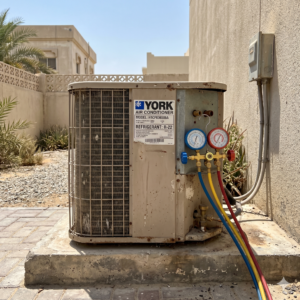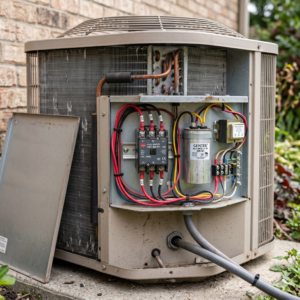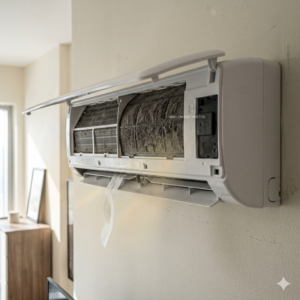





AC refrigerant recharge in the UAE is often misunderstood. Many people think AC systems “use up” gas over time, but in reality, refrigerant operates in a closed loop. If your AC is low on refrigerant, it almost always means there is a leak. This guide explains how recharge really works, why leaks must be fixed first, and how to avoid costly mistakes.
Table of Contents
ToggleAC Refrigerant Is a Closed-Loop System
An air conditioning system is designed as a sealed, closed-loop system. This means refrigerant continuously circulates inside copper pipes without being consumed or reduced under normal conditions.
In simple terms:
- Refrigerant does not burn like fuel
- It does not evaporate into the air during normal operation
- It should remain at the same level for years
If your AC is low on refrigerant, it is not because the system “used it.” It is because refrigerant has escaped through a leak somewhere in the system.
This is one of the most important concepts to understand before considering any recharge.
The “Top-Up” Myth in the UAE
In many UAE properties, especially older apartments and villas, a common practice is to “top up” refrigerant every few months. This is often presented as routine maintenance, but in reality, it is a temporary fix.
The problem with repeated top-ups:
- The leak is never repaired
- The system continues losing refrigerant
- The compressor works harder each cycle
- Energy consumption increases
Over time, this leads to compressor damage—the most expensive component in your AC system.
Instead of solving the problem, repeated recharges without fixing leaks create a cycle of increasing cost and declining performance.
Why Low Refrigerant Is Dangerous for Your AC
Refrigerant is not just for cooling—it also plays a role in protecting system components.
When levels drop:
- Cooling efficiency decreases
- Compressor temperature increases
- Lubrication becomes insufficient
- System pressure becomes unstable
This imbalance can lead to overheating, internal wear, and eventually compressor failure.
Common Symptoms of Low Refrigerant
Low refrigerant often shows clear warning signs:
- Weak or warm airflow
- Longer cooling cycles
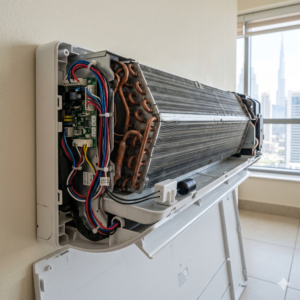
- Ice forming on evaporator coils
- Hissing or bubbling sound
- Sudden increase in electricity bills
Frozen coils are especially common in UAE conditions due to high humidity combined with low pressure inside the system.
Typical Leak Locations in UAE Homes
Leaks can develop in different parts of the AC system. In UAE environments, heat, dust, and corrosion accelerate these issues.
Common leak points include:
- Copper piping joints
- Evaporator coils inside indoor units
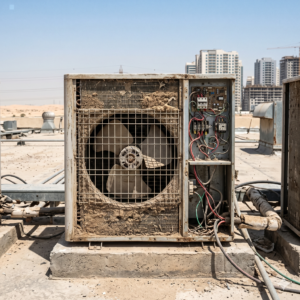
- Condenser coils in outdoor units
- Service valves and connections
- Expansion valves or capillary tubes
In many cases, leaks are microscopic and cannot be detected without proper tools.
Professional Leak Detection Methods
A proper AC refrigerant recharge always begins with leak detection. Without this step, any recharge is temporary.
Nitrogen Pressure Testing
The system is filled with dry nitrogen gas at high pressure. If pressure drops, it indicates a leak. This method is highly reliable for identifying leaks.
UV Dye Testing
A special dye is added to the system. When refrigerant leaks, the dye escapes and becomes visible under UV light.
Electronic Leak Detectors
These devices detect refrigerant gas in the air and can pinpoint leak locations with high sensitivity.
Professional AC gas refill procedures always include proper leak detection before any recharge is performed.
The Critical Vacuum Process Before Recharge
After repairing leaks, the system must be vacuumed before recharging. This step is often skipped in low-cost services, but it is essential.
The vacuum process removes:
- Moisture from inside the system
- Air and non-condensable gases
- Contaminants that affect performance
In UAE conditions, humidity makes this step even more critical.
Why Moisture Is Dangerous
If moisture remains inside the system:
- It reacts with refrigerant to form acid
- Acid damages compressor windings
- Internal corrosion increases
This is one of the most common causes of long-term AC failure after improper servicing.
Types of Refrigerants Used in UAE
Different AC systems use different refrigerants, each with specific characteristics.
R-22 (Older Systems)
- Being phased out globally
- Less environmentally friendly
- More expensive due to limited supply
R-410A (Modern Standard)
- Higher efficiency
- Requires full recharge (cannot be topped up partially)
- Works at higher pressure
R-32 (Newer Technology)
- More energy-efficient
- Lower environmental impact
- Slightly flammable (requires careful handling)
For blended refrigerants like R-410A, partial top-up is not recommended. The system must be fully evacuated and recharged to maintain correct composition.
Recharge vs Repair Cost Considerations
The cost of AC refrigerant recharge depends on system size, refrigerant type, and the amount required.
| Service | Estimated Cost (AED) |
|---|---|
| Basic Refrigerant Recharge | 300 – 800 |
| Leak Detection | 200 – 500 |
| Leak Repair | 300 – 1,500+ |
Note: Prices are approximate and may vary depending on system condition, refrigerant type, and complexity.
While recharge may seem cheaper, repairing the leak first is always more cost-effective long-term.
Special Considerations for Complex Systems
VRF and VRV Systems
These systems are used in larger residential and commercial buildings. They require precise refrigerant levels and advanced diagnostic tools.
Recharge must be done carefully to avoid system imbalance.
Chiller Systems
Chillers are used in large commercial properties and require industrial-level handling. Refrigerant management is highly technical and must follow strict procedures.
Why Proper Procedure Matters in UAE Climate
The UAE environment creates unique challenges:
- High temperatures increase system pressure
- Humidity increases moisture risk
- Dust accelerates system wear
Improper recharge in these conditions can quickly lead to system failure.
Common Mistakes to Avoid
- Recharging without fixing leaks
- Skipping vacuum process
- Using incorrect refrigerant type
- Overcharging or undercharging the system
Each of these mistakes can damage the system and increase costs.
Long-Term Impact of Ignoring Refrigerant Issues
Ignoring refrigerant problems can lead to:
- Compressor failure
- High energy bills
- Reduced cooling performance
- Shortened system lifespan
If you are experiencing signs of low refrigerant, it is important to address the issue properly rather than relying on temporary top-ups. Refrigerant leaks, moisture contamination, and improper recharge procedures can cause serious damage to your AC system over time, especially in UAE conditions. Taking early action helps prevent higher repair costs, protects indoor air quality, and ensures stable cooling performance. If you are unsure about your system condition, you can use the WhatsApp or Call button on the top right to connect with the Bio On Air team and understand the most suitable next step based on your AC situation.
Conclusion
AC refrigerant recharge is not about adding gas—it is about restoring system balance. In the UAE, proper leak detection, vacuuming, and correct recharge procedures are essential to avoid long-term damage. Understanding this helps you make better decisions and maintain efficient, reliable cooling.