Learning how to remove ac indoor unit safely in Dubai is important if you are relocating, upgrading your system, or doing maintenance. In UAE conditions, improper removal can lead to refrigerant loss, wall damage, and expensive repairs. This guide explains the correct step-by-step process, tools, and risks you must understand.
Table of Contents
ToggleWhy Removing an AC Indoor Unit Is Not a Simple Task
At first glance, removing a split AC indoor unit may seem like a basic job—just unscrew and take it off the wall. In reality, the process involves refrigerant handling, electrical disconnection, and careful pipe management.
In Dubai, AC systems run almost continuously due to extreme heat. This means the system is under pressure, and incorrect handling can cause:
- Refrigerant leakage (leading to gas refill costs)
- Damage to compressor or outdoor unit
- Water leakage or drain issues
- Wall damage and mold risk
This is why removal should follow a structured process, not trial-and-error.
Understanding the Pump Down Process (Critical Step)
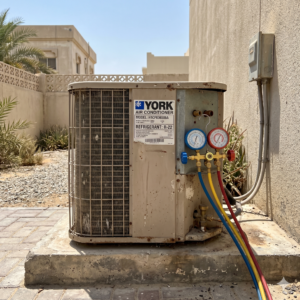
The most important step in removing an AC indoor unit is the pump down process. This procedure traps refrigerant inside the outdoor unit before disconnecting the indoor unit.
Why Pump Down Is Mandatory
Without pump down, refrigerant will escape into the air when pipes are disconnected. This causes:
- Loss of cooling gas
- Environmental impact
- Need for full gas refill (costly)
Basic Pump Down Concept
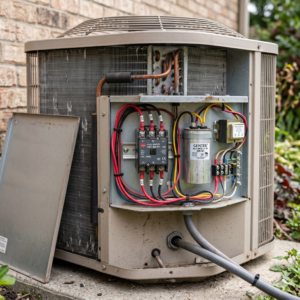
The AC is run in cooling mode while closing the liquid line valve. This forces refrigerant back into the outdoor unit. Once pressure drops, the suction valve is closed, sealing the gas inside.
This step must be done carefully and quickly to avoid system damage.
Tools Required for Removing AC Indoor Unit
Before starting, you need proper tools. UAE AC systems are typically standard split units, so the following tools are required:
- Adjustable wrench or spanner
- Allen key (for service valves)
- Screwdrivers (Phillips and flat)
- Voltage tester
- Insulation tape
- Pipe cutter (if needed)
- Bucket or cloth (for drain water)
Using incorrect tools increases the risk of damaging flare nuts or connections.
Step 1: Turn Off Power Completely
Before touching the unit, you must isolate power.
- Turn off AC from remote
- Switch off circuit breaker
- Confirm no power using a tester
This prevents electrical shock and protects system components.
Step 2: Perform Pump Down Procedure
Start the AC in cooling mode and follow these steps:
- Close liquid valve using Allen key
- Wait 1–2 minutes for refrigerant to move
- Close suction valve
- Turn off AC immediately
This ensures refrigerant is safely stored in the outdoor unit.
Step 3: Disconnect Electrical Wiring
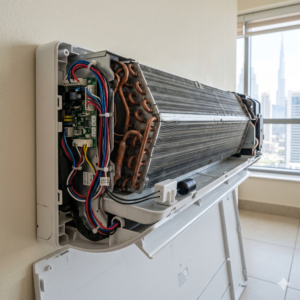
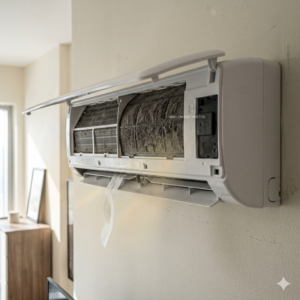
Open the indoor unit front panel and locate the wiring terminal.
- Take photo of wiring setup (important)
- Loosen terminal screws
- Remove wires carefully
Incorrect reconnection later can cause system malfunction.
Step 4: Disconnect Copper Pipes Safely
The indoor unit is connected to the outdoor unit through copper pipes.
Steps:
- Use wrench to loosen flare nuts
- Hold pipe steady to avoid bending
- Cover pipe ends immediately to prevent dust entry
Damaged pipes can lead to leaks and expensive repairs.
Step 5: Disconnect Drain Line
The drain pipe removes condensation water.
- Carefully detach drain hose
- Expect water inside (use cloth or bucket)
- Avoid pulling forcefully
Improper handling can cause future leakage issues.
Step 6: Unmount the Indoor Unit
The unit is mounted on a wall bracket.
- Lift the unit slightly upward
- Pull bottom outward gently
- Detach from mounting plate
This step requires careful handling to avoid wall damage.
Step 7: Remove Wall Bracket and Seal Opening
After removing the unit, the wall opening must be sealed.
- Remove mounting plate screws
- Seal pipe hole using foam or sealant
- Close gaps to prevent humidity and pests
In Dubai, open wall gaps can cause moisture entry, leading to mold and air leakage.
Common Mistakes During AC Indoor Unit Removal
- Skipping pump down (causes gas loss)
- Cutting pipes instead of loosening nuts
- Forgetting wiring configuration
- Leaving wall opening unsealed
These mistakes often lead to additional costs during reinstallation.
UAE-Specific Considerations
1. High-Rise Safety
In apartments, outdoor units are often placed in difficult locations. Improper handling can be dangerous.
2. Multi-Split Systems
Some units are connected to a single outdoor system. Removing one unit incorrectly can affect others.
3. Tenancy Rules and NOC
In many Dubai buildings, approval may be required before modifying AC systems.
4. Continuous AC Usage
Systems are often under heavy load, making proper pump down even more important.
When DIY Removal Is Not Recommended
You should avoid DIY removal if:
- You are unfamiliar with pump down
- The system is multi-split
- The unit is installed in a high-rise building
- You plan to reuse the AC unit later
Improper removal can make the unit unusable.
Connection with Repair and System Handling
AC removal is closely related to repair and system handling. Many issues arise during improper removal, especially refrigerant loss and pipe damage. Understanding how AC repair is handled helps you see why correct procedures matter even during removal.
Cost Risks of Improper Removal
If removal is done incorrectly, you may face:
- Gas refill cost (AED 300 – 800+)
- Pipe replacement cost
- Reinstallation labor cost
- Compressor damage
These costs are often higher than doing the job correctly from the start.
Preventing Damage During Removal
To minimize risk:
- Always perform pump down
- Use correct tools
- Handle pipes carefully
- Seal openings properly
Small mistakes can lead to long-term problems.
Think Before You Remove Your AC Unit
Removing an AC indoor unit is not just a mechanical task—it involves system protection and indoor air considerations.
If you are planning removal, relocation, or replacement, it is important to approach it carefully. Improper handling can lead to refrigerant loss, increased costs, reduced system performance, and even indoor air quality issues due to unsealed openings or contamination. Addressing this properly from the beginning helps avoid unnecessary complications. If you need guidance or want to ensure everything is handled correctly, you can use the WhatsApp or Call button on the top right to connect with the Bio On Air team and understand the safest next step for your AC system.
Conclusion
Knowing how to remove ac indoor unit correctly is essential to avoid damage, refrigerant loss, and additional costs. By following proper procedures and understanding UAE-specific conditions, you can ensure safe removal and maintain system integrity for future use.