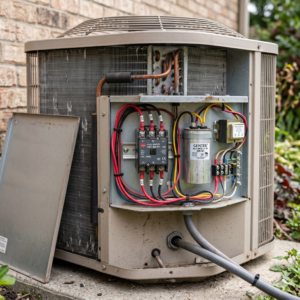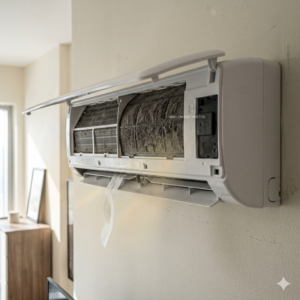





AC outdoor unit placement is one of the most overlooked factors affecting cooling performance, energy efficiency, and long-term system reliability in the UAE. In a climate like Dubai, where extreme heat and constant AC usage are normal, the way your outdoor unit is installed can directly impact how well your system performs.
Table of Contents
ToggleWhy AC Outdoor Unit Placement Matters More in Dubai
In many regions, outdoor unit placement is treated as a simple installation step. But in Dubai and across the UAE, it becomes a critical performance factor.
This is because:
- Outdoor temperatures regularly exceed 40°C
- AC systems run for long hours daily
- Heat buildup around the condenser can reduce cooling efficiency
- Restricted airflow increases compressor strain
When placement is wrong, the AC system has to work harder to release heat, which leads to higher electricity consumption, reduced cooling performance, and faster wear of components.
Minimum Clearance Requirements for Outdoor Unit
Proper spacing around the outdoor unit ensures airflow is not restricted. Without enough clearance, hot air gets trapped and recirculates back into the system.
| Area Around Unit | Minimum Clearance | Purpose |
|---|---|---|
| Back | 15 – 30 cm | Allows intake airflow |
| Sides | 30 – 60 cm | Prevents airflow blockage |
| Front (Fan Discharge) | 100 – 150 cm | Ensures hot air is expelled freely |
| Top | 60 – 100 cm | Prevents heat accumulation |
Note: These are safe minimum guidelines. Larger clearance is always better for airflow and efficiency.
If these clearances are ignored, the unit may overheat even if it is technically functioning correctly.
Optimal Orientation for UAE Climate
Orientation is not just about direction—it is about heat exposure and airflow behavior.
1. Avoid Direct Sun Exposure
Outdoor units exposed to direct sunlight for long periods experience higher operating temperatures. This reduces efficiency and increases compressor load.
Best practice:
- Install in shaded areas
- Use proper shading structures (without blocking airflow)
2. Ensure Open Airflow Direction
The fan should blow hot air into an open space, not toward walls or enclosed areas.
Avoid placing units:
- Inside tight shafts
- Between two close walls
- Near obstacles that trap heat
3. Consider Wind Direction
While not always controllable, aligning the unit to avoid airflow resistance can help improve efficiency.
Proper Mounting Methods
Outdoor units can be installed in three main ways: ground, wall-mounted, or rooftop.
Ground Installation
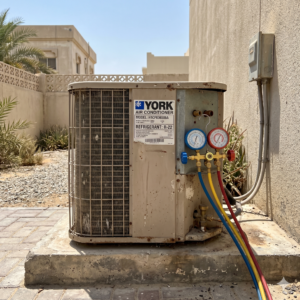
- Placed on a concrete base or slab
- Must be level and stable
- Elevated slightly to prevent water accumulation
Wall-Mounted Installation
- Uses metal brackets fixed to the wall
- Requires strong structural support
- Must include anti-vibration pads
Rooftop Installation
- Common for villas and commercial buildings
- Requires proper anchoring to prevent movement
- Needs protection from direct sun exposure
Each method must prioritize stability, airflow, and accessibility.
Structural Stability and Anti-Vibration Considerations
Outdoor units generate vibration during operation. If not properly managed, this can lead to noise, structural damage, and reduced lifespan.
Key considerations:
- Use anti-vibration rubber pads
- Ensure mounting brackets are securely fixed
- Avoid loose or uneven surfaces
Unstable installations can also cause refrigerant line stress, leading to leaks over time.
DEWA and Dubai Municipality Compliance
Outdoor unit placement must comply with local regulations.
Noise Control
- Units should not create excessive noise for neighbors
- Proper mounting reduces vibration noise
Electrical Safety
- Proper wiring and grounding are required
- Safe distance from water sources must be maintained
Installation Location
- Should not obstruct public areas
- Must follow building guidelines
Working with experienced professionals ensures compliance with these standards.
Common Placement Mistakes
Many AC performance issues are caused by incorrect outdoor unit placement.
1. Installing Too Close to Walls
This restricts airflow and causes hot air recirculation.
2. Placing Unit in Enclosed Spaces
Heat gets trapped, reducing cooling efficiency.
3. No Shade Protection
Direct sunlight increases system temperature and workload.
4. Weak Mounting
Leads to vibration, noise, and long-term damage.
5. Ignoring Maintenance Access
Technicians cannot properly inspect or service the unit.
Technician Access Requirements
Outdoor units should always be accessible for maintenance.
Proper access allows:
- Easy cleaning of coils
- Inspection of components
- Safe repair work
If access is restricted, maintenance becomes difficult and costly.
Practical Tips to Prevent Overheating
In Dubai’s extreme heat, preventing overheating is critical.
- Ensure proper spacing around the unit
- Install shading without blocking airflow
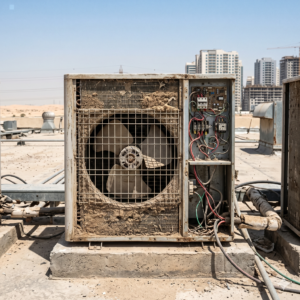
- Keep surrounding area clean and dust-free
- Schedule regular maintenance
Even small improvements in placement can significantly improve performance.
Impact of Placement on Energy Efficiency
Poor placement increases compressor workload, which leads to higher electricity consumption.
Correct placement:
- Improves heat exchange efficiency
- Reduces cooling time
- Lowers energy bills
This makes placement a key factor in long-term cost savings.
When to Reevaluate Outdoor Unit Placement
You should review placement if you notice:
- AC not cooling efficiently
- Outdoor unit overheating
- Frequent breakdowns
- Unusual noise or vibration
In some cases, repositioning the unit can solve recurring problems.
Connection with Installation Quality
Proper placement is closely linked with installation quality. A well-installed system considers airflow, stability, and accessibility from the beginning.
Understanding how AC installation and replacement should be handled helps ensure that placement is optimized for performance and longevity.
If your outdoor unit is exposed to extreme heat, restricted airflow, or unstable mounting, it can silently reduce cooling efficiency, increase electricity consumption, and lead to premature system failure. These issues often develop gradually and are not always immediately visible. Addressing placement early can prevent long-term damage and costly repairs. If you are unsure whether your current setup is optimal, you can use the WhatsApp or Call button on the top right to connect with the Bio On Air team and understand the best approach based on your installation condition.
Conclusion
AC outdoor unit placement plays a major role in system performance, efficiency, and durability—especially in Dubai’s extreme climate. By ensuring proper clearance, correct orientation, stable mounting, and compliance with local standards, you can significantly improve cooling performance and extend the lifespan of your AC system.