




Understanding ac capacitor location is important if your AC is not starting, making clicking sounds, or struggling to cool properly. In UAE conditions, capacitors fail more often due to heat and heavy usage. This guide explains where to find the capacitor, how to identify it safely, and what to check before replacing it.
Table of Contents
ToggleWhat Is an AC Capacitor and Why It Matters
An AC capacitor is a small electrical component that stores and releases energy to help start and run the compressor and fan motors. Without it, your AC system cannot function properly.
There are usually two types of capacitors in AC systems:
- Start capacitor – helps the system start
- Run capacitor – keeps the system running smoothly
In many modern systems, these are combined into a single dual run capacitor.
AC Capacitor Location in Different AC Types
1. Split AC (Most Common in UAE)
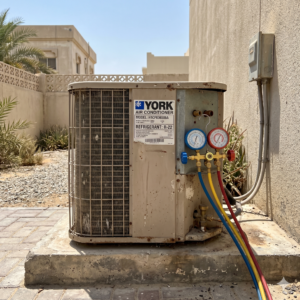
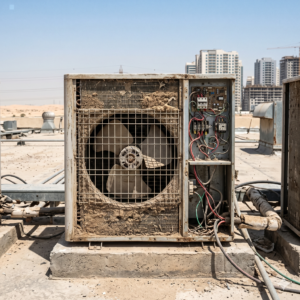
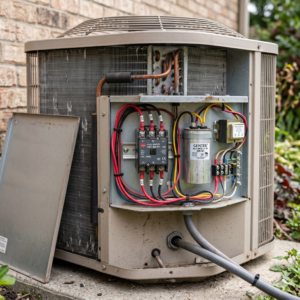
In split AC systems, the capacitor is usually located inside the outdoor condenser unit. This is the external box installed outside your apartment or villa.
Inside the condenser, the capacitor is typically mounted near:
- The compressor
- The contactor (relay switch)
- Electrical wiring panel
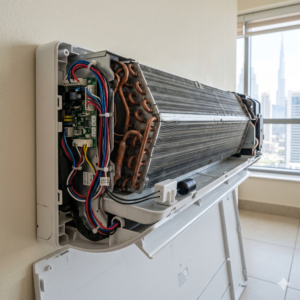
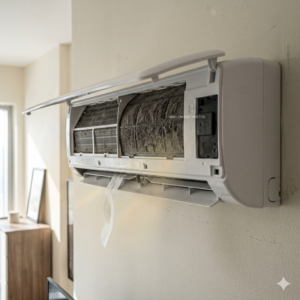
It is rarely located in the indoor unit.
2. Window AC Units
For window AC systems, the capacitor is located inside the main body of the unit, usually behind the front or side panel.
It is positioned close to:
- The fan motor
- The compressor wiring
Access is more compact compared to split systems.
3. Ducted AC Systems
In ducted systems (common in villas and commercial spaces), capacitors are typically found in:
- The outdoor condenser unit
- Sometimes inside the air handling unit (AHU)
These systems may have multiple capacitors depending on system complexity.
How to Identify the Capacitor Inside the Outdoor Unit
Once you open the condenser panel, the capacitor is usually easy to recognize.
It typically looks like:
- A cylindrical or oval-shaped metal can
- Silver or black in color
- With 2–3 terminals on top
Labels on the capacitor will include:
- Microfarad rating (µF)
- Voltage rating (V)
- Brand and model details
It is usually mounted with a metal strap or bracket.
Step-by-Step Safe Access to AC Capacitor
Step 1: Turn Off Power Completely
Before opening anything, switch off the AC from:
- Main breaker
- Outdoor disconnect switch
This is critical to avoid electrical shock.
Step 2: Open the Outdoor Unit Panel
Use a screwdriver to remove the side panel of the condenser unit. The capacitor is usually behind this panel.
Step 3: Locate Electrical Section
Look for the wiring area where the contactor and wires are grouped. The capacitor is typically placed next to them.
Step 4: Do Not Touch Immediately
Even after power is off, capacitors can hold electrical charge. Avoid touching terminals directly.
Step 5: Visual Inspection Only
At this stage, focus only on identifying the capacitor and checking visible signs of damage.
If you are unsure at any point, it is safer to stop and consult professionals familiar with AC repair procedures.
Common Placement Inside the Condenser Unit
In most systems, the capacitor is positioned near:
- The contactor (square relay switch)
- Compressor wiring connections
- Fan motor wiring
This placement allows it to supply power efficiently to both compressor and fan.
Signs of a Blown or Faulty Capacitor
Capacitor failure is one of the most common AC issues in the UAE due to high temperatures.
Look for these signs:
- Bulging or swollen top
- Leaking oil or residue
- AC not starting but making clicking sound
- Fan not spinning properly
- Intermittent cooling
If you notice any of these, the capacitor likely needs replacement.
How to Read Capacitor Specifications
Capacitors have specific ratings that must match your system.
Microfarads (µF)
This indicates the storage capacity. Example: 35µF, 45µF, or dual values like 35/5µF.
Voltage Rating
Common ratings include 370V or 440V. You can replace with equal or higher voltage, but never lower.
Dual Run Capacitor
This type supports both compressor and fan. It has three terminals:
- C (Common)
- FAN
- HERM (Compressor)
Matching these correctly is critical for safe operation.
Typical Capacitor Replacement Cost in Dubai
Capacitor replacement is relatively affordable compared to other AC components.
| Component | Estimated Cost (AED) |
|---|---|
| Capacitor (Part Only) | 50 – 150 |
| Capacitor + Installation | 150 – 350 |
Note: These prices are slightly below average UAE market rates and may vary depending on brand, capacity, and service provider.
Where to Buy AC Capacitors in Dubai
You can source capacitors from:
- HVAC spare parts shops
- AC service providers
- Industrial supply stores
Common areas include:
- Deira
- Al Quoz
- Sharjah industrial zones
Always ensure compatibility with your system before purchasing.
DIY vs Professional Replacement
While capacitor replacement may look simple, it involves electrical handling.
| DIY | Professional |
|---|---|
| Lower cost | Safer handling |
| Higher risk | Correct installation |
| No guarantee | Verified diagnosis |
Incorrect wiring can damage the compressor, which is far more expensive to repair.
Why Capacitors Fail Faster in UAE
Capacitors are sensitive to heat. In UAE conditions:
- Outdoor temperatures exceed 40°C
- AC systems run for long hours
- Electrical load is consistently high
This accelerates wear and reduces capacitor lifespan.
How to Prevent Capacitor Failure
- Regular AC maintenance
- Cleaning condenser coils
- Ensuring proper airflow
- Avoiding power fluctuations
Preventive care reduces stress on electrical components.
When You Should Not Attempt DIY
- If capacitor is leaking
- If wiring looks damaged
- If system repeatedly trips breaker
- If unsure about specifications
These situations require professional inspection.
Understanding the Bigger Picture
The capacitor is a small component, but it plays a critical role in system performance. A failing capacitor can lead to compressor damage if ignored.
If you are experiencing startup issues, weak cooling, or unusual AC behavior, it is important to address it early. Electrical components like capacitors can fail silently and affect overall system performance, energy efficiency, and indoor comfort. Ignoring these signs can lead to larger and more expensive repairs. If you need clarity about your AC condition, you can use the WhatsApp or Call button on the top right to connect with the Bio On Air team and understand the most suitable next step.
Conclusion
Knowing the ac capacitor location helps you understand your AC system better and recognize early signs of failure. With proper handling, correct identification, and timely replacement, you can maintain system performance and avoid costly damage.